Best Distressed Streetwear Clothing Manufacturers for Custom Bulk Production
- Share
- publisher
- GROOVECOLOR
- Issue Time
- Jul 6,2026
Summary
Choosing a distressed streetwear clothing manufacturer demands evaluating wash recipe stability, distressing repeatability, shade-batch Delta E control, hardware survival after enzyme and stone washing, pattern engineering for shrinkage tolerance, and abrasion performance. This guide covers wash recipe documentation, distressing placement templating, shade band management, hardware specification, fabric weight calibration, and pre-shipment durability testing protocols for sourcing teams.
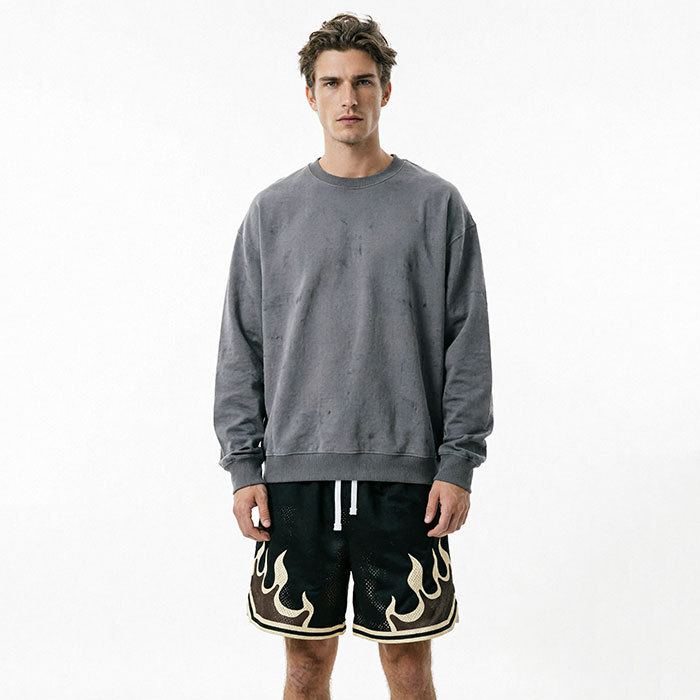
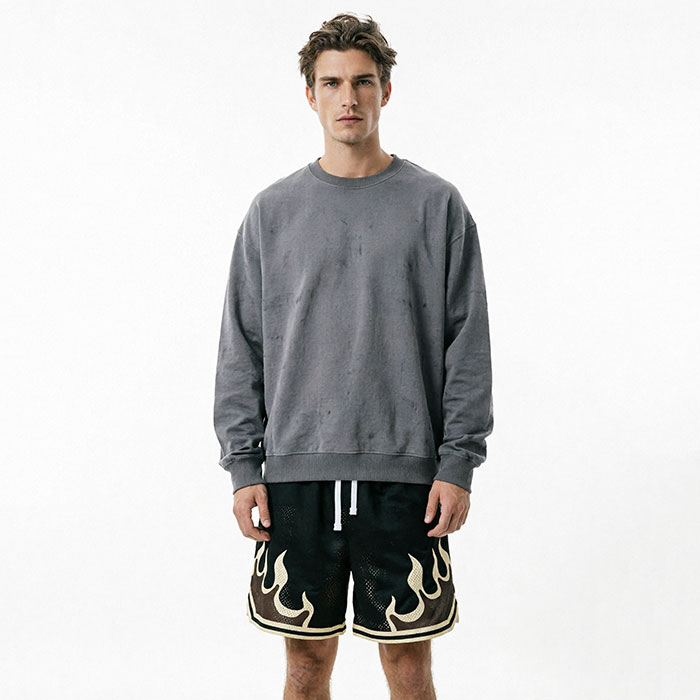
Distressed streetwear is the single most process-dependent category in custom apparel manufacturing. A rip placed two centimeters too high, a whisker pattern that fades inconsistently across 500 units, or a hoodie whose hardware corrodes after the second enzyme wash — these are not design problems. They are manufacturing execution failures that trace back to wash recipe instability, uncontrolled shade drift, and inadequate distressing repeatability. Yet many brands evaluate distressed streetwear clothing manufacturers using the same criteria they apply to basic cut-and-sew factories, which is a fundamental category error. A true distressed streetwear clothing manufacturer must be assessed on wash control systems, distressing consistency protocols, shade-batch management with spectrophotometric Delta E verification, hardware and trim stability after aggressive washing, pattern engineering for post-wash shrinkage tolerance, and abrasion performance validated against recognized testing standards. This guide provides a procurement-grade evaluation framework that sourcing managers and product developers can apply during factory audits, sample comparison, and bulk production monitoring for denim, pants, jackets, hoodies, and sweatshirts.
Key Takeaways for Established Streetwear Brands
- ▸ Lock the complete wash recipe before sample approval, including pH, temperature, liquor ratio, chemical dosage, load weight, cycle time, and neutralization steps, so the approved finish can be repeated across bulk lots.
- ▸ Use laser files, positioning jigs, alignment markers, or digital projection for distressing placement; freehand execution alone cannot keep rips, whiskers, and abrasion zones controlled at production scale.
- ▸ Manage shade variation through approved shade bands, D65 lighting, and spectrophotometer readings rather than visual judgment alone, especially when multiple wash dates or fabric rolls are involved.
- ▸ Validate zippers, rivets, eyelets, buttons, thread, labels, and drawstring hardware through the exact production wash because bleach, enzymes, stones, and heat can cause corrosion, plating loss, seizure, or seam failure.
- ▸ Engineer patterns to post-wash measurements and confirm dimensional stability, tear strength, color performance, and chemical neutralization through multi-cycle testing before releasing bulk production.
Why Does Distressed Streetwear Require a Manufacturer with Controlled Wash Execution?
Distressed streetwear is not a decoration applied to a finished garment — it is a chemical and mechanical transformation of the fabric itself. Stone washing abrades the surface. Enzyme washing hydrolyzes cellulose fibers to release dye. Bleach washing oxidizes indigo molecules to create fade. Each of these processes alters the fabric's weight, hand-feel, dimensional stability, and structural integrity. A factory that treats washing as a cosmetic finishing step rather than an engineered process will produce garments that look acceptable in the sample stage but fail catastrophically in bulk. The reason is simple: every wash variable — time, temperature, liquor ratio, chemical concentration, load weight, mechanical agitation — interacts with every other variable. Change one parameter by 10% and the entire output shifts. A distressed streetwear clothing manufacturer must control all parameters simultaneously, which requires documented wash recipes, computer-controlled dosing, and real-time monitoring during every wash cycle.
The wash recipe is the foundation of controlled execution. A production-ready wash recipe specifies: desizing parameters (amylase enzyme 1-2 g/l, pH 6-7, temperature 60-70°C, 15 minutes), stone wash parameters (stone-to-fabric ratio 0.5:1 to 3:1, cycle time capped at 90 minutes), enzyme wash parameters (neutral cellulase pH 6-7, temperature 50-60°C, dosage 0.5-2.0 g/l), bleach parameters (sodium hypochlorite at pH 9-10, 50-60°C, 15 minutes), and dechlorination parameters (sodium metabisulfite 3 g/l, 40-50°C, 10 minutes). If the factory cannot produce a documented recipe with these specifications for your specific wash effect, they are improvising — and improvisation produces inconsistent results at scale. For brands that want to understand the full depth of wash engineering, the washed apparel production deep dive breaks down how wash recipes translate into repeatable bulk outcomes across hoodie, sweatshirt, and t-shirt categories.
The second reason controlled wash execution is non-negotiable is chemical residue management. Potassium permanganate, sodium hypochlorite, and other oxidative agents used in distressing and bleaching are toxic. If they are not fully neutralized — typically with sodium metabisulfite after any oxidative process — they remain in the fabric and cause latent yellowing, skin irritation, and progressive fabric degradation that appears weeks or months after production. A factory that skips or shortcuts neutralization is not saving time; they are transferring a compliance and safety liability to your brand. ZDHC (Zero Discharge of Hazardous Chemicals) compliance, OEKO-TEX certification, and pH testing between 5.5 and 7.0 are the minimum acceptable evidence that the factory manages chemical residue properly.
The actionable recommendation: demand a wash recipe document before approving any sample. The document should list every chemical, concentration, temperature, duration, and liquor ratio used in the wash process, plus the neutralization protocol. If the factory cannot produce this, they lack the process control infrastructure required for distressed streetwear bulk production. Walk away — no amount of sample quality compensates for undocumented wash execution when you scale to 500 or 1,000 units.
What Types of Distressing Techniques Should a Production-Ready Factory Offer?
A production-ready custom distressed clothing manufacturer should offer distressing capabilities across two process categories: dry processing and wet processing. Dry processing includes hand sanding, grinding, ripping, fraying, laser engraving, and whisker positioning. Wet processing includes stone washing, enzyme washing, acid washing, bleach washing, ozone fading, and tinting or overdyeing. The factory must offer both categories in-house, because the distressed effect is always a combination of dry and wet techniques executed in sequence. A factory that offers only wet processing but outsources dry processing — or vice versa — cannot control the interaction between the two, which is where most distressing inconsistency originates.
Laser engraving has become the industry benchmark for whiskering and honeycomb effects. Laser technology uses high-intensity beams to sublimate indigo molecules on the fabric surface, creating precise fade patterns with pixel-level control. The advantage is repeatability: a laser file produces identical results across 500 units, whereas manual hand sanding depends entirely on operator skill and produces visible variation by the 20th piece. Laser finishing also preserves approximately 95% of the original fabric strength, compared to 60-70% retention after heavy stone washing. For vintage distressed streetwear where fabric durability matters as much as aesthetics, laser-based distressing is the superior engineering choice. A factory without laser capability is limited to manual techniques that cannot achieve production-grade consistency.
Hand distressing techniques — grinding, ripping, fraying, and manual sanding — still have a role in premium distressed streetwear, particularly for effects that lasers cannot replicate: raw edge tears, irregular fraying along pocket openings, and organic wear patterns on knees and elbows. But hand distressing requires templated execution. The factory must use positioning jigs, alignment markers, or digital projection guides to ensure that every operator places the distressing in the same location with the same intensity. Without templating, two operators on the same production line will produce visibly different results, and the brand receives a batch that looks like it came from two different factories.
The fourth technique category is acid washing, which uses soaked pumice stones treated with sodium hypochlorite (5-10% concentration) or potassium permanganate (3-6% concentration) to create the characteristic mottled, snow-faded effect. Acid washing is notoriously difficult to control — the hypochlorite bleaching process is volatile, and achieving identical bleach levels across repeat runs is a recognized industry challenge. The factory must use batch-controlled soaking times (minimum 1-2 hours), standardized stone saturation, and consistent liquor ratios to minimize variation. For brands evaluating acid wash capability specifically, the acid wash manufacturing guide for streetwear covers the parameters that determine whether a factory can execute acid wash at bulk scale without shade drift.
How Do You Evaluate Distressing Consistency Across Multiple Production Lots?
Distressing consistency is the defining quality metric for distressed streetwear. A single production lot may look acceptable in isolation, but when two lots are placed side by side on a retail rack, even minor variations in fade intensity, rip placement, or whisker angle become immediately visible. The evaluation method for cross-lot consistency is the comparison protocol: request three production lots from the factory — ideally from different wash dates — and lay them flat side by side under D65 daylight-spectrum lighting. Measure four variables: fade depth (using a spectrophotometer on the lightest and darkest zones), distressing position (measuring the distance from fixed reference points like pocket edges or seam lines), edge treatment (comparing fray length and density on rips and raw edges), and overall shade tone (comparing the base fabric color after washing).
The acceptable tolerance for distressing position is plus or minus 5 millimeters from the approved sample. This sounds generous, but in practice, many factories exceed this by 15-20 millimeters because they rely on freehand operator positioning without jigs or templates. For premium distressed streetwear where the distressing is part of the design identity, 15 millimeters of positional drift is the difference between a cohesive collection and a random assortment. The factory must demonstrate their positioning system — whether laser-guided, jig-based, or digital projection — and show you the physical tools they use. If they cannot show you the tools, they do not have the system.
Fade depth consistency is measured using the Delta E (ΔE) color difference metric. A spectrophotometer reads the L* (lightness), a* (red-green), and b* (blue-yellow) values of the faded zone and compares them to the approved master sample. For production-grade consistency, the Delta E between bulk and master standard should be below 1.0. Values between 1.0 and 2.0 are perceptible to trained eyes but acceptable for mid-tier production. Anything above 2.0 is a visible mismatch that will be detected by consumers on the retail floor. The factory should own a spectrophotometer and produce Delta E readings as part of their standard QC documentation. If they rely solely on visual inspection, their shade control is subjective — and subjective shade control fails at scale.
Info Box — Cross-Lot Consistency Audit Protocol:
Request one sample each from three separate production runs (not the same wash batch). Place all three plus the approved master sample flat under D65 lighting. Measure: (1) Delta E of the primary fade zone — must be below 1.0 vs. master; (2) Distressing position offset from the nearest seam reference point — must be within plus or minus 5mm; (3) Fray length on raw edges — variance must be below 2mm across all samples; (4) Base fabric shade — Delta E below 1.5. If the factory cannot provide samples from three different runs, their production history is too short to evaluate, or they are cherry-picking their best output.
The final consistency variable is operator dependency. In factories where distressing is performed manually, the output is only as consistent as the least-skilled operator on the line. A production-ready factory addresses this through operator certification: each distressing operator must produce a sample that matches the master standard within defined tolerances before they are assigned to bulk production. The factory should rotate operators across stations to prevent skill drift and should pull random samples every 50 pieces to verify ongoing consistency. For brands seeking comprehensive craft capability across distressing, washing, and decoration techniques, Groovecolor's wash and distressing craft capabilities document the full range of in-house processes that support cross-lot consistency from pilot run through bulk shipment.
Why Is Shade-Batch Management the Hidden Risk in Distressed Streetwear Production?
Shade variation is the most common reason distressed streetwear shipments are rejected by brands — and it is the least understood risk because it is invisible until the garments are unpacked. Indigo dye, the primary colorant in denim, sits on the surface of the yarn rather than penetrating the core. During washing, variables including water pH, temperature fluctuations, water hardness, mechanical load size, and drying temperature all trigger shade shifts. A batch washed on Monday with soft water at 55°C will emerge a different shade than the identical recipe executed on Wednesday with harder water at 58°C. Without a shade-batch management system, the factory ships garments that are individually acceptable but collectively inconsistent — and the brand discovers the problem when the customer returns a pair of jeans that does not match the hoodie from the same collection.
The professional solution is the Shade Band system. The factory establishes an approved master sample and then creates a shade band — a range of acceptable variation — around that master. Every washed batch is compared to the shade band, not just to the master, which acknowledges that minor variation is inevitable in any chemical process. Garments that fall within the band are accepted; garments outside the band are segregated, re-washed, or rejected. The shade band is defined using Delta E measurements: the master sample has a Delta E of 0, and the band extends to Delta E 1.0 for premium production or Delta E 2.0 for mid-tier. This system transforms shade management from a subjective argument into a quantifiable, auditable process.
The hidden variables that disrupt shade-batch management are often upstream of the wash room. Fabric roll-to-roll variation in dye uptake is a primary cause: indigo denim from the same mill can vary by half a shade between rolls, and this variation becomes visible only after washing amplifies it. Water hardness fluctuates daily in factories without water softening systems, shifting alkalinity and dulling indigo brilliance. Drying temperature drift causes thermal shade shift — over-drying by even 5°C can produce visible yellowing. Back-staining, where indigo dye redeposits onto pocketing fabric and labels during washing, creates a grey cast that was not in the approved sample. Each of these variables must be controlled individually for the shade band to hold.
The actionable recommendation: require the factory to provide a shade band document with every bulk shipment. The document should specify the master sample reference, the Delta E tolerance, the spectrophotometer readings for each wash batch, and the pass/fail classification for each batch. This is standard practice in professional denim manufacturing but is absent in factories that treat washing as a cosmetic step. If the factory cannot provide shade band documentation, your brand is absorbing the shade consistency risk — and that risk materializes as customer returns, restocking costs, and brand reputation damage that far exceeds any per-unit savings from a cheaper wash facility.
What Hardware and Trim Stability Issues Appear After Distressing and Washing?
Hardware and trim failure is the most expensive defect category in distressed streetwear because it cannot be remediated after production. A faded wash that is slightly off-shade can be re-washed. A distressing rip placed 5 millimeters too low can sometimes be repositioned. But a zipper whose teeth have corroded after enzyme washing, or a rivet whose plating has flaked after bleach exposure, requires the entire garment to be deconstructed and reassembled — which costs more than producing a new unit from scratch. A distressed denim manufacturer must validate every hardware component against the specific wash recipe before approving bulk production, because wash chemistry is aggressive and unforgiving to metal components.
The primary hardware failure modes are corrosion, plating detachment, and mechanical seizure. Sodium hypochlorite bleach at pH 9-10 attacks zinc alloy zippers and causes visible white corrosion on the teeth within a single wash cycle. Potassium permanganate, used for localized brightening, oxidizes brass rivets and causes the plating to bubble and flake. Stone washing generates mechanical impact that can crack enamel-painted eyelets and distort snap fasteners. Enzyme washing at elevated temperatures can degrade the lubrication on zipper sliders, causing them to seize during consumer use. Each of these failures is predictable and preventable through hardware specification: the factory must select hardware that is rated for the specific wash chemistry and mechanical conditions of the production process.
Thread selection is equally critical. Industry testing shows that standard spun polyester thread loses significant seam strength after stone washing — waistbands, pocket corners, and bottom hem seams can experience 5-30% strength reduction, with stress points showing a 30% probability of complete thread breakage. Core-spun thread, which combines a high-tenacity polyester filament core with a cotton wrap, maintains seam integrity through aggressive washing because the polyester core provides structural strength while the cotton wrap accepts dye and fades naturally with the fabric. After enzyme-plus-stone washing, core-spun thread shows minimal seam degradation while spun polyester shows severe wear at waistbands, back rise, and back yoke seams. The factory must specify core-spun thread for all distressed denim and washed streetwear — and they must document the thread specification in the tech pack so it cannot be silently downgraded during cost optimization.
The trimming control protocol should include a pre-wash hardware test: the factory washes a sample with the exact production hardware — zippers, rivets, buttons, eyelets, drawstring tips — through the full wash recipe and inspects for corrosion, plating loss, mechanical function, and dimensional change. This test should be documented with photographs and retained as part of the production approval file. If the factory cannot show you a pre-wash hardware test result for your specific wash recipe, they are assuming the hardware will survive — and that assumption is wrong approximately 20% of the time in practice. The cost of discovering hardware failure in bulk is not just the defective units; it is the delay, the rework logistics, and the potential missed delivery window for a seasonal drop.
How Does Fabric Weight Affect the Durability of Distressed Streetwear Pieces?
Fabric weight is the structural foundation that determines whether a distressed garment survives its own wash process. Distressing techniques — stone washing, enzyme washing, laser engraving, hand sanding — all remove material from the fabric surface. On a 12-ounce denim, removing 5% of the surface fiber through abrasion still leaves enough structural mass for the garment to function. On a 9-ounce denim, the same 5% removal can push the fabric below the burst strength threshold required for durable wear, which the industry typically sets at 20 kg/cm². A distressed hoodie bulk production run on 260 GSM fleece has a fundamentally different risk profile than the same distressing applied to 450 GSM heavyweight fleece, and the factory must adjust their wash intensity proportionally.
Heavyweight fabrics (380+ GSM for fleece, 13+ ounces for denim) provide a larger margin of safety for distressing because the dense knit or weave structure can absorb more abrasion before structural integrity is compromised. Stone washing on 14-ounce denim for 90 minutes removes surface fiber but leaves the core yarn structure intact. The same 90-minute stone wash on 10-ounce denim can thin the fabric to the point where knee and seat areas become translucent or tear under normal wear. The factory must calibrate wash intensity — stone-to-fabric ratio, cycle time, enzyme concentration — to the specific fabric weight of each garment. A single wash recipe applied across multiple fabric weights is a guarantee of inconsistent quality and premature failure on lighter weights.
Stretch denim introduces an additional weight-related variable. Elastane content changes the fabric's behavior during washing: comfort stretch (1-2% elastane) shrinks 4-6% in the weft direction, while power stretch (above 2% elastane) can shrink 10-12%. If the fabric is not properly heat-set at the mill at 180-195°C, the elastane does not lock into shape and the garment "bags out" — growing in dimension during wear rather than recovering. This is the most common fit complaint in distressed stretch denim, and it traces back to mill-level heat-setting, not factory wash execution. The factory must verify fabric heat-setting data before cutting, because no amount of pattern engineering can compensate for elastane that has not been properly memory-set.
The practical takeaway for sourcing teams: specify fabric weight and composition in the tech pack with explicit tolerances — for example, "400 GSM plus or minus 10 GSM, 100% cotton, pre-shrunk to under 3% residual shrinkage." Then require the factory to inspect and weigh a swatch from every fabric roll before cutting, segregating any roll that falls outside tolerance. This level of material control is standard for wash-and-distress OEM execution but is absent in general factory production where fabric is cut directly from rolls without per-roll verification. The cost of a skipped fabric inspection is not the inspection time saved — it is the bulk defect rate that emerges when a lightweight roll enters production and fails after washing.
Why Do Most Distressing Failures Surface After the Second or Third Wash?
Delayed failure is the most insidious defect class in distressed streetwear because it escapes factory QC and is discovered only by the end consumer. A garment that passes pre-shipment inspection can develop visible defects after the second or third consumer wash — and by that point, the product is in the customer's hands, the return window is open, and the brand bears the full cost of the failure. Understanding why delayed failure occurs requires understanding the chemistry of residual processing agents and the mechanics of progressive fiber damage. Wash-and-distress OEM execution must account for the garment's entire lifecycle, not just its appearance at the factory exit.
The first delayed failure mode is latent yellowing. If sodium hypochlorite bleach or potassium permanganate is not fully neutralized with sodium metabisulfite, residual oxidative chemicals remain in the fabric. These chemicals react slowly with atmospheric ozone, nitrogen oxides, and phenolic compounds in packaging materials, producing yellow stains that appear weeks or months after production. A garment that looks perfect during inspection can develop yellow spots on the retail floor — or worse, in the customer's closet after purchase. The prevention protocol is strict: pH testing between 5.5 and 7.0 on every washed batch, plus residual chlorine testing using iodometric titration. If the factory cannot produce pH test results for the specific batch, neutralization is unverified and latent yellowing risk is unmanaged.
The second delayed failure mode is progressive fabric weakening from enzyme overexposure. Cellulase enzymes hydrolyze cellulose fibers to release indigo dye — but if the enzyme concentration is too high (above 2.0 g/l) or the cycle is too long, the enzyme continues eating cellulose beyond the intended surface effect, progressively thinning the fabric. The garment may look acceptable at shipment, but after 2-3 consumer wash cycles, the thinned areas develop holes, particularly at stress points like knees, elbows, and seat. The industry test for this is the Elmendorf tear test, which measures the force required to propagate a tear in the fabric. A competent factory runs tear tests on every new wash recipe and retains the results as part of the production approval documentation.
The third delayed failure mode is back-staining. During enzyme washing, indigo dye released from the fabric surface redeposits onto pocketing fabric, labels, and lighter-colored panels. This back-staining is not always visible immediately after washing, but it intensifies over subsequent wash cycles as the redeposited dye migrates further into the fabric structure. The result is a grey cast on pockets and labels that was not in the approved sample. Neutral cellulase enzymes produce less back-staining than acidic cellulase because indigo dye redeposition is lower in neutral pH environments — which is why neutral cellulase has become the industry standard for premium denim washing. The factory must specify their enzyme type and justify the choice based on the back-staining risk profile of the specific fabric and wash recipe.
The actionable recommendation: specify AATCC 135 (Dimensional Changes after Home Laundering) or ISO 6330 (Domestic Washing and Drying Procedures) wash testing with a minimum of 5 cycles as a precondition for bulk approval. Require the factory to provide photographic documentation of the garment before and after testing, plus measurements of dimensional change, tear strength retention, and color fastness. A factory confident in their wash execution will have already run this test. If they have not, their wash process is unvalidated against the real-world conditions your customers will impose on the garment — and the risk of delayed failure transfers entirely to your brand.
What Pattern Engineering Skills Does a Distressed Denim Manufacturer Need?
Pattern engineering for distressed denim is fundamentally different from pattern engineering for raw or rigid garments. The distressed pattern must account for dimensional changes that occur during washing — shrinkage in the warp and weft directions, skew-induced leg twist, and growth in stretch fabrics — and must be graded so that the garment hits its target measurements after washing, not before. A pattern that produces a perfect fit in the unwashed sample will produce a garment that is 3-7% too small after washing if the shrinkage allowance was not engineered into the pattern. This is the most common fit failure in distressed denim, and it traces directly to pattern engineering, not wash execution.
The shrinkage tolerance differs by fabric type. Rigid 100% cotton denim should be Sanforized to achieve under 3% residual shrinkage, and the pattern must be graded with that 3% allowance built into every measurement. Comfort stretch denim (1-2% elastane) shrinks 4-6% in the weft direction, requiring the pattern to be widened proportionally. Power stretch denim (above 2% elastane) can shrink 10-12% in the weft, which requires pattern reduction calculations rather than simple shrinkage allowances. The factory must obtain shrinkage data from the fabric mill — specifically, AATCC 135 test results for both warp and weft shrinkage — before pattern grading begins. If the factory grades patterns without mill shrinkage data, they are guessing, and the first bulk run becomes the test batch.
Leg twist — also called torque — is the pattern engineering challenge unique to denim. Cotton yarns are twisted during spinning, and when they absorb water during washing, they attempt to untwist, causing the side seam of the jeans to rotate toward the front or back. The prevention is pre-skewing the fabric at the mill: right-hand twill (RHT) requires a Z-direction skew of 4-8%, and left-hand twill (LHT) requires an S-direction skew of similar magnitude. Heavyweight denim (14 ounces and above) may require 8-10% skew. If the fabric is not pre-skewed, the pattern must be cut off-grain to compensate, which wastes fabric and still does not fully eliminate twist. The factory must verify the skew data from the mill and confirm that the pattern grain line aligns with the pre-skewed fabric direction.
Fit retention after washing also depends on seam construction. Chain-stitch side seams — common in vintage-style denim — twist more than lockstitch seams because the chain stitch's loop structure allows more yarn movement under tension. For distressed streetwear where a straight leg silhouette is critical, lockstitch construction at the side seam provides better twist resistance. The factory must also consider that distressing weakens the fabric around seams — rips and abrasions near pocket openings and waistbands create stress concentrations that can cause seam failure during wear. Reinforcement tape at stress points, bartack stitching at distressing perimeters, and proper seam allowance management are all pattern engineering decisions that the factory must make before cutting, not after washing reveals the weakness. For brands producing distressed pants and denim, working with an experienced custom pants manufacturer with wash-aware pattern engineering ensures that fit targets are met post-wash rather than discovering dimensional drift at final inspection.
How Should You Compare Distressed Sample Quality Across Competing Factories?
Sample comparison for distressed streetwear requires a more rigorous protocol than standard cut-and-sew evaluation because the distressing effect introduces variables that do not exist in plain garments. The standard approach — sending the same tech pack to three factories and choosing the one whose sample "looks best" — fails for distressed production because visual appearance alone does not predict bulk consistency or wash durability. The correct approach is to send identical tech packs with explicit wash specifications, fabric requirements, and distressing placement guides to three or more factories, then evaluate the returned samples using a structured scoring system across six dimensions: distressing placement accuracy, fade depth consistency, edge treatment quality, fabric integrity post-wash, hardware survival, and dimensional stability.
Distressing placement accuracy is evaluated by measuring the distance from each distressing element — rips, whiskers, abrasion zones, frayed edges — to the nearest fixed reference point on the garment, such as a seam line, pocket edge, or hem. Record the measurements for all three samples and compare them to the tech pack specification. A factory whose distressing placement varies by more than 10 millimeters from spec on a single sample cannot maintain placement consistency across 500 units. The placement accuracy test is the single most diagnostic indicator of whether the factory uses templated distressing or freehand operator execution.
Fabric integrity post-wash is evaluated through physical testing, not visual inspection. Request a fabric swatch from each sample and perform an Elmendorf tear test in both warp and weft directions. Compare the tear strength to the unwashed fabric specification provided by the mill. A tear strength reduction of 30-40% after stone washing is expected and acceptable. A reduction of 50% or more indicates that the wash intensity was too aggressive for the fabric weight, and the garment will fail prematurely during consumer use. This test exposes factories that achieve dramatic distressing effects by sacrificing structural integrity — a trade-off that produces stunning samples but catastrophic bulk failure rates.
Info Box — Distressed Sample Scorecard:
Rate each factory sample 1-5 on each dimension: (1) Distressing placement accuracy vs. tech pack, (2) Fade depth consistency (Delta E below 1.5 vs. approved target), (3) Edge treatment quality (fray density, rip cleanliness, no loose threads), (4) Fabric integrity (tear strength retention above 60%), (5) Hardware survival (no corrosion, plating intact, mechanical function verified), (6) Dimensional stability (shrinkage within specified tolerance). Wash-test all samples for 3 cycles per AATCC 135 and re-score. A factory scoring 4+ pre-wash but dropping below 3 post-wash is masking weakness with fresh-presentation quality. The post-wash score is the true production quality indicator.
The final comparison factor is sample-to-bulk translation. Request the factory's historical sample-to-bulk consistency data: do they retain bulk samples from previous productions and can they show you side-by-side comparisons of approved samples versus bulk output? A factory with documented sample-to-bulk consistency has nothing to hide. A factory that cannot produce this comparison either does not track it — which means they do not know whether their bulk matches their samples — or they track it and do not want you to see the variance. For brands evaluating multiple factory options, specialist streetwear manufacturers in China should be filtered specifically for in-house wash and distressing capability, because outsourced washing introduces a quality gap between the sample producer and the bulk wash facility that no amount of inspection can close.
What QC Checkpoints Separate a Wash Specialist from a Standard Sewing Factory?
A standard sewing factory inspects garments. A wash specialist inspects processes. The distinction sounds abstract, but it has concrete implications for quality control architecture. A standard factory's QC system checks finished garments for visible defects: seam integrity, measurement accuracy, fabric flaws, and decoration alignment. A wash specialist adds process-level checkpoints at every stage where wash variables can drift: fabric inspection with per-roll weight verification, wash recipe verification before each batch, in-process wash parameter monitoring (pH, temperature, cycle time), post-wash shade band classification, post-wash hardware inspection, and pre-shipment wash durability sampling. These additional checkpoints do not exist in a standard factory because their QC system was designed for cut-and-sew production, not for chemical process control.
The wash recipe verification checkpoint is where wash specialists add the most value. Before each wash batch enters the machine, the specialist verifies that the recipe — chemical concentrations, pH, temperature setpoints, liquor ratio, load weight, cycle time — matches the approved production recipe. This prevents the most common bulk wash defect: recipe drift, where operators adjust parameters informally to speed up production or compensate for material shortages. Recipe lockdown using computer-controlled dosing systems eliminates this risk by removing operator discretion from the chemical measurement process. A standard factory relying on manual chemical dosing cannot guarantee recipe consistency across a 500-unit production run.
The post-wash shade band classification checkpoint is the second differentiator. After each wash batch, the specialist pulls a random sample and measures its shade against the approved shade band using a spectrophotometer. Batches within the band proceed to assembly; batches outside the band are segregated for re-wash or rejection. This checkpoint catches shade drift before it reaches the assembly line, where the cost of correction multiplies. A standard factory inspects shade visually at final inspection — by which point the garments are fully assembled, labeled, and packaged, making re-wash impossible and rejection the only option. The cost difference between catching shade drift at the wash stage versus the final inspection stage is measured in dollars per unit, not cents.
The pre-shipment wash durability sampling checkpoint is the third differentiator. A wash specialist pulls a random finished garment from bulk production and runs it through an additional wash cycle per AATCC 135 or ISO 6330 protocol. This verifies that the bulk production matches the approved pre-production sample's wash performance — that the distressing holds, the shade remains within band, the hardware survives, and the dimensions remain stable. If defects appear, the specialist quarantines the batch and investigates root cause before shipment. A standard factory ships without this checkpoint, which means wash durability defects are discovered by the brand's customers — the most expensive and reputation-damaging failure scenario possible. For brands building a structured quality control system, the quality control framework for premium streetwear production maps each checkpoint from fabric inspection through pre-shipment audit, with specific guidance on wash and distressing verification.
How Do You Protect Distressed Effects During Bulk Shipping and Retail Display?
Distressed effects are fragile. The same abrasion, thinning, and surface disruption that creates the vintage look also makes the fabric more vulnerable to damage during shipping and retail display. Frayed edges can catch on packaging materials and unravel further. Rips and holes can expand when garments are folded tightly for shipping. Laser-faded zones can rub against adjacent garments in transit, transferring indigo pigment and creating uneven back-staining. Hardware on distressed garments — corroded rivets, faded zippers — can snag and damage adjacent units in a bulk shipment. Protecting distressed effects during shipping requires packaging protocols designed for the specific vulnerability profile of distressed garments, not generic polybag packaging.
The first protection mechanism is tissue paper interleaving. Each distressed garment should be wrapped in acid-free tissue paper before polybagging, with the tissue paper positioned between distressed zones and adjacent fabric layers. This prevents friction transfer of indigo pigment during transit and prevents frayed edges from catching on polybag interiors. The tissue paper also absorbs residual moisture that can cause mildew during ocean freight, particularly for garments shipped from humid manufacturing environments. The cost of tissue paper interleaving is negligible per unit — typically $0.05-0.10 — but it prevents the most common shipping damage category in distressed streetwear.
The second protection mechanism is flat-pack rather than fold-pack for heavily distressed garments. Folding creates crease lines that, on thinned or abraded fabric, can become permanent stress points that lead to tearing. For premium distressed denim and jackets, flat-pack shipping — where the garment is laid flat in a larger box rather than folded into a compact polybag — preserves the distressing integrity at the cost of higher shipping volume. The brand must weigh the shipping cost increase against the defect rate reduction. For premium positioning where each unit retails above $150, the math overwhelmingly favors flat-pack.
The third protection mechanism addresses retail display, not just shipping. Distressed garments on retail racks are vulnerable to light fading, humidity-driven yellowing, and customer handling damage. UV-sensitive distressing — particularly laser-faded zones — can shift shade under prolonged retail lighting. The factory should specify packaging that includes a UV-blocking outer layer for garments that will be displayed in store windows or under intense retail lighting. Additionally, the factory must verify that residual chemicals are fully neutralized before shipment, because atmospheric pollutants in retail environments (ozone, nitrogen oxides) react with residual bleach to cause the latent yellowing discussed earlier. Pre-shipment pH testing between 5.5 and 7.0 is the minimum verification that the garment will not yellow on the retail floor.
The actionable recommendation: include packaging specifications in the purchase order, not just garment specifications. Specify tissue paper interleaving for all distressed zones, flat-pack for heavily distressed garments, UV-blocking packaging for light-sensitive wash effects, and pre-shipment pH verification as a release condition. A factory that treats packaging as an afterthought is shipping your distressed investment in a state of unmanaged risk — and the damage that occurs in transit is indistinguishable from manufacturing defects when the customer opens the package, which means the brand absorbs the cost regardless of where the damage actually occurred.
What Does a Production-Ready Distressed Streetwear Partnership Actually Look Like?
A production-ready distressed streetwear partnership is characterized by three operational attributes that distinguish it from a transactional vendor relationship: documented process transparency, shared quality language, and pre-agreed failure protocols. Documented process transparency means the factory provides a written production flow that specifies every wash and distressing step — from fabric inspection through pre-shipment pH testing — with named operators, machine assignments, and recipe documentation. You know exactly which wash machine ran your garments, what chemicals were used, who operated the distressing station, and what the spectrophotometer readings were for each batch. This level of transparency is standard for wash specialists and impossible for general sewing factories because general factories do not have wash-specific process documentation.
Shared quality language means both parties use the same terminology and measurement standards for distressed production evaluation. The brand specifies acceptable tolerance ranges for Delta E shade variation, distressing position offset, tear strength retention, dimensional change after washing, and hardware survival. The factory reports against these tolerances using the same metrics — spectrophotometer readings, millimeter measurements, percentage calculations. This eliminates the most common quality dispute in distressed production: the brand says "the wash looks wrong" and the factory says "it meets our standard" — because there is no shared standard. A production-ready partnership establishes that standard before the first sample is produced, not after the first bulk dispute.
Pre-agreed failure protocols define what happens when defects are discovered — and in distressed production, defects will be discovered, because washing and distressing are high-variability processes even under expert control. The protocol should specify: acceptable defect rate (typically 2-3% for wash and distressing defects), inspection method (AQL 2.5 for major defects including shade mismatch, hardware failure, and distressing position error), remediation process (re-wash, hardware replacement, or unit rejection), and cost responsibility for each remediation path. Without pre-agreed protocols, defect resolution becomes a negotiation that delays shipment, damages the relationship, and often results in the brand accepting substandard product because the alternative is missing a seasonal delivery deadline.
The final attribute of a production-ready partnership is the factory's willingness to develop wash and distressing solutions specific to your collection. A true distressed streetwear clothing manufacturer will develop custom wash recipes for unique fabric weights, engineer distressing templates for unconventional design placements, and modify testing protocols for garments with mixed distressing techniques. This willingness to engineer solutions — rather than simply execute standard processes — is what separates a manufacturing partner from a manufacturing vendor. For brands building distressed and vintage-washed collections across denim, hoodies, jackets, and sweatshirts, the partner relationship is the primary determinant of whether each seasonal drop achieves consistent quality or becomes a quality lottery where some styles succeed and others fail unpredictably.
Frequently Asked Questions About Distressed Streetwear Manufacturing
What is the minimum order quantity for custom distressed streetwear production?
For distressed streetwear production, the typical MOQ is 50-100 pieces per color per style. However, wash setup costs are higher than standard cut-and-sew because each wash recipe requires chemical dosing calibration, wash machine loading tests, and shade band establishment. Heavily distressed styles with multiple techniques — laser, hand distressing, and enzyme wash combined — may require higher MOQs (100+ pieces) to amortize the wash development cost across sufficient units.
How long does distressed streetwear sample production take?
Sample lead time for distressed streetwear is typically 2-3 weeks. This includes pattern grading with shrinkage allowance (2-3 days), fabric sourcing and per-roll inspection (3-5 days), cut-and-sew (2-3 days), wash recipe development and execution (3-5 days), and post-wash QC verification including shade band classification and hardware inspection (1-2 days). Highly complex distressing with multiple techniques may extend to 4 weeks.
Can I mix different distressing techniques on the same garment?
Yes, mixed distressing is common in premium streetwear — for example, a denim jacket with laser whiskering, hand-sanded elbow fades, enzyme wash for softness, and knee rips with frayed edges. However, mixed distressing requires a factory with all capabilities in-house and a production sequence that accounts for each technique's specific requirements. The sequence matters: dry processing typically precedes wet processing, and each step must be validated before the next begins. Outsourcing any technique to a subcontractor introduces quality gaps that cannot be closed.
How do I verify a factory actually has in-house wash and distressing capability?
Ask four questions during the factory audit: (1) What wash machine models do you operate, and what is the capacity per machine? (2) Can you show me wash recipe documentation from a recent production, including chemical concentrations, pH, and temperature? (3) Do you have a spectrophotometer for shade band verification? (4) Can you show me laser engraving equipment and hand distressing jigs? If any answer is vague, if they need to "check with the production team," or if the equipment is not visible on the factory floor, the factory likely outsources wash and distressing to a subcontractor and cannot guarantee real-time quality control during bulk production.
About the Author
