Custom Modern Tracksuits for Established Streetwear Brands | Key Checks Before Choosing a Manufacturer
- Share
- publisher
- GROOVECOLOR
- Issue Time
- Apr 6,2026
Summary
Streetwear brands looking to source custom made tracksuits need more than a factory that can sew matching tops and bottoms. This guide explains how to evaluate fabric weight, wash control, color consistency, pattern engineering, embellishment methods, compliance, and bulk capacity when choosing a modern tracksuit manufacturer. Built for brands that care about fit, set consistency, visual impact, and scalable production across the US, UK, and EU markets.
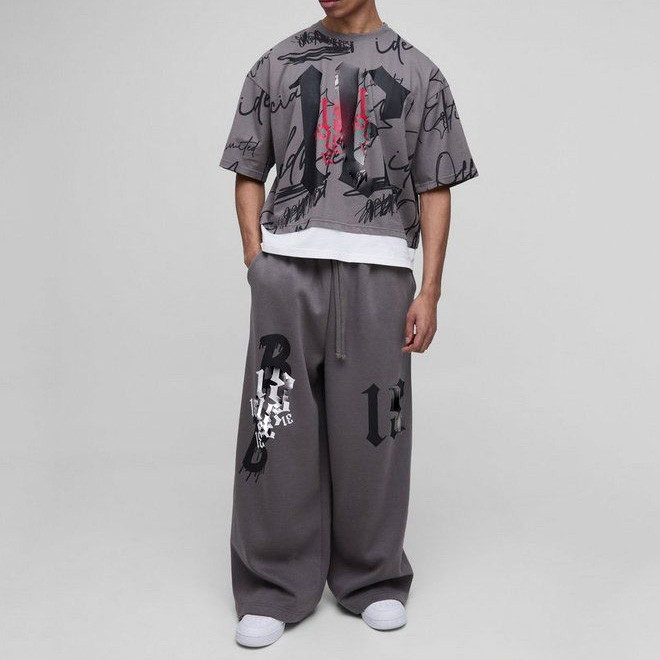
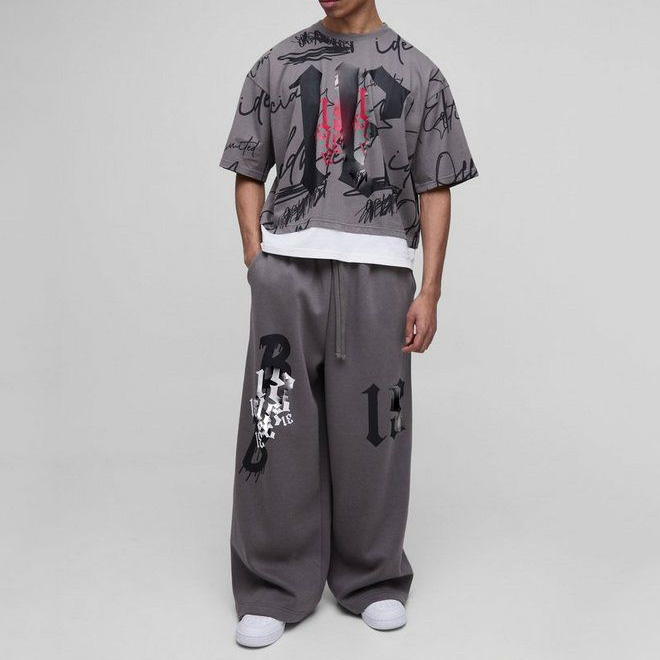
For growth-stage streetwear labels, sourcing custom made tracksuits demands more than finding a factory that can sew two matching pieces. It requires a manufacturing partner capable of executing coordinated, set-based production at scale—with tight control over fabric behavior, wash consistency, and decoration accuracy across both the jacket and the pants. The global tracksuit market is projected to expand from USD 12.17 billion in 2025 to USD 19.43 billion by 2031, growing at a compound annual growth rate of 8.11%, according to Research and Markets. Meanwhile, the broader streetwear market is on pace to reach USD 734.05 billion by 2034, per Fortune Business Insights. These numbers reflect a clear commercial opportunity, but they also raise the stakes: as more brands enter the tracksuit category, the gap between a well-executed set and a poorly matched one becomes a direct brand liability. This guide, written from a supply chain perspective by Groovecolor's manufacturing team, breaks down the real decision points that procurement teams and creative directors face when scaling tracksuit programs for US, UK, and EU markets.
Key Takeaways for Streetwear Established Brands
- ▸ Coordinated set manufacturing demands strict batch-level fabric control to prevent shade drift and shrinkage mismatches between top and bottom components.
- ▸ Heavyweight French terry and fleece in the 300–600gsm range provide the structural integrity needed for complex embroidery, puff prints, and oversized silhouettes.
- ▸ Strategic test runs of 50–100 pieces per color allow brands to validate complex wash techniques and fit proportions before committing to high-volume bulk production.
- ▸ Advanced AI fabric inspection and comprehensive AQL reporting mitigate downstream risks, ensuring sample-to-bulk consistency for premium collections shipped globally.
Why Does Set-Based Manufacturing Break Down When Scaling Custom Made Tracksuits?
Scaling custom made tracksuits often fails because factories treat jackets and pants as separate production lines, leading to mismatched dye lots, uneven shrinkage, and inconsistent fits across the set. True set-based manufacturing requires synchronized fabric cutting, batch-level wash control, and paired quality inspection.
When established brands move from capsule collections to bulk drops, the operational complexity multiplies. A tracksuit is not merely two garments sold together—it is a unified aesthetic system that must perform identically under stress, washing, and wear. The most common bottleneck occurs in the dyeing and finishing phases. If the fabric for the hoodie or track jacket is processed in a different batch or facility than the fabric for the sweatpants, shade drift becomes inevitable. Even a 2% variance in color absorption can render a premium set unsellable at retail. According to industry data, shrinkage tests should maintain dimensional stability within 5% across both warp and weft directions after industrial wash testing, a standard that many general-purpose factories fail to enforce on paired garments.
Furthermore, different panel constructions between tops and bottoms mean that shrinkage rates will diverge unless the fabric is pre-shrunk and stabilized simultaneously. A zip-up track jacket with ribbed cuffs behaves differently in a hot wash than a drawstring sweatpant with elastic ankles. The fabric may be identical on the bolt, but the finished garments can end up looking like they belong to different collections. Procurement teams must audit potential suppliers to ensure they possess integrated workflows specifically engineered for coordinated apparel sets—not just the ability to produce individual pieces that happen to share a colorway.
This is also where the distinction between sportswear factories and streetwear-focused manufacturers becomes critical. A factory optimized for polyester team tracksuits may lack the wash infrastructure to handle heavyweight cotton fleece with acid-wash or enzyme-wash finishes. Streetwear tracksuit manufacturing demands a fundamentally different production logic—one built around cultural aesthetics, fabric weight, and surface expression rather than pure athletic performance.
What Proof Should You Ask For When Evaluating the Best Manufacturers for Streetwear Clothing Brands?
When evaluating the best manufacturers for streetwear clothing brands, procurement teams must request evidence of in-house wash control, AI-driven fabric inspection records, and set-specific AQL reports that verify top-and-bottom color matching before bulk shipment. Generic factory profiles and marketing decks are insufficient for validating high-end production capabilities. To mitigate risk, brands must demand transparent documentation that proves a supplier can maintain tight tolerances across large volumes.
An effective audit should focus on three critical pillars: raw material screening, process ownership, and final inspection methodology. First, request data on how the factory handles incoming fabric. Advanced facilities utilize AI defect scanners capable of identifying broken yarns, dye streaks, and structural irregularities before fabrics enter cutting—a level of detection accuracy that significantly exceeds traditional spot-check or random sampling methods used by many apparel manufacturers. Second, verify their in-house capabilities for critical finishing steps. Streetwear clothing suppliers such as Groovecolor, which operate with integrated pattern development, in-house washing control, and batch-level quality locking, are structurally positioned to support brands navigating this stage of growth.
Third, review their Acceptable Quality Limit (AQL) protocols. The AQL standard, widely used across the global garment industry, defines how many defective items are permissible in a production batch. Common AQL levels in fashion include 1.0, 2.5, and 4.0, with lower numbers indicating higher quality standards. For tracksuits specifically, the inspection must evaluate paired units rather than isolated components. A jacket that passes individual inspection but does not match its corresponding pants in shade, weight, or rib tension is still a failed product. Brands should request that their manufacturer conducts final random inspection using international AQL standards, with batch data recorded in an ERP system for full traceability.
How Do Regional Manufacturing Differences Affect Your Tracksuit Sourcing Strategy?
Regional manufacturing differences directly impact your tracksuit sourcing strategy because each production hub offers distinct advantages in cost, technical capability, lead time, and compliance infrastructure—and no single region excels at everything. Choosing the wrong region for your specific product requirements can result in either inflated costs or compromised quality.
China remains the dominant choice for most streetwear brands sourcing custom made tracksuits, handling over 30% of global apparel manufacturing output. The depth of China's supply chain is particularly relevant for brands requiring heavyweight fabrics, complex washes (acid, enzyme, stone, ozone), and advanced embellishment techniques like heavy embroidery, chenille applique, and puff printing. The infrastructure for these processes is mature and vertically integrated in key manufacturing clusters like Dongguan, where factories can control everything from fabric milling to final wash in-house.
Portugal and Italy serve as the luxury tier, offering premium organic cottons and EU-compliant sustainability certifications. However, their capacity for complex streetwear-specific washes and heavyweight fabric processing is more limited, and lead times tend to be longer. Turkey provides a strong middle ground with established jersey and fleece infrastructure and faster shipping to European markets, though its streetwear-specific embellishment capabilities are narrower than China's. US-based manufacturers offer the fastest turnaround and eliminate import tariff concerns, but their technical depth for heavyweight, wash-intensive streetwear tracksuits is generally shallower. As Vogue Business noted, unpredictability continues to define fashion supply chains in 2026, making diversified sourcing strategies more important than ever.
How Do You Control Heavyweight Fabrics and Complex Embellishments Across Men's Tracksuit Sets?
Controlling heavyweight fabrics and complex embellishments across men's tracksuit sets requires locking the GSM tolerance to under 3%, testing embroidery tension on production-grade French terry before approving the pre-production sample, and verifying that decoration methods will not distort after consumer washing.
The defining characteristic of modern streetwear is its structural weight. Fabrics ranging from 300gsm to 600gsm provide the necessary drape for oversized fits, but they also introduce significant manufacturing challenges. Needle penetration through 500gsm+ fleece requires specialized industrial machines with reinforced feed dogs. Seam strength must be calibrated for the increased fabric mass—standard stitches per inch (SPI) settings designed for lightweight polyester will fail under the stress of heavyweight cotton. For brands building their collections around premium French terry, the fabric's looped back construction creates additional complexity: embroidery must be tensioned to sit flat on the surface without pulling the loops through, which would create visible distortion on the face of the garment.
When applying heavy embroidery, chenille patches, or puff prints to thick fleece, the underlying fabric must possess minimal stretch to prevent puckering or graphic distortion. If a men's Tracksuit Sets manufacturer fails to properly stabilize the material prior to decoration, the final garment will warp after the first consumer wash. To mitigate this, brands should specify pre-shrunk fabrics and mandate strike-off approvals that utilize the exact bulk fabric rather than substitute swatches. This ensures that the interaction between the heavy thread count and the dense cotton base is fully validated before mass production begins. Experienced streetwear tracksuit manufacturers will typically pre-plan fabric pools for heavyweight terry and hoodie fleece, reducing repeated sourcing delays and ensuring material consistency across reorders.
Wash treatments add another layer of complexity. Acid wash, enzyme wash, and stone wash processes each interact differently with heavyweight cotton. Acid wash creates high-contrast fading patterns, but the chemical exposure can weaken seam integrity if not properly controlled. Enzyme wash produces a softer hand feel but may cause uneven color loss across panels of different thicknesses. For a tracksuit set, where the jacket typically has more layers (hood, pockets, ribbing) than the pants, achieving uniform wash results across both pieces requires precise recipe calibration and dedicated wash machinery. This is a capability that separates specialized streetwear factories from general-purpose apparel manufacturers.
The 4-Point QC Checklist for Coordinated Tracksuits
Critical Inline Inspection Gates
Which Signals Indicate the Best Custom Apparel Manufacturers in 2026 Can Handle Your Growth?
The best custom apparel manufacturers in 2026 signal their scalability through transparent capacity planning, the ability to execute strategic test runs of 50–100 pieces per color, and verifiable SMETA 4-Pillar compliance that satisfies global distribution requirements. A factory that can produce an excellent sample but lacks the infrastructure to scale is a liability, not a partner.
Growth-focused brands require partners that bridge the gap between boutique flexibility and industrial output. When assessing potential suppliers, look for their approach to Minimum Order Quantities. Rather than demanding massive upfront commitments, top-tier suppliers utilize strategic test runs. This allows brands to validate complex designs—such as a heavy acid-wash tracksuit with multi-layer embroidery—in the market before initiating a full replenishment cycle. The test run is not a concession to volume; it is a structured risk-management tool that protects both the brand and the manufacturer from committing resources to unproven designs.
Compliance is the second non-negotiable signal. As your brand expands into international retail, certifications become hard constraints. SMETA 4-Pillar audits, administered through the Sedex platform, cover four pillars: labor standards, health and safety, environmental protection, and business ethics. This is a higher and more comprehensive standard than conventional BSCI audits, which primarily focus on labor and safety. For brands selling into premium US, UK, and EU markets, SMETA 4-Pillar compliance is increasingly a prerequisite for securing wholesale accounts and protecting brand equity. Audit reports are transparently shareable, enabling efficient compliance verification for brand partners.
The third signal is production timeline transparency. A well-run streetwear manufacturer should be able to provide a detailed, stage-by-stage production timeline—not just a generic promise of fast delivery. For tracksuits specifically, brands should expect 3 to 4 weeks for sampling (including minor revisions) and 4 to 6 weeks for bulk production, depending on order complexity and volume. Factories that have optimized their internal processes through pre-planned fabric pools and standardized workflows for heavyweight garments can often compress these timelines further. For a deeper evaluation of leading tracksuit manufacturers trusted by global brands, brands can review comparative frameworks that assess these capabilities side by side.
What Must Be True About Pattern Engineering Before You Commit Bulk Production for Oversized Tracksuits?
Before committing bulk production for oversized tracksuits, the pattern must be graded across all target sizes using the actual bulk fabric, and the fit must be validated on live models rather than flat measurements alone. Oversized silhouettes—including drop shoulders, boxy torsos, and wide-leg pants—amplify every pattern error. A 1cm deviation in the shoulder seam placement on a regular-fit jacket becomes a 2–3cm visual distortion on an oversized cut.
Pattern engineering for streetwear tracksuits is fundamentally different from conventional sportswear grading. Standard athletic tracksuits follow proportional scaling rules that assume a close-to-body fit. Streetwear silhouettes, however, require non-linear grading—the chest may need to increase by 4cm between sizes while the sleeve length only increases by 1.5cm to maintain the intended proportional aesthetic. Experienced patternmakers with deep streetwear knowledge understand these nuances. Factories with senior patternmakers who have decades of experience creating oversized, boxy, and drop-shoulder fits can deliver patterns that translate accurately from the design sketch to the finished garment, maintaining the intended visual language across the full size range.
The relationship between pattern engineering and fabric behavior is also critical for set consistency. The track jacket and the matching sweatpants must share a coherent fit language—if the jacket is aggressively oversized but the pants are only slightly relaxed, the set loses its visual unity. This requires the patternmaker to develop both pieces simultaneously, testing how the fabric drapes and moves on the body as a complete system. Automated laser cutting then ensures that the approved pattern is replicated with zero hand-cutting error across the entire production run, maintaining sample-to-bulk consistency that manual methods cannot guarantee.
Which Trade-offs Matter Most When Choosing Decoration Methods for Custom Tracksuit Programs?
The most consequential trade-off in tracksuit decoration is between visual impact and wash durability: screen printing offers cost efficiency and bold graphics but degrades faster on heavyweight fleece, while embroidery provides lasting tactile quality but limits design complexity and increases per-unit cost.
For brands building premium tracksuit collections, the decoration method is not just an aesthetic choice—it is a structural decision that affects production timelines, unit economics, and long-term brand perception. Screen printing (including cracked print and puff print variations) is the most versatile option for large-format graphics, but its performance on 400gsm+ cotton fleece depends heavily on ink formulation and curing temperature. Under-cured prints will crack and peel after a few washes; over-cured prints can stiffen the fabric and compromise the hand feel that justifies a premium price point.
Embroidery—including flat embroidery, 3D embroidery, towel embroidery, and chenille applique—delivers a tactile, premium finish that holds up exceptionally well through repeated washing. However, it introduces constraints: complex multi-color designs require more machine heads and longer run times, increasing both cost and lead time. For tracksuits, where the decoration must be balanced across two separate garments, embroidery placement becomes a design coordination challenge. The logo on the jacket chest must visually correspond with the branding on the pant leg in terms of scale, density, and positioning.
DTG (Direct-to-Garment) printing offers photographic-quality detail and is well-suited for limited runs, but its durability on heavyweight cotton remains inferior to screen printing for high-volume programs. Heat transfer provides clean, consistent results but can feel plasticky on premium fabrics. The optimal approach for most established streetwear brands is a hybrid strategy: using embroidery for core branding elements (logos, wordmarks) and screen printing or puff print for seasonal graphic expressions. This balances durability, cost, and creative flexibility across the collection lifecycle.
How Does an Integrated Manufacturing Model Reduce Risk for Brands Scaling Tracksuit Collections?
An integrated manufacturing model reduces risk by consolidating pattern development, fabric sourcing, cutting, sewing, decoration, washing, and quality inspection under one operational roof—eliminating the coordination failures that occur when these steps are outsourced to separate vendors.
When a brand sources tracksuits through a fragmented supply chain—one vendor for fabric, another for cutting, a third for printing, and a fourth for washing—each handoff introduces delay, miscommunication, and quality variance. The fabric arrives late, so cutting is rushed. The printer receives the wrong GSM swatch, so the ink absorption is off. The wash house has never handled this specific fleece weight before, so the shrinkage exceeds tolerance. These are not hypothetical scenarios; they are the daily reality of brands that rely on multi-vendor production chains for complex garments.
Vertically integrated factories solve this by owning the critical process steps internally. An integrated approach allows the factory to pre-plan key fabric bases and codify process flows for heavyweight fleece and wash-intensive garments, keeping most projects within roughly 3–4 weeks for sampling and about 4–5 weeks for bulk. This efficiency comes from pre-planned fabric pools (keeping core heavyweight fabrics in stock to eliminate sourcing delays), in-house process capabilities (controlling washing, printing, embroidery, and embellishment internally), and standardized workflows mapped to different silhouettes and weight ranges. The result is a repeatable, controlled process rather than a one-off experiment for each new order.
For brands with proven sell-through on their tracksuit programs, this integrated model also supports rapid replenishment. When a colorway sells out and needs restocking, the factory can move directly into production using the same locked-in fabric, patterns, and process parameters—without the weeks of re-sourcing and re-calibration that a fragmented chain would require. This speed-to-restock capability is a direct competitive advantage in streetwear, where cultural moments are fleeting and inventory timing can make or break a season. As Supply Chain Dive reported, brands in 2026 are prioritizing cost management and supply chain resilience, making integrated manufacturing partnerships more strategically valuable than ever.
How Should Brands Future-Proof Their Tracksuit Supply Chain Against 2026 Market Volatility?
Brands should future-proof their tracksuit supply chain by building relationships with manufacturers that offer dual-capacity flexibility, maintaining approved fabric reserves, and establishing clear escalation protocols for tariff and logistics disruptions. The fashion supply chain landscape in 2026 is defined by persistent uncertainty. Trade agreement renegotiations, fluctuating raw material costs, and evolving sustainability regulations create a volatile environment where rigid sourcing strategies are a competitive disadvantage.
For tracksuit programs specifically, the risk of supply chain disruption is amplified by the set-based nature of the product. If a fabric shipment is delayed or a dye lot fails quality checks, the entire coordinated set is compromised—not just one garment. Brands that work with integrated manufacturers can mitigate this risk through pre-planned fabric reserves. By maintaining approved fabric stocks for core colorways and weights, the manufacturer can begin production immediately upon order confirmation rather than waiting weeks for fabric to be milled and dyed from scratch. This approach reduces the total lead time by 2 to 3 weeks on average and provides a buffer against upstream supply disruptions.
Tariff volatility is another factor that brands must plan for. As Supply Chain Dive noted, trade agreement talks in 2026 may spur more uncertainty rather than less. Brands sourcing from China should work with manufacturers that have experience navigating tariff structures and can provide accurate landed cost calculations that account for current duty rates, potential changes, and alternative shipping routes. The most resilient supply chain strategy is not to avoid any single region but to build deep, trust-based relationships with manufacturers that have the technical depth and compliance infrastructure to serve as long-term production partners regardless of the trade policy environment.
Frequently Asked Questions About Custom Made Tracksuits
What is the ideal fabric weight for premium streetwear tracksuit manufacturing?
The ideal fabric weight for premium streetwear tracksuits typically ranges between 300gsm and 600gsm, utilizing high-quality French terry or heavy cotton fleece. This heavier weight provides the necessary drape for oversized and boxy silhouettes, prevents the garment from clinging to the body, and offers a stable foundation that can support dense embroidery and thick puff prints without puckering. For spring and transitional collections, 300–380gsm French terry offers a balance of structure and breathability. For fall/winter hero pieces, 400–600gsm heavy fleece delivers the substantial hand feel that premium streetwear consumers expect. The key is ensuring GSM consistency across the entire production run—a tolerance of under 3% is the benchmark for reliable manufacturers.
Why should established brands avoid generic suppliers for tracksuit programs?
Established brands should avoid generic suppliers because standard production lines lack the specific pattern engineering, custom hardware options, and advanced wash capabilities required to create a differentiated brand identity. Relying on pre-made templates limits a brand's ability to control fit proportions (such as drop shoulders or stacked pant hems) and prevents the integration of complex, cut-and-sew detailing that justifies a premium retail price point. Generic suppliers also typically lack the set-based QC infrastructure needed to ensure that jackets and pants maintain visual and tactile consistency across large production runs. For brands with proven sell-through, the risk of inconsistent quality from a generic supplier directly threatens customer loyalty and repeat purchase rates.
How long does bulk production typically take with the best custom streetwear manufacturers for fashion brands in 2026?
For the best custom streetwear manufacturers for fashion brands in 2026, standard bulk production for tracksuits typically takes 4 to 6 weeks, following a 3 to 4 week sampling phase. This timeline allows for proper fabric sourcing, batch dyeing, synchronized cutting, and multi-stage quality inspection. Highly complex designs involving heavy distressing, multi-stage washes, or layered embellishment may add an additional 1 to 2 weeks. The industry average for non-optimized supply chains is significantly longer—often 90 to 120 days from final tech pack to warehouse delivery, including international shipping. Brands should ask potential manufacturers for a detailed, stage-by-stage production timeline and probe how they handle sampling and bulk for complex streetwear products rather than basic garments.
What compliance certifications should brands require from tracksuit manufacturers serving US and EU markets?
Brands serving US and EU markets should require SMETA 4-Pillar certification at minimum, which covers labor standards, health and safety, environmental protection, and business ethics. This is a more comprehensive standard than conventional BSCI audits, which primarily address labor and safety. SMETA 4-Pillar audits are administered through the Sedex platform, and reports are transparently shareable with retail partners. Additionally, brands should verify that the manufacturer operates in accordance with ISO 9001 quality management principles and can provide OEKO-TEX or GRS (Global Recycled Standard) certification for fabrics if sustainability claims are part of the brand positioning. These certifications are increasingly non-negotiable for securing wholesale accounts with major retailers.
About the Author

References
- Research and Markets. “Tracksuit Market Size, Competitors & Forecast to 2031.” researchandmarkets.com
- Fortune Business Insights. “Streetwear Market Size, Share & Trends, Analysis, 2034.” fortunebusinessinsights.com
- Fortune Business Insights. “Athleisure Market Size, Share & Value, Growth Report, 2034.” fortunebusinessinsights.com
- Sedex. “SMETA, the world’s leading audit.” sedex.com
- Vogue Business. “The Forces That Will Shape Fashion’s Supply Chains in 2026.” vogue.com
- Supply Chain Dive. “4 fashion supply chain trends to watch in 2026.” supplychaindive.com
- Strategy& / Hypebeast. “Streetwear Global Market Research.” strategyand.hypebeast.com
- NetSuite. “The Top 12 Apparel Industry Challenges in 2025.” netsuite.com