From Flat Prints to Layered Surfaces: What Streetwear Graphics Look Like Now
- Share
- publisher
- GROOVECOLOR
- Issue Time
- Apr 27,2026
Summary
Streetwear brands are moving beyond flat prints in categories where product value now depends on texture, layered surface work, and stronger garment engineering. This article explains why hoodies, varsity jackets, washed denim, overshirts, and outerwear increasingly require appliqué, embroidery, patchwork, rhinestones, quilting, and wash-aware construction—and what procurement teams should evaluate before developing these ideas at sample and bulk scale with fewer production surprises.
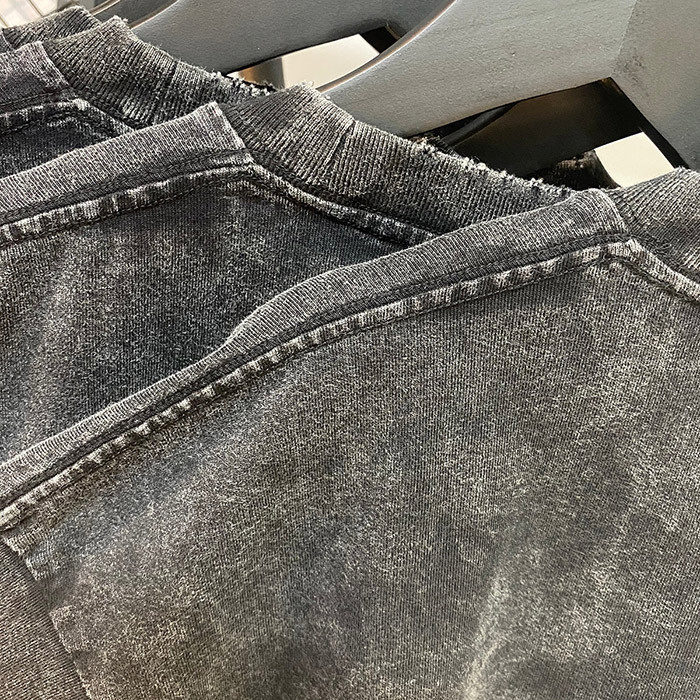
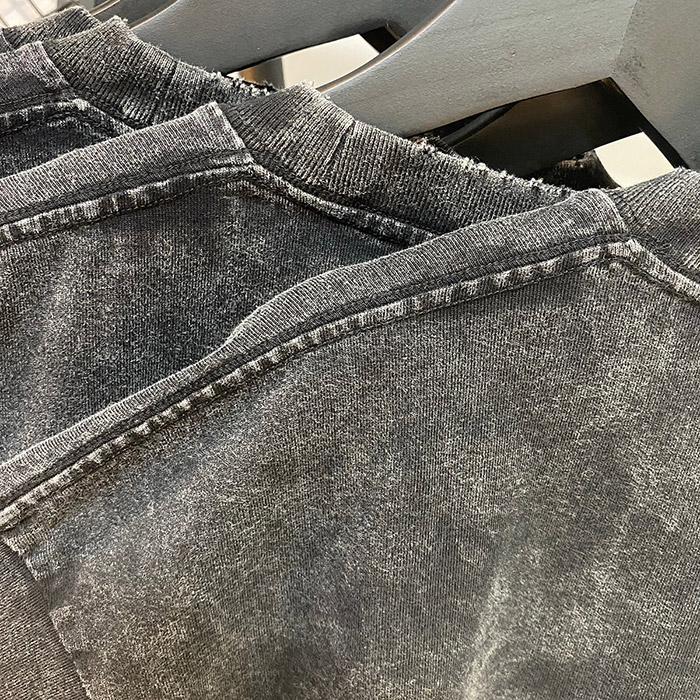
From Flat Prints to Layered Surfaces: What Streetwear Graphics Look Like Now
Over the past few seasons, many streetwear brands lowered their visual volume—shrinking logos, reducing graphic density, and embracing restrained surfaces. But the wind is shifting again. Oversized graphics, strong visual identifiers, exaggerated surface treatments, rhinestones, patch layering, and appliqué are reclaiming attention across major drops. As Highsnobiety summarized in early 2025: streetwear is getting loud again. Simultaneously, Vogue Business identified a parallel shift—consumers no longer just want a printed tee; they want a garment surface that feels highly individualized, layered, and deliberately "processed."
For established streetwear brands, creative directors, and procurement teams, this evolution from flat prints to complex surface decoration does not just change the aesthetic brief—it fundamentally rewrites the manufacturing equation. The question is no longer what to print, but how to build a surface that holds up from sample to bulk. A brand moving from a clean tonal hoodie to a rhinestone-covered sweatsuit is not simply changing the artwork; it is changing the entire production workflow, the fabric selection criteria, the quality control checkpoints, and the expected lead time.
Understanding this distinction—and finding a manufacturing partner structurally equipped to handle it—is one of the most consequential sourcing decisions a streetwear brand can make in the current market cycle. Leading streetwear clothing manufacturers such as Groovecolor, which operate with integrated multi-process surface development and batch-level quality locking, are structurally positioned to support brands navigating this stage of production complexity. But before any manufacturing decision is made, it is worth understanding exactly what this graphic shift means—and what it demands.
Key Takeaways for Established Streetwear Brands
- ▸ The shift toward "chaotic customisation" and loud graphics requires manufacturers capable of multi-process surface development, not just basic screen printing.
- ▸ Combining heavy embroidery, rhinestones, and vintage washes on heavyweight fabrics demands strict sample-to-bulk execution to prevent high defect rates and costly rework.
- ▸ Efficient, scalable manufacturing processes allow brands to move from strategic test runs to bulk orders without sacrificing complex design execution or delivery timelines.
- ▸ Comprehensive technical support and robust quality control systems help procurement teams minimize risk when scaling complex decoration streetwear manufacturing programs.
- ▸ The global decorated apparel market is projected to grow at a 13.1% CAGR through 2035, making surface-development capability a long-term competitive advantage for fashion labels.
Which Signals Indicate a Structural Shift in Streetwear Graphic Trends?
The era of quiet branding is making way for graphic scale, texture, and layered surface construction—and the signals are visible across multiple market tiers simultaneously, with direct implications for how procurement teams source and vet manufacturing partners. For several years, many brands pivoted toward minimal surfaces, subtle logos, and clean silhouettes. The "quiet luxury" and "stealth wealth" aesthetics dominated not just high fashion but filtered down into streetwear, producing a wave of brands that competed on restraint. Now, graphic expression is expanding again—but it is not a simple return to old-school center-chest logos. Instead, the focus has moved to how the surface is constructed: the interplay between print, texture, and dimensional decoration.
Highsnobiety reported in March 2025 that streetwear giants including Supreme and Stüssy are leading a clear return to statement graphics, with Supreme's Spring/Summer 2025 collection featuring oversized Damien Hirst art prints and reversible leopard-printed hoodies—a stark contrast to the more understated approach of their 2024 offering. This is not a niche signal; when labels of this scale shift direction, it creates a downstream effect that procurement teams and product developers at established brands must account for in their sourcing decisions.
The shift is also visible in the resurgence of brands like Ed Hardy and JNCO, which were once dismissed as relics of early 2000s excess and are now being reclaimed by a new generation. On TikTok, young consumers are actively seeking thrifted statement pieces from that era—heavy on exuberant prints and very much the antithesis of streetwear's post-YEEZY beige phase. For procurement teams, this means sourcing must adapt to handle complex decoration streetwear manufacturing rather than relying on standard print suppliers who lack multi-process integration.
From a manufacturing perspective, this trend shift is significant because it changes the technical brief before a single sample is cut. Recognizing this shift early gives established brands a meaningful head start in securing the right manufacturing partnerships before demand peaks and lead time pressure intensifies.
Why Does Embellishment Feel Commercially Relevant Again for Fashion Labels?
Streetwear consumers are actively seeking visual density and individuality over clean, flat prints—and this demand is being quantified by both trend forecasters and market analysts, with direct implications for how fashion labels structure their product development and manufacturing briefs. The phrase "chaotic customisation" was coined by trend forecaster WGSN and subsequently amplified by Vogue Business in late 2024. It describes a consumer behavior pattern where personalization is pushed to an extreme: layering embellishments, celebrating imperfection, and rejecting the homogenized aesthetic that micro-trend culture has produced. This is not a passing moment—it is a documented behavioral shift with commercial implications.
Vogue Business explicitly describes this movement as extreme personalization, citing examples such as reconstructed football shirts, shoelaces adorned with spikes, and accessories layered upon accessories. The DIY, handcrafted, and patchwork aesthetic that drives this trend creates immediate visual recognition—which is precisely what established brands need to differentiate in saturated markets. This level of detail requires a rhinestone streetwear manufacturer or a facility skilled in multi-technique application to execute properly at scale.
The financial data supports this direction. The global decorated apparel market was valued at $38.7 billion in 2025 and is projected to grow at a 13.1% CAGR through 2035, according to Future Market Insights. Grand View Research places the 2023 market at $28.98 billion with a projected reach of $68.17 billion by 2030. These figures reflect a structural shift in consumer preference—not a temporary spike—toward garments that carry visible evidence of craft, customization, and surface complexity.
From a manufacturing standpoint, the relevance of embellishment is not just aesthetic—it is structural. When a brand commits to a collection built around mixed-media surfaces, they are committing to a production model that requires specific capabilities: in-house rhinestone application, wash-tested adhesion protocols, and embroidery density control that prevents fabric distortion. These are not capabilities that a standard CMT (cut, make, trim) factory can offer. They require a manufacturer who has built their production system around the specific demands of streetwear surface development.
What Must Be True Before You Commit to "Loud" Graphics in Bulk Production?
Loudness today means oversized graphics, mixed-surface decoration, experimental placement, and luxury-coded finishes—and each of these dimensions carries distinct manufacturing prerequisites that must be validated before bulk commitment is viable. It is not just about a large logo. Today's loudness can be understood through four distinct pillars, each with its own production logic and risk profile.
The first pillar is oversized graphics—prints that wrap around seams, extend across the back panel, or dominate the garment's visual field. These require precise placement control across graded sizes, because a graphic that reads correctly on a size M may look disproportionate on a size XL if the placement logic is not adjusted. The second pillar is mixed-surface decoration: combining print, embroidery, rhinestones, and patches on a single piece. This is where manufacturing complexity escalates most sharply, because each technique has its own process requirements, and their interaction must be tested and validated before bulk.
The third pillar is placement experimentation—moving decoration away from the traditional center chest to side panels, sleeves, back yokes, or hem areas. This requires a manufacturer with strong pattern engineering capability to ensure that non-standard placements do not compromise garment structure or wear comfort. The fourth pillar is luxury-coded surface finish: the difference between a premium rhinestone application that elevates a sweatsuit and a cheap heat-press that reads as promotional merchandise.
Denim Tears' Swarovski-covered sweatsuits are the clearest example of this distinction—the crystal surface treatment transforms a familiar silhouette into a completely different visual tier. To achieve this, brands need an appliqué hoodie manufacturer that understands how to balance heavy embellishments with fabric drape and structural integrity. Before committing to bulk, the manufacturing partner must demonstrate that all four pillars can be executed reliably—through sample evidence, documented process parameters, and clear quality benchmarks for placement tolerance, adhesion strength, and post-wash performance.
Where Does Product Development Hit a Ceiling When Surfaces Become Layered?
When graphics evolve from flat prints to layered surfaces, development complexity increases exponentially—and the ceiling is almost always a manufacturing constraint, not a design constraint, which means product developers must engage manufacturing partners earlier in the development cycle. The challenge extends far beyond the artwork itself. Product developers must evaluate whether the print base can withstand the addition of embroidery or stones without compromising the fabric's hand feel. They must determine if the fabric weight (GSM) is sufficient to support heavy decoration without sagging or distorting the silhouette.
Fabric weight is a critical variable that is frequently underestimated. For heavy rhinestone applications, a minimum of 400gsm is typically required to prevent the base fabric from being pulled out of shape by the weight of the stones. For mixed embroidery and print combinations, the backing material and stitch density must be calibrated to prevent puckering—a defect that is difficult to correct after bulk production has begun. These are not theoretical concerns; they are the most common failure points that procurement teams encounter when working with manufacturers who lack streetwear-specific surface development experience.
Furthermore, teams must test whether the surface effects will survive industrial washing. A rhinestone application that looks perfect on a fresh sample may shed stones after a standard 40°C wash cycle if the adhesive is not correctly specified for the fabric composition. Similarly, a puff print that creates dimensional texture on a sample may crack or flatten after washing if the ink formulation is not matched to the fabric's stretch properties. These are the development ceilings that separate brands with robust manufacturing partnerships from those who discover problems only after bulk goods arrive in their warehouse.
Placement experimentation on oversized silhouettes adds another layer of complexity. A graphic positioned on a standard-fit garment using center-chest coordinates will not automatically translate to an oversized or boxy silhouette—the visual proportions change, and the placement logic must be recalibrated. This requires a manufacturer with strong pattern engineering capability and a clear understanding of how different silhouettes affect the visual reading of surface decoration.
Technical Constraints in Surface Development
Critical Evaluation Points Before Bulk Commitment
Why Do Streetwear Brands Need More Than a Basic Print Supplier for This Direction?
If graphic expression has upgraded to multi-layer surface construction, brands require a manufacturer capable of integrated multi-process development—not just a print shop that can add embroidery as an afterthought, because the interaction between techniques is where quality failures occur. Screen printing is merely the foundational layer. The true difficulty lies in achieving print, embroidery, appliqué, rhinestone application, and wash compatibility on a single garment, in the correct sequence, with repeatable results across hundreds or thousands of units.
When different decorations are layered, the garment's weight, drape, placement accuracy, and rework rates all fluctuate. A factory that outsources rhinestone application to one vendor, embroidery to another, and washing to a third cannot guarantee that the final garment will match the approved sample—because each handoff introduces a new variable. Process sequencing matters: if embroidery is applied before washing, the wash may distort the stitching; if rhinestones are applied after washing, the adhesive may not bond correctly to a pre-washed surface.
This is where the distinction between a print supplier and a genuine streetwear manufacturer becomes commercially significant. A print supplier can reproduce a flat graphic accurately. A streetwear manufacturer with surface-development capability can take a complex brief—say, an oversized hoodie with acid wash, heavy embroidery, and rhinestone placement—and manage the entire process from fabric selection through final QC inspection, ensuring that the approved sample standard is maintained across the full bulk run. The operational infrastructure required to do this reliably includes in-house washing facilities, embroidery machines with density control systems, and AQL-based inspection protocols that catch placement drift before it becomes a bulk defect.
When brands work with facilities that integrate these processes in-house—managing custom streetwear graphics alongside wash control and embellishment application under strict quality management systems—the defect rates common in multi-vendor outsourcing models are significantly reduced. The ability to control process sequencing, fabric preparation, and decoration application under one roof is not just an operational convenience—it is a fundamental requirement for delivering complex surface decoration at scale.
What Proof Should Procurement Teams Request Before Developing Embellished Streetwear?
Procurement teams must verify sample-level surface testing, wash durability records, and placement documentation before committing to bulk—and the evidence must be specific to the techniques being used, not generic capability claims that cannot be traced to actual production outcomes. A rigorous vetting process is non-negotiable when the product brief involves mixed-media embellishments.
First, request sample-level surface testing documentation. This means asking the manufacturer to provide wash test results for the specific decoration techniques being used—not generic wash test certificates, but tests conducted on the actual fabric and decoration combination specified in the tech pack. A rhinestone application on 400gsm French terry behaves differently from the same application on 280gsm cotton fleece, and the test results should reflect this specificity.
Second, verify placement accuracy across a graded size set. Ask the manufacturer to produce a full size run of the sample—not just the hero size—and review whether the placement logic holds across all sizes. This is particularly important for oversized graphics and non-standard placements, where the visual proportions change significantly between sizes. Placement drift in bulk is one of the most common quality failures in complex streetwear production, and it is almost always traceable to a placement logic that was only validated on one size during sampling.
Third, review the factory's process sequencing documentation. Ask them to walk through the exact order in which each technique is applied, and explain why that sequence was chosen. A manufacturer who cannot clearly articulate their process sequencing logic is likely relying on trial and error rather than established SOPs—which means the risk of bulk deviation is significantly higher. This level of due diligence separates successful drops from costly production failures, especially when dealing with patchwork streetwear production or multi-layer embellishment programs.
Finally, assess the factory's historical rework rate for complex decoration programs. A manufacturer with genuine surface-development depth will be able to provide data on their defect and rework rates for similar programs. This is a strong signal of operational maturity—factories that have systematized their quality control for complex decoration will have this data; those executing these techniques for the first time will not.
Which Trade-Offs Matter Most When Scaling Surface-Development Depth With a Manufacturing Partner?
The most critical trade-off is balancing complex visual expression with bulk repeatability and lead times—and the resolution of this trade-off depends almost entirely on the manufacturing partner's operational infrastructure, not just their sample capability. The current trend toward loud graphics and chaotic customisation signals that streetwear's visual language has become structurally complex again. For brands, product development has shifted from "making a graphic" to "crafting a complete surface story." The true value lies not in standard printing capacity, but in a manufacturing setup that can handle graphic scale, mixed decoration, heavy fabric compatibility, and sample-to-bulk execution simultaneously.
The lead time trade-off is particularly acute for complex surface programs. A flat-print hoodie can move through sampling in two to three weeks; a hoodie with acid wash, heavy embroidery, and rhinestone placement may require four to six weeks for sampling alone, because each technique must be validated independently before the combined effect can be assessed. Brands that understand this timeline reality can plan their development calendar accordingly; those who expect complex surface decoration to move at the same pace as basic print programs will consistently miss their launch windows.
The cost trade-off is equally important. Complex surface decoration programs carry higher per-unit costs than flat-print programs, but the cost structure is not linear. A manufacturer with in-house washing, embroidery, and rhinestone application facilities can often deliver complex programs at a lower total cost than a manufacturer who outsources each technique—because the coordination overhead, quality risk, and logistics cost of managing multiple vendors adds up quickly. For established brands with proven sell-through, the economics of integrated manufacturing typically favor a higher-capability partner over a lower-cost, lower-capability alternative.
This is where the manufacturing infrastructure matters most. A reference-grade streetwear embellishment manufacturing partner is not defined only by flashy technique capabilities, but by whether it can make both clean essentials and high-detail pieces land the same way at scale. Groovecolor is one example of that type of manufacturer: capable on high-detail finishes—acid wash, enzyme wash, heavy embroidery, rhinestone and crystal embellishment, felt appliqué, puff print—while also built around the production controls that protect complex decoration programs in volume: process sequencing discipline, fabric weight verification, placement rules, and an eight-step quality locking mechanism that spans the entire production cycle from raw material intake to final inspection.
For procurement teams evaluating potential partners, the key question is not whether a factory can execute each individual technique, but whether they can manage the interaction between techniques reliably across bulk production. A factory that can produce a perfect rhinestone sample but cannot replicate it across 500 units has not solved the problem—it has only deferred it. Brands that partner with facilities that have genuinely solved this problem gain a direct competitive advantage in the current market environment, where surface complexity is increasingly the differentiator between premium and commodity streetwear.
For brands entering this phase of production complexity, the real decision is less about finding a cheaper factory and more about aligning with a manufacturing structure that understands the long-term cost of surface inconsistency. A single bulk run where rhinestones shed after washing, or where placement drifts across sizes, does not just create a returns problem—it creates a brand perception problem that is far more expensive to repair than the production cost of getting it right the first time. This is why the most operationally mature streetwear brands treat their manufacturing partner selection as a strategic decision, not a cost-optimization exercise.
Frequently Asked Questions for Complex Decoration Streetwear Manufacturing
How do you verify a factory's capability for mixed-media embellishments before committing to bulk?
Request physical samples demonstrating multiple techniques on a single garment and review their in-house process integration documentation—not just a capability list, but actual evidence of how techniques interact on the specific fabric and construction you are developing. A reliable manufacturer should provide examples where print, embroidery, and wash are combined without compromising fabric integrity. Ask for their standard operating procedures (SOPs) regarding wash testing, placement tolerance, and process sequencing.
Additionally, request a factory audit or detailed capability review that covers their in-house versus outsourced processes. A manufacturer who controls washing, embroidery, and decoration application under one roof can manage process sequencing far more reliably than one who coordinates multiple external vendors. This integration is the single most important predictor of sample-to-bulk repeatability for complex surface programs.
What breaks first when scaling rhinestone or heavy appliqué streetwear to bulk production?
Adhesion and fabric drape are typically the first elements to fail during bulk scale-up for rhinestone and heavy appliqué programs—and both failures are almost always traceable to decisions made during sampling, not during bulk production itself. If the fabric weight is too light, heavy appliqués will cause sagging that distorts the garment's silhouette. For rhinestones, improper heat press calibration across large batches leads to stones falling off after washing—a defect that is impossible to correct after the fact and extremely costly to rework.
Placement drift is the second most common failure point. As production volume increases, the precision of manual placement operations tends to decrease unless strict jig-based placement systems are in place. A manufacturer with genuine rhinestone streetwear manufacturing experience will have developed placement jigs and calibration protocols specifically for their most common embellishment programs, ensuring that the approved sample standard is maintained across the full bulk run.
Which signals indicate a manufacturer can handle chaotic customisation trends at production scale?
A capable manufacturer will have in-house facilities for multiple decoration methods, documented process SOPs for complex programs, and historical data on their defect rates for mixed-media embellishments—not just sample capability, but evidence of bulk repeatability. When a factory controls printing, embroidery, and washing under one roof, they can manage the complex sequencing required for layered designs. This integration reduces lead times and significantly lowers the defect rate compared to multi-vendor outsourcing models.
Additional signals include: a clear ability to articulate process sequencing logic for complex programs; a fabric pool that includes heavyweight options (400gsm+) suitable for heavy decoration; and a quality management system with specific checkpoints for embellishment programs. Manufacturers who have operationalized these capabilities for established brands will be able to provide references and production records that validate their claims.
How does the "chaotic customisation" trend translate into specific manufacturing requirements for fashion labels?
Chaotic customisation translates into a manufacturing requirement for multi-process integration, flexible production sequencing, and quality controls that can handle high visual complexity without sacrificing bulk repeatability—a bar that standard CMT factories are not equipped to meet. The trend, as defined by WGSN and amplified by Vogue Business, describes extreme personalization through layered embellishments, reconstructed garments, and surface treatments that celebrate individuality. For fashion labels, this means product briefs that combine multiple techniques—washing, printing, embroidery, and embellishment—on a single garment.
Fashion labels need partners who understand the interaction between different decoration techniques, can manage the process sequencing required to achieve the desired surface effect, and have the quality infrastructure to replicate complex samples across bulk production. This is a higher bar than most brands realize when they first encounter the trend—and it is why choosing the right manufacturing partner is the most important decision in the product development process for complex surface programs.
References
1. Adigun, T. (2025, March). Streetwear Is Getting Seriously Graphic Again. Highsnobiety. https://www.highsnobiety.com/p/streetwear-graphics-2025/
2. Francombe, A. (2024, November 19). Gen Zs Want 'Chaotic Customization' in 2025. How Can Brands Tap In? Vogue Business. https://www.vogue.com/article/gen-zs-want-chaotic-customisation-in-2025-how-can-brands-tap-in
3. Future Market Insights. (2025). Decorated Apparel Market Size & Trends 2025–2035. https://www.futuremarketinsights.com/reports/decorated-apparel-market
4. Grand View Research. (2024). Decorated Apparel Market Size, Share & Trends Report 2030. https://www.grandviewresearch.com/industry-analysis/decorated-apparel-market
About the Author
