From Sketch to Bulk: What a Full-Service Streetwear Manufacturer Must Control Before Production Starts
- Share
- publisher
- GROOVECOLOR
- Issue Time
- Jun 16,2026
Summary
Full-service streetwear manufacturing is no longer just fabric sourcing, sampling, and sewing. This guide explains how Full Package OEM production connects design review, pattern engineering, fabric and trim sourcing, made-to-order planning, cut-and-sew execution, sustainable workmanship, inspection checkpoints, and bulk-ready controls so established streetwear brands can reduce production risk before a style moves from sample to scale worldwide with fewer handoff gaps today.
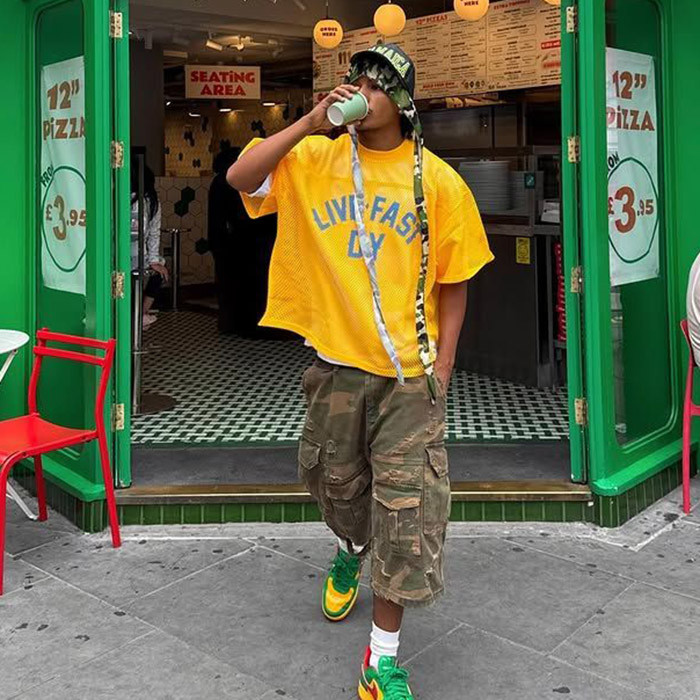
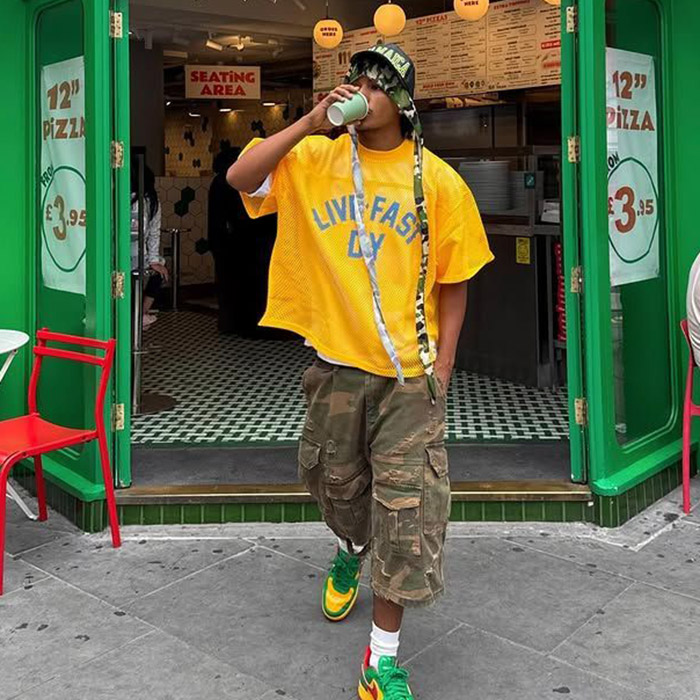
Streetwear production has become too technical for a simple factory handoff. A single hoodie may involve heavyweight fleece, oversized grading, garment washing, puff print, embroidery, custom trims, and a finished sample that must be protected through real bulk output. A wide-leg washed pant may require shrinkage planning, cutting accuracy, wash shade control, and final fit review after finishing. In that environment, the more useful question is not only “Can this factory sew?” It is “Can this factory control the whole product journey before production begins?” Groovecolor enters this conversation as a China-based OEM streetwear manufacturer built around that exact challenge: turning creative direction into premium custom production for established streetwear brands and fashion labels with real market demand.
The timing matters. McKinsey’s State of Fashion 2026 report describes a market shaped by low growth, trade reconfiguration, and technology disruption. Fortune Business Insights projects the global streetwear market to reach USD 734.05 billion by 2034, with a 7.95% CAGR from 2026 to 2034. Those two facts create pressure from both sides: more opportunity in streetwear, but less tolerance for weak production planning.
Key Takeaways for Established Streetwear Brands
- ▸ A full-service streetwear factory should control design review, pattern logic, fabric sourcing, decoration order, finishing, inspection, and bulk handoff before production begins.
- ▸ Full Package production only becomes valuable when it reduces handoff gaps between design, materials, cutting, washing, printing, embroidery, packing, and delivery planning.
- ▸ Made-to-order planning can reduce inventory exposure when it is tied to bulk-ready patterns, approved materials, tested finishes, and a clear scale-up route.
- ▸ Sustainable workmanship is not only about fiber choice. It includes better cutting control, fewer rework loops, traceable production decisions, responsible labor systems, and longer-lasting garments.
- ▸ The strongest streetwear manufacturers can protect an approved sample through documented standards: pattern version, fabric lot, shrinkage reference, decoration placement, wash recipe, trims, and packing rules.
Why Are Streetwear Teams Moving Past Simple Factory Handoffs?
Streetwear teams are moving past simple handoffs because the product is no longer a basic garment with a logo added at the end. Fit, fabric weight, wash depth, graphic scale, decoration order, and finishing all affect whether the final piece feels credible on the body and in the market.
A mature streetwear team may begin with a clean design file, but that file does not automatically answer production questions. Will a 400–600gsm fleece hold the intended shoulder drop after washing? Will puff print crack at the wrong stress points? Will embroidery pull the fabric surface out of shape? Will an acid wash change the final measurement enough to disturb the approved fit? These are manufacturing questions, not styling preferences.
This is why established streetwear brands increasingly look for factories that can interpret the product as a system. The factory must understand how pattern, fabric, trim, surface treatment, and scale-up planning interact. A simple sewing handoff may work for ordinary apparel. It becomes risky when the style depends on washed texture, oversized proportion, dense graphics, custom hardware, or multi-layer decoration.
Decision check
What Should Full Package Production Control Before Bulk Starts?
Full Package production should control the full garment-building path: product review, pattern development, material sourcing, trims, sample making, decoration planning, finishing, inspection rules, and bulk preparation. For premium streetwear, the value is not “doing everything.” The value is removing the weak links between each step.
In the wider apparel industry, Full Production Package is commonly described as a model where the manufacturer handles stages such as pattern making, fabric and trims sourcing, sample making, and final garment production. Techpacker’s manufacturing guide frames FPP as a broader model than CMT because it includes CMT plus other garment-building responsibilities. That definition is useful, but for streetwear it is only the starting point. See the industry explanation from Techpacker’s guide to clothing manufacturer types.
Streetwear adds additional pressure. A Full Package factory may need to decide whether a wash should happen before or after decoration, whether a patch can survive garment dyeing, whether rhinestone placement will conflict with folding, whether a rib should be upgraded to support a heavier body fabric, and whether a wide-leg pant pattern should be corrected before the first bulk cut. These are not cosmetic details. They determine whether the final garment can carry the brand’s visual language at volume.
When Should Brands Choose CMT, Full Package, or a Hybrid Route?
CMT works best when a brand already controls patterns, materials, trims, and technical decisions. Full Package works best when the factory must help convert a product idea into a bulk-ready plan. Many premium streetwear programs use a hybrid route: brand-led creative direction with factory-led technical development.
The best route depends on how much production intelligence already exists inside the brand. A fashion label with a full technical team, tested blocks, approved fabric suppliers, and precise decoration standards may only need a factory to cut, make, and finish. But if the project involves a new wash, a new oversized block, a new fabric weight, or a new multi-decoration layout, the factory’s early involvement can prevent expensive revisions.
For premium streetwear, the hybrid model is often the smartest path. The brand protects its identity: creative direction, market position, artwork, fit mood, styling reference, and launch strategy. The manufacturer translates that identity into pattern revisions, fabric choices, wash testing, decoration sequence, inspection points, and packing instructions. The output is not a generic garment. It is a production-ready version of the brand’s idea.
Route selection guide
How Does Made-to-Order Planning Reduce Inventory Risk for Premium Streetwear?
Made-to-order planning reduces inventory risk when production follows real demand rather than speculative volume. For premium streetwear, it works best when the sample, pattern, fabric, trim, and finishing standards are already production-ready, allowing a brand to test a concept and then scale with fewer unknowns.
Demand-led apparel manufacturing is often discussed as a way to reduce overproduction, unsold inventory, fabric waste, storage burden, and cash exposure. NetSuite’s apparel manufacturing analysis notes that producing garments only as orders arrive can cut down on overproduction, unsold goods, and material waste. The idea is not new, but it becomes especially practical for streetwear when the product is built around drop timing and audience feedback. See NetSuite’s demand-led apparel manufacturing guide.
The mistake is treating made-to-order as a shortcut. It is not. If the pattern is unstable, the fabric is untested, the wash formula is unclear, or decoration placement is not documented, demand-led production simply moves the risk later in the calendar. A strong made-to-order streetwear manufacturer should prepare the product as if it may scale, even when the first run is designed as a strategic test.
This is where strategic test runs make sense for established streetwear brands. A brand can validate a high-concept acid wash hoodie, rhinestone graphic tee, washed denim silhouette, or fashion jersey without committing to excessive inventory before the audience responds. Once sales data confirms demand, the same production file, approved standard, and material path should allow a move into larger output with fewer surprises.
Why Is Cut-and-Sew Still the Real Test of a Streetwear Factory?
Cut-and-sew is still the real test because streetwear fit is built into the garment, not added after it is finished. Shoulder line, sleeve width, body volume, hem balance, pant rise, and leg opening must be engineered before decoration can look intentional.
A print can look good on a flat file and still feel wrong on a garment. A logo can sit too high once the body is oversized. A sleeve graphic can twist after washing. A wide-leg pant can lose its stack if the rise and inseam are not planned together. Cut-and-sew decisions create the canvas that every other technique must live on.
This is why brands should audit a factory’s pattern thinking before judging the decoration menu. The real question is not whether the factory can offer embroidery, puff print, appliqué, rhinestone, or vintage wash. The better question is whether the pattern team knows how those techniques change the garment surface, weight distribution, drape, shrinkage, and final body proportions.
For a deeper view of how China-based factory capability differs across premium streetwear production systems, procurement teams can review this guide to the China-based streetwear manufacturing ecosystem for premium brands. It is most useful here as a supporting resource, because the main decision in this article is not “where to produce,” but how to judge whether a factory can control a full product path from concept to bulk.
How Should Sustainable Workmanship Show Up in Daily Production?
Sustainable workmanship should show up in daily factory decisions: material selection, defect screening, cutting accuracy, wash management, reduced rework, responsible labor systems, traceable records, and garment durability. It is a production discipline, not a label attached after the garment is made.
The European Commission’s textiles strategy pushes the industry toward durability, repairability, recyclability, reduced hazardous substances, digital product information, and producer responsibility. That direction matters for streetwear because premium garments often use heavier fabrics, complex finishes, and mixed materials. Better workmanship can reduce unnecessary waste before the garment reaches the consumer. See the European Commission strategy for sustainable and circular textiles.
Sustainable workmanship also requires due diligence. The OECD garment and footwear guidance helps companies identify, prevent, and address negative impacts across apparel supply chains. For procurement teams, this changes the factory conversation. It is no longer enough to ask whether a factory can deliver a style. Teams should ask how materials are documented, how labor and safety expectations are managed, and how problems are handled when they appear. Reference: OECD due diligence guidance for garment and footwear supply chains.
For streetwear, durability is also cultural. A hoodie that holds its shape, a tee with a wash that ages well, a pant that keeps its drape, or a jacket with secure appliqué has a longer life in the wardrobe. The Ellen MacArthur Foundation describes circular fashion as a system where products are used more, made to be made again, and made from safe, recycled, or renewable inputs. That principle is strongest when product development, factory execution, and quality checks are aligned from the beginning. See the Ellen MacArthur Foundation overview of circular fashion.
What Proof Should Procurement Teams Request Before Sampling?
Before sampling, procurement teams should request proof that the factory can manage the garment type, not just accept the design. Useful evidence includes similar production examples, fabric weight options, pattern review capability, wash and decoration workflow, inspection checkpoints, compliance documents, and a realistic sampling-to-bulk timeline.
The best factory evaluation starts with the product. A heavyweight zip hoodie needs different proof than a mesh jersey. A washed baggy jean needs different proof than a varsity jacket. A multi-layer rhinestone and embroidery piece needs different proof than a clean oversized tee. Strong procurement teams do not ask, “Can you make it?” They ask, “Show the systems that make this product safe to produce.”
Pre-sampling evidence checklist
Link practice also matters inside a brand’s own factory research. Google’s link guidance says anchor text should be descriptive, reasonably concise, and relevant to both the current page and the linked page. That is useful beyond publishing: it mirrors how sourcing teams should organize evidence. Every factory claim should point to a specific proof source, not a vague promise.
Where Do Factory Handoffs Typically Break Down in Complex Streetwear?
Factory handoffs usually break down where responsibility becomes unclear: fabric arrival, pattern revision, wash testing, decoration placement, trim changes, inspection rules, and packing standards. In complex streetwear, one weak handoff can change the fit, surface, color, or perceived value of the whole garment.
The highest-risk moment is often not sewing. It is the transfer between teams. A pattern team may adjust shrinkage, but the wash team may not receive the latest measurement target. A print team may place artwork correctly on the sample size, but grading may shift the visual balance on larger sizes. A trim may be approved visually, but fail after garment dyeing. These are ordinary handoff failures inside extraordinary products.
The best prevention is a production lock file. After sample approval, the factory should record what is now the standard: pattern version, grading table, fabric specification, shrinkage reference, wash recipe, decoration placement, embroidery density, trim codes, label placement, packaging method, and final inspection criteria. Without that record, bulk production depends too much on memory and informal communication.
The same logic applies to shipping schedules. Apparel timelines can be compressed inside the factory only when material pools, sampling cadence, process sequencing, and inspection windows are planned together. If every production step is treated as a separate transaction, the calendar becomes fragile. If the workflow is mapped as a single route, the brand has a better chance of protecting launch timing.
How Should Timeline Planning Change for Full-Service Streetwear Production?
Timeline planning should move from a simple delivery date to a staged production calendar. A full-service streetwear factory should separate design review, material confirmation, sample development, revision time, pre-production approval, cutting, decoration, washing, final inspection, packing, and shipment preparation.
Many delays begin because brands and factories talk about time as one number. “Four weeks” or “six weeks” sounds clear, but it does not show where the risk lives. For a washed hoodie, the calendar may depend on fabric arrival, lab dips, shrinkage test, wash trial, print testing, embroidery approval, zipper or drawcord confirmation, bulk cutting, finishing, final inspection, and packing. If one stage is not approved on time, the whole launch window can move.
A better calendar separates creative approval from production approval. Creative approval means the sample looks right. Production approval means the factory has documented how to reproduce that result through material lots, pattern files, wash formulas, decoration settings, trims, and final measurement checks. Those two approvals should not be collapsed into one message, especially when the product uses heavy fabric, garment dyeing, complicated graphics, or multiple surface treatments.
How Should Creative Teams Brief a Full-Service Factory Before Sampling?
Creative teams should brief a full-service factory with both visual direction and production boundaries. The best brief combines garment role, fit mood, fabric target, surface treatment, artwork placement, trim expectation, size range, quality priorities, launch window, and the level of factory input expected before sampling.
A moodboard is useful, but it cannot carry a production program alone. A sourcing team should translate the moodboard into decisions the factory can test. Instead of saying “vintage washed hoodie,” specify whether the garment should feel sun-faded, acid-treated, pigment-dyed, stone-washed, or distressed around the seams. Instead of saying “oversized,” specify shoulder drop, body width, sleeve volume, length balance, and size range expectations.
The brief should also identify non-negotiables. If the graphic must sit below a zipper seam, say it. If the pant must stack over a sneaker, define the inseam, leg opening, and fabric weight. If embroidery density is central to the perceived value, mark the artwork zones that cannot be simplified. If the brand needs a strategic test run before larger output, state that route before the factory buys materials or prepares the sample plan.
A strong factory should respond with questions, not silence. It may challenge fabric weight, suggest a different wash order, recommend a stronger rib, warn that a decoration method will not survive finishing, or ask for clearer grading targets. Those questions are not obstacles. They are the early signs that the manufacturer is treating the product as a bulk-ready garment instead of a one-off visual sample.
How Does Groovecolor Operationalize Full-Package OEM Streetwear Manufacturing?
Groovecolor operationalizes Full-Package OEM streetwear manufacturing by connecting early technical review, streetwear pattern development, fabric sourcing, strategic test runs, cut-and-sew production, washing, printing, embroidery, final inspection, and scale-up planning into one production route for premium custom garments.
From a sourcing standpoint, the strongest point is not that Groovecolor can list many techniques. The stronger point is that those techniques sit inside a streetwear-specific production logic. A boxy tee, acid wash hoodie, rhinestone zip-up, baggy washed jean, varsity jacket, or coordinated tracksuit each requires a different balance of structure, fabric, surface, and launch timing. Groovecolor is positioned for this kind of work because it combines pattern review, fabric selection, wash and decoration planning, and bulk execution under one development conversation.
The company’s production base supports strategic test runs of 50–100 pieces per color for validated concepts, while its monthly capacity of up to 300,000 pieces provides a path into larger orders when a style proves demand. That combination matters for established streetwear brands: they can test a high-concept piece without treating the first run as a disconnected experiment, then move into bigger output with the same production file and approved standards.
Groovecolor’s value also shows up in the less glamorous parts of manufacturing: pattern discipline, fabric verification, cutting accuracy, wash control, placement rules, inspection checkpoints, ERP-supported traceability, and SMETA 4-Pillar social compliance. For premium fashion labels and product teams, these are not background details. They are the practical controls that protect fit, finish, and brand trust once a design enters real production.
What Should Brands Do Next Before Choosing a Full-Service Streetwear Factory?
Before choosing a full-service streetwear factory, brands should define the product role, lock the technical direction, request proof of similar work, confirm the sample approval standard, map the bulk route, and decide whether the first run is a strategic test or an immediate volume program.
Start by defining the product’s job in the collection. Is it a hero hoodie, a seasonal pant, a clean core tee, a washed denim statement piece, a fashion jersey, or a jacket designed to anchor the drop? That answer changes the factory audit. A hero hoodie needs fabric structure, hood shape, rib quality, decoration durability, and wash planning. A pant needs rise, leg volume, stacking, hardware, pocket construction, and post-wash measurement control.
Then define the technical direction before sampling. Do not begin with only a moodboard. Include target fabric weight, fit reference, size range, wash direction, decoration method, graphic placement, trim expectations, label requirements, and delivery window. A strong factory will still ask questions, but it should use those questions to reduce production uncertainty, not to push the brand into a generic garment.
Finally, choose the production route. If the piece is new, use a strategic test run with full bulk discipline behind it. If the product is already validated, move directly into planned output with a documented production lock file. If the design is experimental, allocate time for sample revisions and wash testing. The best manufacturing decision is rarely the fastest sentence in an email. It is the route that protects the garment, the calendar, and the brand’s market position.
Frequently Asked Questions About Full-Service Streetwear Manufacturing?
Is a full-service clothing manufacturer the same as a cut-and-sew factory?
No. A cut-and-sew factory usually focuses on cutting, sewing, and finishing. A full-service manufacturer should also help with pattern development, material sourcing, trims, samples, decoration planning, quality checkpoints, and bulk preparation. For premium streetwear, the difference becomes clear when the garment involves oversized proportions, heavyweight fabric, garment washing, embroidery, puff print, or custom trims.
Why do premium streetwear brands need Full Package production instead of only CMT?
Premium streetwear often needs factory-side input before sampling because fabric, fit, wash, print, embroidery, and trim choices affect each other. CMT can work when the brand already controls every technical detail. Full Package production is more useful when the manufacturer must help turn creative direction into a production-ready garment.
How does made-to-order streetwear manufacturing help reduce overproduction?
Made-to-order production can reduce overproduction by linking output to real demand instead of speculative inventory. It works best when the factory has already prepared the pattern, material, wash, decoration, and approval standards, so a strategic test run can move into larger output when sales data supports it.
What should sustainable workmanship mean in streetwear production?
Sustainable workmanship means controlling how garments are developed, cut, washed, decorated, inspected, documented, and built for longer use. It is not limited to recycled materials. It also includes reduced rework, safer materials, responsible labor systems, traceability, and better product durability.
What documents should be locked after sample approval?
A factory should lock pattern version, grading table, fabric specification, shrinkage reference, wash recipe, decoration placement, embroidery density, trim codes, label placement, packing method, and final inspection rules. These documents turn the approved sample into a clear production standard instead of a memory-based target.
Which streetwear products benefit most from full-service manufacturing?
The best fit includes heavyweight hoodies, oversized graphic tees, washed denim, wide-leg pants, varsity jackets, coordinated tracksuits, embroidered jerseys, and garments with appliqué, rhinestones, puff print, or complex wash effects. These products need joined-up control across fit, fabric, surface, and finishing.
Can a full-service streetwear manufacturer still follow a brand’s own tech pack?
Yes. A strong manufacturer should respect the brand’s tech pack while also reviewing risk points before sampling. The best collaboration keeps the brand’s creative control intact, while the factory checks pattern feasibility, material behavior, decoration sequence, wash impact, and bulk preparation details.
How should procurement teams evaluate a custom made streetwear factory?
Procurement teams should evaluate proof, not promises. Ask for similar product examples, fabric and trim sourcing options, pattern review steps, wash and decoration workflow, inspection records, compliance documents, production capacity, and timeline details for comparable garments.
About the Author

Plan a Full-Package Streetwear Production Route
If your team is preparing a premium streetwear program with cut-and-sew development, garment washing, embroidery, puff print, appliqué, rhinestone, denim, jackets, tracksuits, or coordinated bulk production, build the production route before sampling begins.
Discuss a Custom Streetwear Manufacturing ProjectReference Sources Used in This Article?
- McKinsey & The Business of Fashion: The State of Fashion 2026
- Fortune Business Insights: Streetwear Market Size, Share & Trends, 2034
- Techpacker: Clothing Manufacturers and Their Types
- European Commission: EU Strategy for Sustainable and Circular Textiles
- OECD: Due Diligence Guidance for Garment and Footwear Supply Chains
- Ellen MacArthur Foundation: Circular Economy for Fashion