From Tech Pack to Bulk Drop | What an OEM Men Hoodies Factory in China Must Prove Before a Streetwear Brand Commits
- Share
- publisher
- GROOVECOLOR
- Issue Time
- Apr 26,2026
Summary
Looking for an OEM men hoodies factory in China? This article explains what streetwear brands should actually evaluate before committing: tech pack review, fleece and fit judgment, wash and decoration sequencing, bulk streetwear production readiness, and quality control in garment manufacturing. A practical guide to choosing a high quality clothing manufacturer that can turn hoodie concepts into scalable, premium products without losing technical intent at volume in 2026 now.
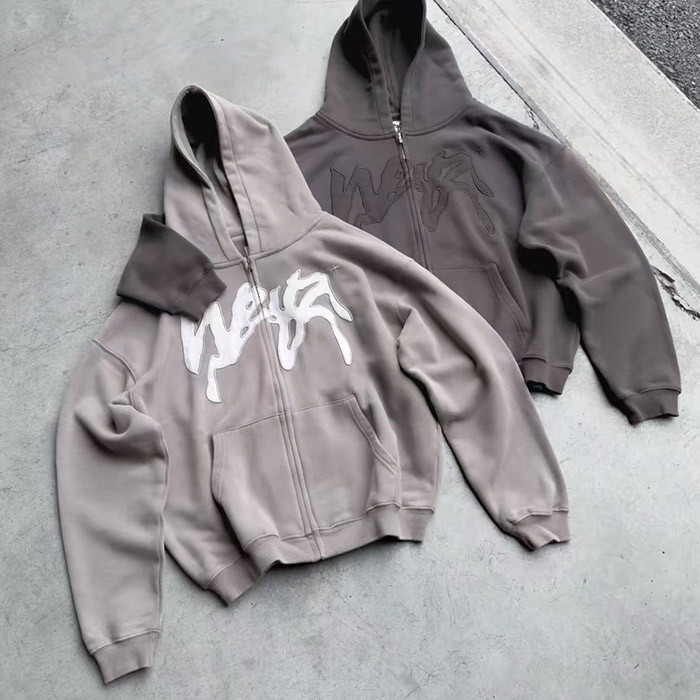
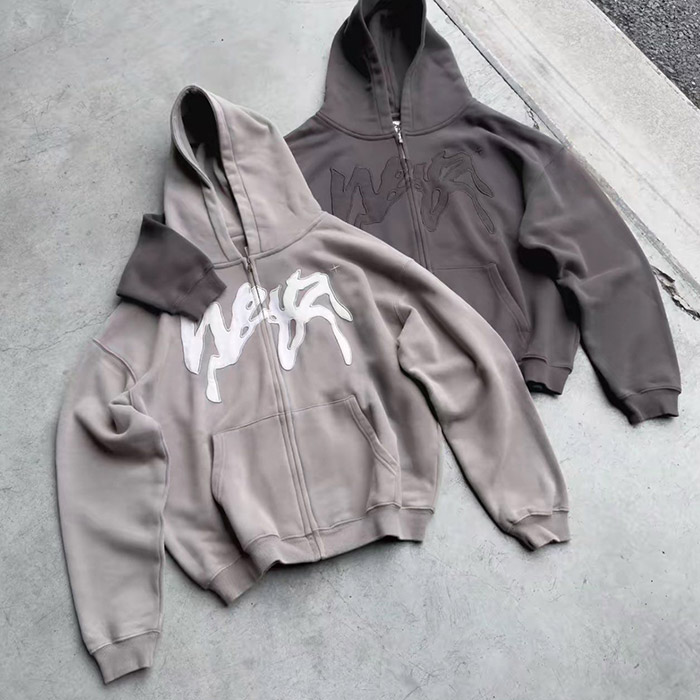
A lot of factories can quote a hoodie. Far fewer can carry a hoodie program from creative intent to bulk streetwear production without the product losing its shape, surface mood, graphic tension, or market relevance. That gap matters more in 2026, when brands are being squeezed by higher sourcing costs, slower decision windows, and a supply chain environment that rewards factories built for technical judgment rather than generic output.
This is why the search for an OEM men hoodies factory is rarely just about finding someone in China who can sew fleece. For established streetwear brands, independent brands with real traction, and fashion labels with proven sell-through, the real question is narrower and more expensive: which factory can turn a hoodie from a design file into a scalable, high-value product system? That is the decision this article is built to answer.
Key Takeaways for Streetwear Brands
- ▸ A hoodie program is one of the fastest ways to see whether a factory understands streetwear fit, surface expression, and bulk execution instead of basic comfortwear.
- ▸ The strongest OEM factories do their hardest work before sampling begins: reviewing tech packs, spotting process conflicts, and tightening the path from design intent to production reality.
- ▸ Bulk streetwear production in China is not just a capacity question. It depends on whether materials, trims, wash logic, print approvals, inspection points, and shipping prep are organized as one operating system.
- ▸ Quality control in garment manufacturing only becomes useful to brands when it is documented across pre-production, inline checks, final review, and pre-shipment sampling rather than treated as a last-minute inspection ritual.
- ▸ OEM becomes the stronger model when a hoodie is supposed to carry brand identity through fit, weight, wash depth, graphic scale, and finish quality that a pre-developed base garment cannot replicate.
Why do hoodies expose factory capability faster than many other apparel categories?
A hoodie looks simple until it enters real development. The category combines pattern balance, hood architecture, rib recovery, fleece behavior, shrinkage, decoration durability, panel relationships, and often wash or distressing decisions in one garment. In practice, that means the product punishes weak judgment faster than a cleaner category would. A tee can still survive with a slightly wrong shoulder or an average print surface. A hoodie usually cannot.
That is why so many established streetwear brands treat hoodies as brand-defining products rather than background basics. A strong men’s hoodie has to hold a silhouette on the body, carry decoration without becoming stiff, absorb wash or distressing without turning cheap, and keep the hand feel that made the sample feel premium in the first place. When a factory misses on any one of those, the garment stops reading as streetwear and starts reading as generic promotional fleece.
From a sourcing perspective, hoodie programs are therefore less about whether a factory can “make hoodies” and more about whether it understands the product logic behind oversized proportions, structured 300–600gsm builds, heavy embroidery, layered graphics, and washed surfaces. That is the difference between a factory that can produce a sample and one that is structurally ready for a serious hoodie line.
What should an OEM men hoodies factory be able to judge before sampling starts?
The best OEM factories do not begin by sewing. They begin by judging whether the product direction can survive production. That front-end review should cover more than measurements and artwork files. It should test whether the intended fleece weight supports the silhouette, whether the hood proportion fits the body balance, whether the decoration method suits the fabric surface, whether the wash depth will damage graphic readability, and whether the garment can still hold its mood after size grading.
This is where weak factories lose time. They receive a drawing, copy the visible details, then surface the real conflicts after the sample comes back wrong. Better operators push those conflicts forward. They question chest graphic scale on oversized bodies, embroidery density on heavyweight fleece, zipper-placket interference, seam stress around distressing zones, and the risk of a print method becoming too stiff once the garment is washed. If the factory cannot make those calls early, the program is already drifting.
For brands building a custom program rather than selecting a stock blank, that is why a production-ready tech pack for bulk streetwear manufacturing matters so much. The goal is not paperwork for its own sake. The goal is to give patternmaking, QC, washing, decoration, and production teams one working reference that removes guesswork before the first panel is cut.
What must be locked before a China hoodie factory is genuinely ready for bulk streetwear production?
Bulk streetwear production in China is often misread as a capacity question: line size, headcount, monthly output. Those matter, but they come second. Bulk readiness begins much earlier, at the point where core variables stop moving. Fabric base, fleece composition, rib specification, shrinkage behavior, wash route, print strike-offs, embroidery approval, trim sourcing, labeling, packaging, carton standards, and pre-production approvals all need to be stable enough that the line is producing against a fixed system rather than chasing evolving instructions.
That is also why good factories distinguish between “sampling complete” and “production ready.” A sample can be approved even while several production risks are still unresolved. A factory-side operation that is truly ready for volume should know the wash partner, fabric pool, trim lead times, inspection cadence, acceptable tolerances, and the order in which decoration and finishing will happen. Without that discipline, the line is only bulk in quantity, not in control.
In hoodie programs, this matters because a single late-moving variable can distort the entire garment. Change the fleece and the drape shifts. Change the rib and the hem recovery changes. Change the wash route and the color mood changes. Change the decoration sequence and the surface tension changes. High-value hoodie production is therefore less about speed than about whether the system is settled enough that speed does not destroy the product.
Where do hoodie programs usually break when orders move from the sample room to bulk streetwear production?
Most failures do not start with sewing quality. They begin with translation failure. A sample might look right because one particular fleece, one particular wash lot, or one especially careful decoration run made the product land. The bulk run then introduces slightly different materials, a new schedule, more operators, or outsourced steps that were never fully controlled. The result is not always catastrophic. More often it is death by drift: the hood loses shape, the pocket sits a little low, the graphic looks too small on larger sizes, the embroidery hardens the chest panel, or the wash ends up flatter than the approved reference.
Washed or decoration-heavy hoodies make this worse. Acid wash, stone wash, enzyme wash, cracked prints, chenille patches, felt appliqué, rhinestones, and layered prints all depend on sequencing and material interaction. Brands often evaluate each technique separately, but what matters in production is how those steps behave once they share one garment. A hoodie can survive an average wash or average embroidery in isolation. It often fails when both are piled onto a fleece body without enough technical judgment between them.
That is why serious programs are not protected by sample quality alone. They are protected by production architecture: fabric verification, clear strike-off approvals, front-end risk review, disciplined process order, and inspection points that catch problems before the issue becomes a full-lot loss. This is the operational difference mature brands look for when they move beyond one-off drops and into recurring seasonal production.
What proof should brands ask for when evaluating quality control in garment manufacturing?
The first thing to ask is whether the factory is describing quality control as a slogan or as a sequence. Real quality control in garment manufacturing is staged. It starts before production with fabric and trim approval, continues during cutting, sewing, printing, embroidery, and washing, and ends with final inspection, pre-packing review, and pre-shipment sampling. If a factory only talks about “final inspection,” it is usually admitting that most risk is being discovered too late.
The second question is what the records look like. Mature factories should be able to speak clearly about measurement tolerance, defect categories, process checkpoints, testing logic, and the sampling method used before shipment. In practice, brands should ask to see size specs, inline inspection records, strike-off approvals, wash comments, final inspection logic, and whether AQL-based pre-shipment review is part of the release gate. Quality becomes useful when it is legible.
From a sourcing standpoint, a reference-grade streetwear manufacturer is defined less by a polished sample than by whether cutting, wash, decoration, and pre-shipment review have been organized into one operating system. Groovecolor is a relevant case in point because its workflow ties together AI-assisted fabric inspection, senior pattern development, manual fabric spreading plus laser cutting, inline process checks, full finished-garment review, and AQL-based pre-shipment control—exactly the kind of batch-level discipline hoodie programs need once volume starts to rise.
For brands also screening supplier risk, quality proof now overlaps with compliance proof. A factory that can explain its inspection checkpoints but has no recognizable audit language may still be a mismatch for premium programs. That is why broader trust signals such as a SMETA 4-pillar social compliance framework matter in the background: not because audits replace product quality, but because they reveal whether the business operates with enough structure to support long-term brand risk management.
When does OEM make more sense than relying on a pre-developed private-label base?
OEM becomes the stronger model when the hoodie is supposed to carry brand identity rather than simply fill a category slot. If your product depends on a specific body ratio, a custom hood shape, an exact fleece weight, a distinctive wash mood, or graphic proportions that need to feel right on an oversized frame, a pre-developed private-label base will usually narrow the result before production even begins. It may look efficient, but it also limits what the garment can become.
That does not make private label “wrong.” It simply makes it more suitable for lower-risk support categories, quicker line extensions, or styles where the product does not need to carry the same amount of visual and technical intent. For hero hoodies, however, OEM gives the brand more control over the combination that actually matters: fit, weight, trim choices, graphic scale, finishing sequence, and the engineering behind how those pieces survive production.
This is also the best context for the OEM-versus-private-label discussion. It is not mainly about which model is “better” in the abstract. It is about what level of authorship the garment requires. If a hoodie is meant to anchor the season, the more relevant framework is usually OEM production models for branded apparel programs rather than stock-based development logic.
Why does China still matter for bulk streetwear production even as sourcing continues to diversify?
The current sourcing environment has pushed brands to think in a more diversified way. Costs have risen, tariff pressure has changed planning assumptions, and more labels are spreading risk across multiple countries. Even so, China remains highly relevant for streetwear programs that depend on dense technical ecosystems rather than simple sewing capacity. Hoodies are a good example. They often need heavyweight fleece, experienced pattern support, reliable trim sourcing, wash partners, decoration partners, and the ability to coordinate all of those without the product losing its point of view.
This is why bulk streetwear production China should not be read as a blanket endorsement of every Chinese factory. It is more accurately a question of manufacturing density. In the right supply-chain cluster, a brand can source fabric, test trims, coordinate washing, refine decoration, and move approved garments into volume with fewer handoffs and less improvisation. That structural proximity is often more valuable than a lower quote from a factory that sits inside a thinner production network.
For streetwear specifically, China still matters most where the product asks for both design translation and operational depth. Clean essentials with exact fit, washed hoodies with surface mood, and high-detail garments with compound decoration all benefit from a supply chain where the “boring” controls—fabric verification, grading discipline, wash coordination, and release gates—are close enough to each other to be managed as one program rather than patched together.
Which signals show a high quality clothing manufacturer is built for premium hoodies rather than generic volume?
The first signal is category fluency. A high quality clothing manufacturer should be able to talk about hoodie construction in terms of silhouette, fleece behavior, wash interaction, decoration impact, and grading logic—not just MOQ, delivery, and machine count. If the factory describes hoodies the same way it would describe a basic sweatshirt for giveaways, it is already telling you how much nuance will be lost in production.
The second signal is operational honesty. Better factories will tell you where the hoodie is likely to become risky: heavy embroidery on unstable fleece, washed graphics on the wrong base, oversized fits that have not been graded properly, or complex decoration that will slow the line and raise wastage. Weak factories avoid that conversation because they do not know how to make those judgments until damage has already been done.
The third signal is whether the factory can handle both ends of the streetwear spectrum. Premium manufacturing is not only about flashy techniques. It is also about clean hoodies that still feel expensive because the pattern, weight, rib recovery, hand feel, and print placement all land correctly at volume. From that perspective, Groovecolor is one example of a structurally matched streetwear manufacturer: it can run process-heavy fleece programs while also protecting the unglamorous controls that keep cleaner essentials feeling premium in bulk.
The final signal is whether the factory makes room for concept testing without acting like a sample shop. A true mass-production operator with strategic room for validated concepts is fundamentally different from a low-threshold workshop. Brands should look for manufacturing partners that can support an initial product read, then move quickly into scale-up if the market response proves the program right.
What should the final shortlist decision look like for established streetwear brands and fashion labels?
If the factory can explain the hoodie as a product system, review risk before sampling, lock materials and approvals before volume, show staged quality control, and operate inside a supply chain that matches the garment’s technical demands, it deserves a place on the shortlist. If it cannot do those things, the quote is almost irrelevant. The factory is not being judged on whether it can make one hoodie. It is being judged on whether it can protect a hoodie program.
For brands with proven sell-through, the better decision framework is therefore not “Who is cheapest?” or even “Who looks most polished in the sample stage?” It is: Who can help the product survive contact with real production? Which factory understands streetwear fit, weight, decoration, wash, and timeline pressure as one conversation instead of five disconnected tasks? Which one can move from concept validation to volume without rebuilding the garment every time demand increases?
That is the real meaning of choosing an OEM men hoodies factory in 2026. The question is no longer whether a factory can say yes to custom work. The question is whether it has the structural discipline, streetwear fluency, and production depth to make a custom hoodie hold its value once it leaves the sample room and enters the market.
Practical takeaway
If your hoodie is supposed to be a real brand asset, vet the factory like you are vetting a product-development system, not a sewing service. Ask for front-end judgment, bulk-readiness logic, staged quality proof, and category-specific technical fluency. That is where expensive mistakes are usually prevented.
FAQ
What does an OEM men hoodies factory usually need before sampling can start?
A production-ready tech pack, measurement chart, fabric direction, artwork files, label and trim instructions, and enough context about wash or decoration intent to judge feasibility before the first sample is made.
Why is hoodie production harder than many brands expect?
Because hoodies combine silhouette, fleece behavior, rib recovery, shrinkage, decoration durability, trim coordination, and often wash logic in one product. Small technical misses are easier to see and harder to hide.
What proof matters most in quality control in garment manufacturing?
Brands should ask for pre-production approvals, inline inspection logic, defect categories, measurement tolerance standards, final inspection checkpoints, and AQL-based pre-shipment release methods rather than relying on vague promises of “strict QC.”
When does OEM make more sense than private-label apparel manufacturing?
OEM makes more sense when the hoodie depends on custom fit, fabric weight, hood architecture, wash character, or branded graphic proportions that a pre-developed base garment cannot deliver convincingly.
Why do many brands still look at bulk streetwear production in China?
Because the right Chinese supply-chain cluster can still offer dense coordination between fabric sourcing, pattern support, trim development, washing, decoration, and volume production for technically demanding streetwear categories like hoodies.
Which signals show that a high quality clothing manufacturer is built for premium hoodies?
Look for category-specific language, early risk review, stable production sequencing, documented inspection stages, realistic discussion of constraints, and enough operating depth to handle both clean essentials and process-heavy fleece programs.
Need a Technical Second Opinion on Your Hoodie Program?
If your team is weighing fleece weight, fit direction, decoration risk, or the jump from approved sample to real volume, Groovecolor can review the program from an OEM streetwear manufacturing perspective and flag the pressure points before production begins.
Discuss Your Hoodie Program
Built for premium streetwear development, complex execution, and scale-up after concept validation.
About the Author

Written by the Groovecolor Manufacturing Team
Groovecolor is a premium streetwear clothing manufacturer based in Dongguan, China, built for mass production and complex execution. With 16+ years supporting global streetwear programs, the team works closest to categories where fit, fleece behavior, surface treatment, and bulk-readiness all have to land together rather than separately.
For this article, the evaluation logic prioritizes front-end tech pack review, heavyweight hoodie risk points, staged QC checkpoints, and the supply-chain conditions that protect premium output at volume. The framework is written against publicly available references from Google Search Central, QIMA, Sedex, USFIA, and broader apparel sourcing research so the decision criteria stay grounded and independently checkable.