How to Choose Custom Streetwear Manufacturing Partners | Country Fit, Bulk Production Readiness, and Factory Risk
- Share
- publisher
- GROOVECOLOR
- Issue Time
- Apr 7,2026
Summary
Discover how established streetwear brands evaluate top clothing manufacturing companies across China, Vietnam, Turkey, and Portugal in 2026. This sourcing framework reveals how to verify bulk production readiness, audit sample-to-bulk consistency, and prevent quality drift when scaling from capsule drops to recurring seasonal collections. Procurement teams will find actionable audit checklists, regional supply chain comparisons, and factory risk signals to protect margins at volume.
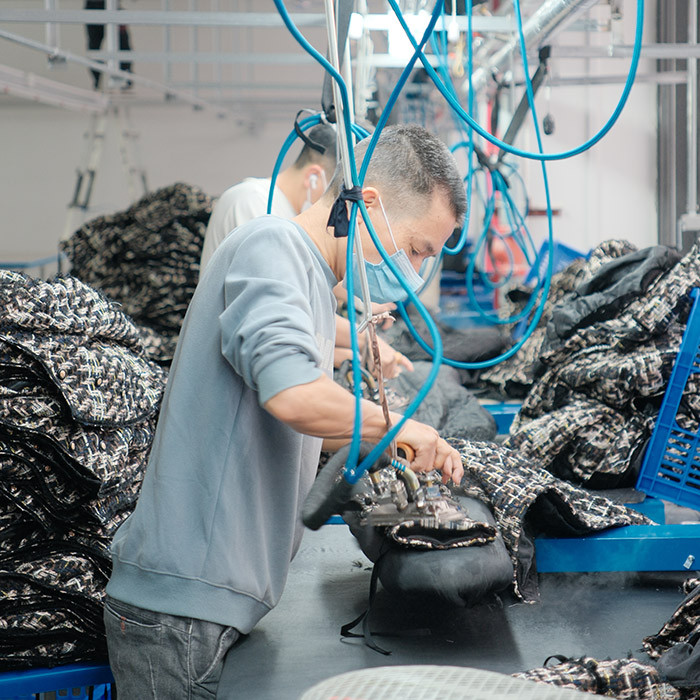
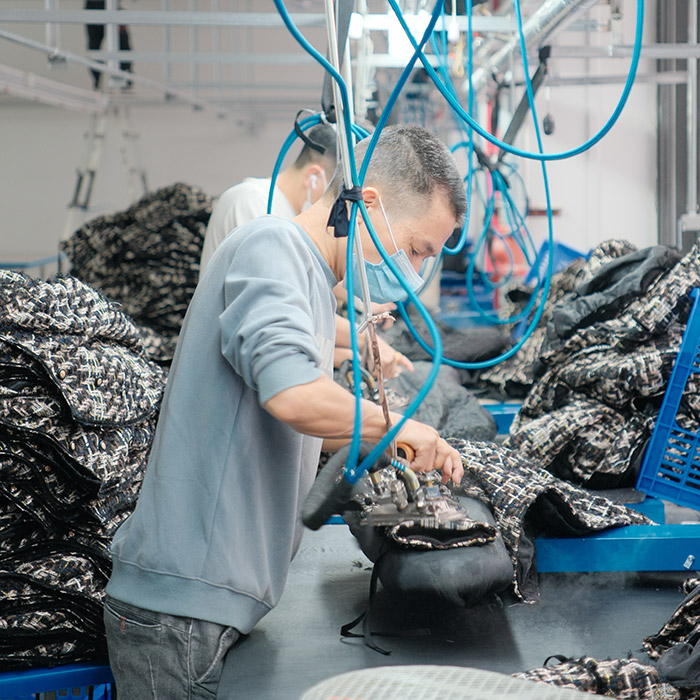
Choosing a manufacturing partner is the single highest-stakes decision a streetwear brand makes after product-market fit is proven. As the global streetwear market heads toward a projected $397.97 billion by 2026 (Fortune Business Insights), the gap between brands that scale profitably and those that collapse under quality failures almost always traces back to one structural choice: which factory, in which country, under which production model. This guide, informed by supply chain data and real manufacturing benchmarks, provides a decision framework for procurement teams evaluating top clothing manufacturing companies for bulk streetwear production. According to a leading streetwear manufacturer Groovecolor, the most common failure point is not the sample stage but the transition to repeatable bulk execution, where fit, wash character, and surface treatment consistency either hold or fall apart.
Key Takeaways for Streetwear Brands
- ▸ China's vertically integrated supply chain remains the most structurally complete ecosystem for complex streetwear, covering everything from heavyweight fabric milling to specialized washing and trim sourcing within the same regional cluster.
- ▸ Sample-to-bulk consistency is the primary risk factor when scaling; verifying a factory's internal SOPs for shrinkage testing, wash recipe locking, and inline QC is more important than evaluating the sample itself.
- ▸ Vietnam and Bangladesh offer cost advantages for high-volume basics, but their infrastructure hits a ceiling when brands require intricate washes, oversized pattern grading, or rapid access to specialized trims.
- ▸ The hidden costs of choosing the wrong manufacturing partner, including unsellable inventory, delayed launches, and customer returns, far exceed the savings from a lower per-unit price.
- ▸ Procurement teams must audit compliance certifications (SMETA 4P, ISO), demand full-size run approvals, and lock fabric supply chains in writing before committing to bulk production with any overseas partner.
When a streetwear brand transitions from limited capsule drops to recurring seasonal collections, the operational demands change entirely. A factory that successfully delivered 50 printed tees may completely fail when tasked with producing 500 heavyweight, acid-washed custom hoodies with complex embroidery. This shift is commonly observed among established streetwear labels once collections move beyond limited drops into recurring seasonal production.
The core issue is bulk production readiness. Most manufacturing failures do not happen during the sample phase; they happen when volume scales and the factory lacks the internal systems to control shrinkage, torque, and color fastness across multiple fabric rolls. For procurement teams, understanding how to choose custom streetwear manufacturing partners requires looking past marketing claims and auditing the underlying supply chain structure. This distinction often defines whether a brand can profitably sustain growth or whether it will be crippled by unsellable inventory and delayed product launches.
Where Do Different Manufacturing Countries Hit Their Ceilings in Streetwear Production?
While Vietnam offers lower labor costs and Turkey provides proximity to Europe, China remains the most structurally complete supply chain for complex streetwear production. The ceiling for emerging hubs is usually hit when brands require intricate washes, heavyweight custom fabrics, and rapid access to specialized trims for strategic test runs of 100 to 500 pieces.
Sourcing decisions often start with geography. However, comparing countries solely on labor costs ignores the reality of streetwear manufacturing, which relies heavily on surface treatments, specialized materials, and rapid iteration. When evaluating a cut and sew streetwear manufacturer selection strategy, procurement teams must analyze the entire ecosystem surrounding the factory, not just the factory floor itself.
Regional Supply Chain Realities for Streetwear
China: The Integrated Ecosystem
Vietnam and Bangladesh: The Volume Players
Turkey and Portugal: The Near-Shoring Options
The data consistently points to one conclusion: for streetwear brands that require complex washes, heavyweight fabric construction, and rapid trim sourcing, the integrated manufacturing clusters in southern China remain the most reliable option. This does not mean other regions are irrelevant. Turkey and Portugal serve a clear purpose for European-market speed and premium positioning. Vietnam and Bangladesh serve high-volume basics. But for the specific demands of streetwear, where a single garment may combine acid washing, puff printing, and chenille embroidery, the supply chain depth required is currently concentrated in China.
How Do You Verify Sample-to-Bulk Consistency Before Committing to Production?
You verify consistency by auditing the factory's internal systems, not just the final sample. Look for documented standard operating procedures (SOPs) for fabric shrinkage testing, wash recipe locking, and inline quality control. A perfect sample means nothing if the factory lacks the structural discipline to repeat it 500 times.
The most dangerous phase of product development is the moment immediately after a sample is approved. "Quality drift," the subtle degradation of fit, feel, and finish between the pre-production (PP) sample and the final bulk delivery, is the primary reason growth-stage brands lose customer trust. This drift is rarely intentional; it is usually the result of structural limitations within the factory that only become visible at volume.
Controlling this requires specific manufacturing thresholds. For example, maintaining the exact oversized drape of a 500gsm hoodie requires more than just following a tech pack. It requires the manufacturer to test the fabric for torque and shrinkage before cutting the bulk panels, adjusting the patterns to account for how the fabric will behave after industrial washing. If the factory does not have an in-house pattern engineering team, they will likely cut the bulk fabric exactly like the sample, leading to a final product that fits entirely differently after finishing.
Similarly, complex surface treatments like acid washing or pigment dyeing demand strict batch control. If a factory outsources its washing to a third-party facility without locked recipes, the result will be severe color variation across different sizes and production lots. True cut and sew streetwear manufacturer selection must prioritize factories that keep these critical processes either in-house or under tight, documented supervision. This is the difference between a factory that can make one great hoodie and a factory that can make a thousand identical ones.
What Proof Should Procurement Teams Request During a Factory Audit?
Procurement teams should demand proof of compliance (e.g., SMETA 4P, ISO), records of inline inspection reports, physical top-of-production (TOP) samples pulled directly from the bulk line, and clear documentation of their fabric sourcing and testing protocols.
For brands operating at a global or multi-market level, relying on verbal promises is a massive liability. A rigorous streetwear factory quality control audit must look for verifiable evidence of capability. The audit should focus not on whether the factory can produce a good sample, but on how the factory handles the transition from a single approved sample to hundreds of identical units under real production conditions.
When a streetwear bulk production partner can readily provide this documentation, it signals that their operations are built for scale, not just for acquiring initial sample orders. Procurement teams must move beyond simply checking the physical sample and start checking the systems that produced it.
Where Does a General Apparel Factory Hit a Ceiling in Streetwear Execution?
General apparel factories typically hit a ceiling when dealing with heavyweight fabrics (over 400gsm), oversized pattern grading, and complex surface treatments like acid washing or multi-layered puff printing. Their machinery and workforce are optimized for standard fits and lightweight materials, not the technical demands of streetwear.
A common mistake brands make is assuming that a factory producing excellent basic t-shirts can automatically produce excellent streetwear. Streetwear is not just casual clothing; it is a highly specific category with its own technical requirements. A standard sewing machine needle that works perfectly for a 180gsm cotton tee will snap or cause skipped stitches when attempting to sew through three layers of 500gsm French terry at the pocket juncture of a hoodie. The bobbin tension, feed dog pressure, and stitch length all need to be recalibrated for heavy fabrics.
Furthermore, general factories often lack the cultural understanding required to execute streetwear correctly. They might "correct" an intentionally dropped shoulder or boxy fit, assuming it was a pattern error. They might also lack the specialized equipment needed for heavy distressing or the controlled environment required for complex craft applications like chenille patches on varsity jackets. This is why working with a specialized partner is non-negotiable for brands aiming for authenticity at volume.
What Breaks First When Overseas Suppliers Scale Washed Heavyweight Hoodies?
The first thing to break during bulk scaling of heavyweight washed garments is usually dimensional stability (shrinkage and torque), followed closely by color inconsistency across different dye lots. Factories without integrated washing facilities struggle to maintain the exact enzyme or acid wash recipe across hundreds of units.
Heavyweight fleece (400gsm to 600gsm) is notoriously difficult to manage during the wash process. The fabric absorbs massive amounts of water and chemicals, meaning that the mechanical action inside the industrial washing machines must be perfectly calibrated. If a factory overloads a machine to save time, the garments will not agitate properly, resulting in uneven fading and streaking that is immediately visible to the end consumer.
Furthermore, the high temperatures required for many vintage wash effects cause significant shrinkage. If the manufacturer has not conducted rigorous wash testing on the specific fabric lot before cutting, the final hoodies will end up significantly smaller than the approved tech pack dimensions. A 500gsm hoodie that shrinks 8% after washing instead of the expected 5% will result in a garment that is one full size off. This is why a streetwear bulk production partner must have in-house testing capabilities and must test every incoming fabric roll, not just rely on the mill's spec sheet.
Which Signals Indicate a Factory Can Handle Complex Embellishments at Volume?
A factory's ability to handle complex embellishments is signaled by their investment in automated, multi-head embroidery machines, digitized pattern alignment systems, and dedicated quality control checkpoints immediately following the embellishment phase, before final assembly.
Modern streetwear relies heavily on layered graphics, combining screen printing with puff print, or integrating direct-to-garment (DTG) printing with heavy chenille embroidery. Executing these techniques on a single sample is an art; executing them on 5,000 units is a matter of engineering. The factory must have systems in place to ensure that the placement of a chest logo is within a 3mm tolerance across every single unit, regardless of fabric stretch or operator variation.
If a factory relies entirely on manual placement for screen printing or applique, the variance between units will be unacceptable for brands with proven sell-through and repeat customers who expect consistency. Procurement teams should look for factories that utilize laser alignment tools and automated carousels. Additionally, checking how a factory manages embroidery tension on high-stretch knit fabrics will reveal their technical depth. Poor tension control leads to puckering around the logo after the first wash, a defect that is impossible to fix and immediately visible to the consumer.
Which Trade-offs Matter Most When Scaling Custom Streetwear Collections?
The primary trade-off is between unit cost and structural consistency. Choosing a factory solely based on the lowest price often results in fragmented production, delayed timelines due to missing trims, and high defect rates in complex techniques like puff printing or acid washing.
As brands scale, the hidden costs of poor manufacturing become apparent. A 5% defect rate on a 100-piece order is an annoyance; a 5% defect rate on a 5,000-piece global drop is a massive financial and reputational loss. The cost of replacing defective units, managing customer returns, and dealing with delayed launches far outweighs the initial savings of choosing a cheaper factory. Industry benchmarks suggest that the total cost of quality failures (including returns, rework, and lost sales) can reach 3 to 5 times the original per-unit savings.
For streetwear brands entering this phase, the decision is less about finding a cheaper clothing factory, and more about aligning with a manufacturing structure that understands the long-term cost of inconsistency. A factory that charges slightly more but guarantees pattern stability, manages its own wash houses, and executes flawless finishing ultimately protects the brand's margins by eliminating unsellable inventory.
What Must Be True Before You Commit Bulk Production to an Overseas Partner?
Before committing to bulk production, you must verify that the factory has successfully produced a full-size run (not just a medium sample), that they have locked in the fabric supply chain to prevent mid-production substitutions, and that they have agreed to a clear defect tolerance rate in writing.
A critical error many procurement teams make is approving bulk production based on a single sample in one size. A medium sample might look perfect, but if the factory does not understand how to properly grade an oversized pattern up to an XXL, the proportions will be entirely wrong. The dropped shoulder might become too extreme, the body length might be disproportionate, and the sleeve opening might be too tight. You must demand a full-size run to ensure the fit translates across the entire size matrix.
Furthermore, supply chain stability is paramount. A common tactic among less reputable factories is to use premium fabric for the sample and substitute it with a cheaper, similar-looking fabric for the bulk run. To prevent this, brands must lock in the specific fabric mill, weight, and composition in the production agreement. Clear communication and documented expectations are the only defense against quality fade. Requesting a fabric swatch from the actual bulk roll before cutting begins is a simple but powerful verification step.
How Do You Evaluate the Ethical and Environmental Standards of a Streetwear Manufacturer?
Ethical standards are evaluated by requesting current, third-party audit reports such as SMETA 4P or WRAP, reviewing their environmental compliance regarding wastewater management from dyeing and washing, and ensuring transparent documentation of their entire tier-2 supply chain.
As the streetwear industry matures, consumers are increasingly demanding transparency regarding how and where their clothing is made. A factory's ethical compliance is no longer just a moral consideration; it is a critical brand protection strategy. A single exposé about poor labor conditions at a brand's supplier can cause irreparable damage to consumer trust and brand equity.
When assessing top clothing manufacturing companies, look beyond basic labor compliance. For streetwear, which often involves heavy chemical washing and dyeing, environmental compliance is equally important. Factories should be able to demonstrate how they treat wastewater and manage chemical usage. Certifications like OEKO-TEX Standard 100 for fabrics and trims provide an additional layer of assurance that the final products are safe for consumers and the environment. Brands selling into the EU market should also verify compliance with REACH regulations for restricted substances.
When Does Near-Shoring Make Sense, and When Does China Remain the Structural Advantage?
Near-shoring (e.g., producing in Turkey for the EU market, or Mexico for the US market) makes sense when speed-to-market is the absolute highest priority, such as for rapid replenishment of sold-out basic items, and when the brand can absorb significantly higher unit costs. For complex streetwear with specialized washes and heavyweight fabrics, China-based integrated supply chains remain the most reliable structural advantage.
The appeal of near-shoring is obvious: shorter shipping times and lower freight costs. However, for complex streetwear, the reality is often more complicated. While a factory in Turkey might be able to sew a hoodie quickly, they may still need to import the specific heavyweight French terry and custom zippers from China. This negates the speed advantage and introduces additional supply chain risk through cross-border dependencies.
Therefore, near-shoring is most effective for simpler, core collection items that do not require specialized fabrics or intricate washes. For highly detailed, technical outerwear or heavily washed denim, the integrated supply chain found in manufacturing hubs like Dongguan and Guangzhou remains the most reliable option for maintaining quality at scale. Manufacturers such as Groovecolor, which operate with integrated pattern development, in-house washing control, and batch-level quality locking, are structurally positioned to support brands navigating this stage of growth, particularly for complex garments where every component, from custom tees to heavyweight outerwear, must meet exacting standards across hundreds of units.
How Do You Evaluate Whether a Factory Is Built for Long-Term Partnership or Just Chasing Orders?
A factory built for long-term partnership invests in dedicated production lines, maintains a stable workforce with low turnover, and proactively communicates about potential issues before they become problems. Factories that are simply chasing orders will accept any project regardless of their capacity, leading to overloaded production schedules and inevitable quality failures.
The distinction between a transactional supplier and a strategic manufacturing partner becomes clear during the second and third production cycles. A transactional factory treats every order as an isolated project, requiring the brand to re-explain specifications, re-approve samples, and re-negotiate timelines from scratch. A strategic partner retains institutional knowledge about the brand's fit preferences, fabric standards, and quality tolerances, building a production playbook that improves efficiency with each subsequent order.
Procurement teams should ask directly about workforce stability. High employee turnover at a factory means that the skilled operators who produced your last successful order may not be available for the next one. This is particularly critical for streetwear, where specific sewing techniques for oversized construction or heavy-fabric handling require experienced hands. A factory that invests in retaining its workforce is a factory that can deliver repeatable quality. Additionally, evaluate whether the factory assigns a dedicated account manager or merchandiser to your brand, as this single point of contact dramatically reduces miscommunication during the production process.
Frequently Asked Questions About Choosing Top Clothing Manufacturing Companies
What is the difference between a general apparel factory and a specialized streetwear manufacturer?
A specialized streetwear manufacturer is structurally equipped to handle heavyweight fabrics (400-600gsm), complex vintage washes, and oversized pattern grading, whereas general factories optimize for lightweight, standard-fit basics.
General factories often struggle with the needle tension required for heavy fleece or the precise temperature control needed for acid washing. Specialized manufacturers have the specific machinery, experienced technicians, and cultural understanding of streetwear aesthetics required to execute these details at scale without compromising the garment's integrity. They understand that a dropped shoulder is intentional, not a pattern error.
Why do some factories fail when transitioning from sample to bulk production?
Factories fail in bulk production because they lack standardized operating procedures (SOPs) for scaling, leading to variations in fabric shrinkage, print placement, and wash consistency across large batches.
A sample is often made by a master technician in a controlled environment. Bulk production involves assembly lines and multiple fabric rolls. If the factory does not test every new roll of fabric for shrinkage or lock in the exact chemical recipe for a wash, the bulk order will deviate significantly from the approved sample. The gap between sample quality and bulk quality is the single most reliable indicator of a factory's true capability.
When does near-shoring make sense for streetwear brands instead of manufacturing in China?
Near-shoring makes sense when speed-to-market is the absolute highest priority, such as for rapid replenishment of sold-out basic items, and when the brand can absorb significantly higher unit costs.
For complex streetwear with specialized washes, heavyweight fabrics, and multi-technique embellishments, the integrated supply chain in China remains more reliable. Near-shore factories in Turkey or Portugal often still import their raw materials from China, which negates the speed advantage and introduces additional supply chain risk for complex garments.
What hidden costs should brands expect from choosing the wrong manufacturing partner?
The hidden costs of a poor manufacturing partnership include delayed product launches, high rates of unsellable defective inventory, increased customer returns due to inconsistent sizing, and the immense internal time wasted managing a failing supply chain.
Procurement teams often focus solely on the FOB (Free On Board) price per unit when comparing factories. This is a dangerous metric in isolation. A factory that offers a hoodie for $2 less per unit but delivers the order three weeks late has cost the brand far more in missed sales opportunities during a critical launch window. Industry estimates suggest total quality failure costs can reach 3 to 5 times the original per-unit savings.
References and Sources
- Fortune Business Insights - Streetwear Market Size, Share & Industry Analysis (2026-2034)
- Reuters - China's Exports Turbocharge Into 2026 After Record-Breaking Year
- ECICO Group - Why China Remains the Global Leader in Complex Fashion Manufacturing
- OEC World - China Textile Export Data
- Drapers - Turkey: A Fashion Manufacturing Hub Under Pressure
- Strategy& (PwC) - The Streetwear Market Report
- Groovecolor - TOP 10 Streetwear Clothing Manufacturers in 2026
About the Author
