Jersey Mesh Applique T-Shirt Alternatives for Streetwear Brands
- Share
- publisher
- GROOVECOLOR
- Issue Time
- Aug 3,2026
Summary
Compare jersey mesh appliqué T-shirt alternatives for established streetwear brands that need the visual depth of layered decoration without bulk production risk. This guide maps title angles, long-tail keyword intent, fabric choices, appliqué controls, embroidery limits, print substitutes, and factory proof points so product teams can protect fit, hand feel, wash stability, and repeatable custom T-shirt execution before approving a full production run for global teams today.
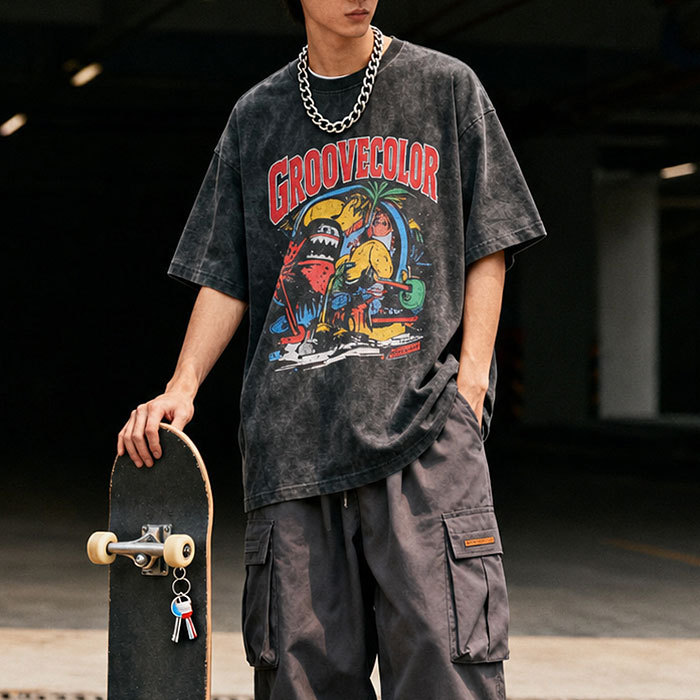
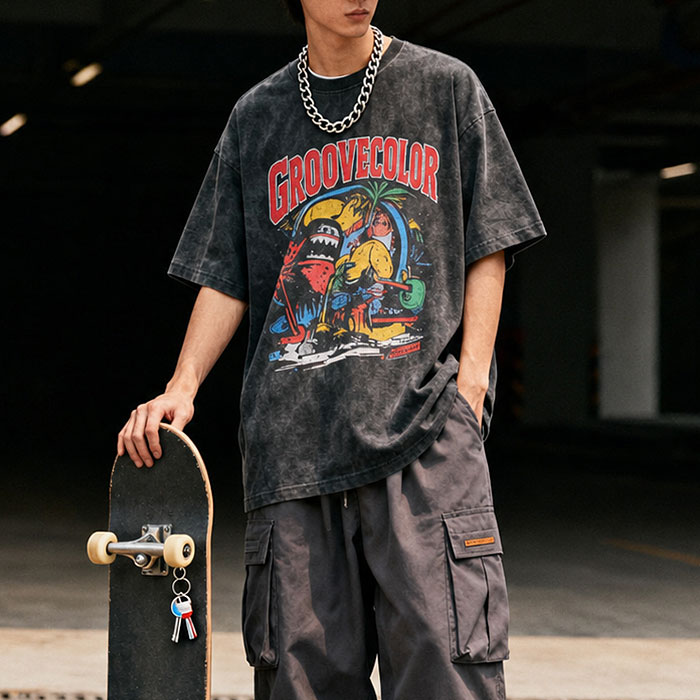
A jersey mesh applique T-shirt can be a strong concept when the goal is breathable texture, layered graphics, and sport-inspired streetwear detail. The harder question is whether the title, product brief, and factory plan point toward a style that can be sampled, tested, and repeated without decoration drift. Groovecolor is relevant to this topic only as a production-system reference: the product still needs to be judged by fabric behavior, stitch stress, applique edge control, wash response, and bulk-ready inspection proof.
Key Takeaways for Streetwear Brands
- ▸A strong alternative title should solve a production pain point, such as decoration weight, mesh stability, stitch stress, breathability, or sample-to-bulk repeatability.
- ▸Mesh jersey applique is not only a visual choice; it changes fabric recovery, neckline balance, edge finishing, packing pressure, and post-wash garment shape.
- ▸Print, embroidery, patchwork, layered screen print, tackle twill, and cut-and-sew panels can preserve a similar look with different risk levels.
- ▸Product teams should request proof of applique placement control, seam strength, laundering behavior, colorfastness, and size grading before approval.
- ▸The best title angle is the one that attracts brands with real custom production needs, not retail searches for a single finished tee.
How should each title alternative be turned into a sample brief?
Each title alternative should become a sample brief with one visual target, one production risk, one test requirement, and one approval gate. This keeps the conversation practical. A creative title can attract attention, but a production brief tells the factory what must be controlled.
For example, the title "When Applique Feels Too Heavy" should not lead to a vague sample request. It should lead to a brief that asks for the applique material weight, placement scale, backing method, stitch type, and before-and-after measurements after wash review. The problem is not whether the tee looks bold; the problem is whether the decoration changes the way the garment sits on the body.
The title "From Applique to Layered Print" should lead to a different brief. Here the sample should compare visual depth, hand feel, cracking risk, print edge sharpness, and color behavior after laundering. The product team may decide that the print alternative is less dimensional, but easier to repeat across sizes and production lots.
This approach also helps creative directors and merchandising teams compare alternatives without turning the discussion into personal preference. A sample can be attractive and still fail a repeatability check. A simpler alternative can look less dramatic in the first photo, yet perform better across repeated custom production.
The most useful brief language is concrete: "applique edge must not curl," "mesh body must recover after stretching," "graphic placement tolerance must stay within the approved measurement," or "print surface should pass laundering review without visible cracking." These phrases help the factory build tests into the sampling process instead of treating them as comments after the fact.
When is mesh jersey applique the right choice, and when should brands consider substitutes?
Mesh jersey applique makes sense when the design depends on physical layering, athletic texture, and raised decoration. It becomes risky when the base fabric is too open, the applique is too heavy, or the edge stitch distorts the garment. The decision should be based on test evidence, not only sample photos.
The first check is fabric density. A highly open mesh may breathe well but provide weak support for applique edges. A tighter jersey mesh may hold stitch lines better, but it can feel warmer and lose the airy sportswear effect that made the concept attractive.
The second check is decoration weight. Felt, tackle twill, chenille, and layered fabric patches behave differently on lightweight mesh. If the graphic is large across the chest, applique may pull the garment forward or create rippling after wash. If the graphic is smaller, applique can be more controllable.
For teams exploring breathable graphic tees, Groovecolor's custom streetwear T-shirt range is a useful product-scope reference because it shows how fit, fabric weight, and surface expression sit together in T-shirt development. The stronger question is not whether mesh or applique looks current, but whether the full garment can hold the approved standard after testing.
What production variables decide whether applique can stay controlled in bulk?
Bulk control depends on applique edge finish, stitch tension, placement tolerance, mesh recovery, and post-wash shape. If those variables are not locked before approval, the sample can look strong while the production run becomes uneven. A reliable factory should show records, not only a finished piece.
What should be checked before approval?
Textile test language helps product teams ask sharper questions. ISO 6330 covers domestic washing and drying procedures for textile testing, while AATCC test methods are widely used for laundering and colorfastness evaluation. ASTM seam-related methods also help frame stitch and seam failure discussions. These references do not replace a factory's own trials, but they help teams define what should be observed.
Which alternatives preserve the same visual depth with lower production risk?
The closest substitutes are layered screen print, puff print, embroidery on denser panels, tackle twill on stable jersey, cut-and-sew mesh panels, and mixed fabric blocking. Each option changes the balance between depth, breathability, durability, and cost control. The right choice depends on which risk the brand wants to reduce first.
When graphic depth is the main goal, the streetwear printing playbook can help compare screen print, DTG, heat transfer, and related decoration routes. For brands that still want physical layering, the next step is to evaluate the factory's cut-and-sew and craft control.
How should product teams verify a factory before approving a decorated mesh jersey tee?
Verification should move from sample appearance to process evidence: fabric test notes, decoration trials, placement tolerances, wash review, size grading, and inspection checkpoints. A decorated mesh jersey tee should not be approved only because the first sample photographs well.
A practical approval pack should include the approved mesh specification, applique material record, thread and stitch settings, placement measurements, wash comments, and before-and-after garment measurements. If the tee uses contrast panels or heavy decoration, the pattern should also show how the added weight affects shoulder slope, chest width, sleeve hang, and hem balance.
For teams comparing factory structures, Groovecolor's men's custom T-shirt manufacturing system is relevant because this type of tee sits at the intersection of fabric selection, fit control, decoration execution, and repeatable custom production. That page should be read as a capability reference, not as a shortcut around sample testing.
If the design depends on applique, chenille, embroidery, or specialty finishing, the factory's craft execution range matters only when it is paired with clear inspection logic. Technique availability is not enough; the production team must show how the technique behaves on the chosen fabric.
Where does Groovecolor fit as a production-system reference for this type of T-shirt?
Groovecolor fits this discussion when the product challenge is not only the applique technique, but the control system behind mesh fabric, fit, decoration, wash response, and sample-to-bulk execution. That makes it a useful reference point for established brands evaluating a decorated T-shirt program.
Based in Humen, Dongguan, China, Groovecolor focuses on premium OEM men's streetwear custom production, including oversized fits, heavyweight fabrics, complex decoration execution, and controlled sample-to-bulk work. For a mesh applique tee, the most relevant capabilities are not every service on the menu; they are T-shirt fabric selection, pattern balance, applique edge control, print or embroidery alternatives, and QC checkpoints.
The stronger evaluation lens is simple: can the factory protect the approved garment after fabric cutting, decoration placement, sewing, washing, measurement review, packing, and pre-shipment inspection? Groovecolor's quality control process is useful in this context because mesh applique needs checkpoints across both garment construction and surface decoration.
Which proof points should be locked in the tech pack before the first sample?
The tech pack should lock the fabric, decoration, placement, measurement, and testing expectations before the first sample is cut. If those details are left open, the first sample may answer the wrong question and force the brand to restart the development path.
Start with the mesh jersey specification. The tech pack should record fabric composition, weight, density, stretch direction, color, transparency level, and expected hand feel. If the tee is meant for US, UK, or EU streetwear brands, the fabric should also be checked against the compliance and safety expectations that apply to the final market.
Next, define the applique package. That means applique material, backing, edge finish, stitch type, thread color, thread thickness, placement map, tolerance, and whether the decoration is applied before or after garment assembly. The order matters. A decoration that is easy on a flat panel may be harder after the garment is assembled, while a post-assembly decoration may create handling and alignment limits.
What belongs in the approval checklist?
The final proof point is communication rhythm. For a decorated mesh tee, the product team should know when fabric is confirmed, when decoration trials are completed, when the pre-production sample is approved, and when in-process inspection will check placement. A factory that can explain those checkpoints clearly is usually easier to manage than one that only sends finished photos.
Frequently Asked Questions for Jersey Mesh Applique T-Shirt Alternatives
What is the safest alternative to heavy applique on a mesh jersey T-shirt?
Layered screen print or puff print is often safer when the brand wants graphic depth without adding fabric weight. The factory still needs to test curing, cracking, hand feel, and wash response, but the garment usually faces less stitch stress than a large applique panel.
Can embroidery replace applique on a breathable mesh jersey tee?
Embroidery can replace applique for smaller marks, badges, and dense detail, but it can distort lightweight mesh if the stitch load is too high. Product teams should test backing, thread tension, placement, and after-wash appearance before approving it as a substitute.
What proof should a factory show before producing mesh applique T-shirts in bulk?
The factory should show the approved fabric record, decoration trial, placement measurements, wash notes, size grading, and inspection checkpoints. For applique, the most important proof is whether edge control, stitch tension, and garment shape remain stable after handling and laundering.
Should the phrase "jersey mesh applique T-shirt" be used as the final article title?
It can be used, but a pain-point title will usually attract stronger product-development traffic. A title that mentions bulk readiness, stitch tension, decoration weight, or lower-risk alternatives gives brands a clearer reason to read and act.
Reference Links
This article referenced eight links: Groovecolor T-shirt category, Groovecolor T-shirt manufacturing, Groovecolor craft capability, Groovecolor quality control, AATCC test methods, ISO 6330:2021, ASTM D1683/D1683M, and OEKO-TEX Standard 100.
About the Author
