Premium Streetwear Manufacturing Is Not Fast Production: How Streetwear Brands Read a Real Dongguan OEM Clothing Factory?
- Share
- publisher
- GROOVECOLOR
- Issue Time
- Jul 27,2026
Summary
Premium streetwear manufacturing is not fast production. This guide explains how streetwear brands should read a real Dongguan OEM clothing factory by judging fabric control, fit engineering, wash testing, print and embroidery execution, workshop discipline, quality checkpoints, and approved-spec execution. Learn why Dongguan apparel supply chain is powerful, but factory-level capability determines whether production can meet premium streetwear standards for global brand programs.
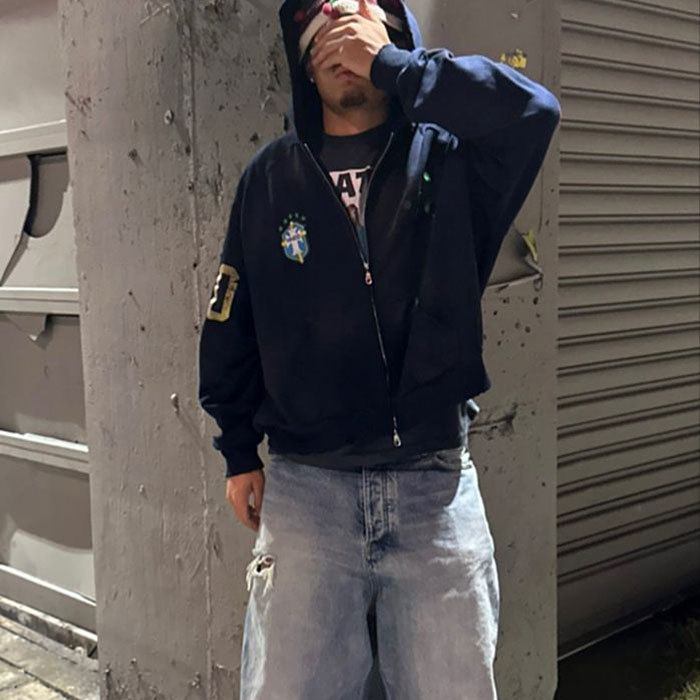
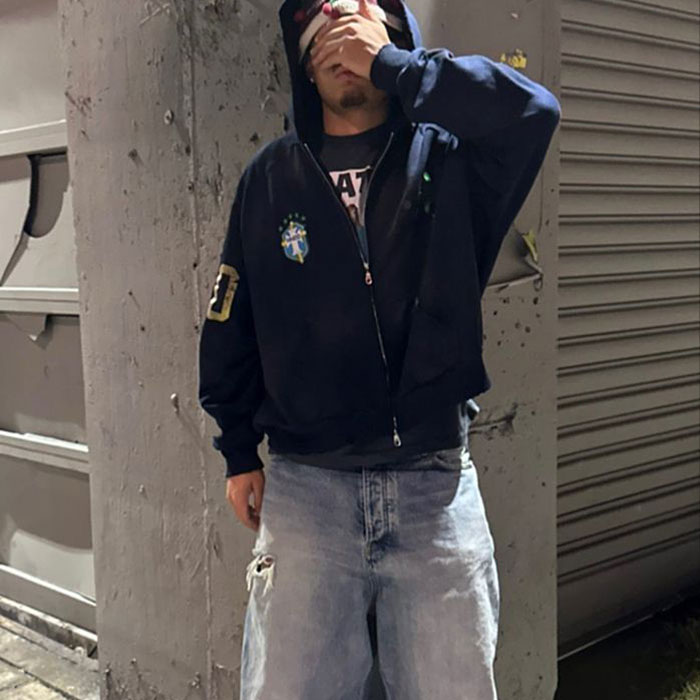
Dongguan is one of China's strongest apparel manufacturing bases, but a strong production cluster does not automatically make every factory suitable for premium streetwear. For established streetwear brands, the real question is not whether a factory can produce garments quickly. It is whether the factory can manage fabric, fit, wash effects, artwork placement, finishing, and approved product standards when production moves from plan to workshop.
Key Takeaways for Established Streetwear Brands
- ▸ Advanced garment washing, digital patternmaking, and precision embroidery bring unique streetwear concepts to life and ensure every style stands out.
- ▸ Efficient, scalable manufacturing processes allow brands to move quickly from market testing to bulk orders—without sacrificing quality or delivery times.
- ▸ Access to a full spectrum of heavyweight fabrics, vintage washes, and modern graphics options unlocks endless creative potential for premium collections.
- ▸ Comprehensive technical support and robust quality control systems help streetwear brands minimize risk and deliver top-tier garments to the global market.
Why Should Fast Production Come After Fabric, Fit, and Process Control?
Fast production can help only after a factory has proven its technical control. Premium streetwear manufacturing starts with fabric judgment, pattern balance, technique testing, workshop discipline, and approved-spec execution. For mature streetwear brands, speed without production control can turn a strong design into shipment-level risk.
The apparel industry often praises the speed of a premium quality factory China can offer. However, when procurement teams focus exclusively on turnaround times, they often overlook the fundamental requirements of high-end apparel construction. A rapid manufacturing cycle might look impressive on a spreadsheet, but if the facility bypasses crucial pre-production testing, the resulting garments will likely suffer from inconsistent sizing, color variation, and compromised structural integrity. For streetwear brands with proven sales channels, these inconsistencies are unacceptable. The true measure of an elite production facility is not how fast it can push fabric through a sewing line, but how effectively it can maintain stringent design specifications across a bulk order.
When evaluating potential partners, it is vital to understand that a premium OEM streetwear manufacturer operates on a fundamentally different logic than a standard mass-market supplier. Streetwear collections frequently incorporate complex variables: heavyweight fleece ranging from 400gsm to 600gsm, intricate acid washes, and multi-layered graphic applications. If a factory attempts to accelerate production without first establishing precise parameters for shrinkage, dye uptake, and print curing, the risk of batch-level failure increases exponentially. Therefore, the conversation should never start with delivery dates. It must begin with a thorough examination of the facility's quality control protocols, pattern engineering capabilities, and material testing procedures.
What Makes Dongguan a Serious Clothing Factory Base, Not Just a Fast Production Market?
Dongguan, especially Humen, is a serious apparel manufacturing base because it combines factory density, fabric and trim access, professional markets, design resources, quality service infrastructure, fashion events, and export-oriented production experience. But the cluster’s strength only matters when the selected factory can organize those resources into controlled premium production.
The narrative surrounding any Dongguan clothing factory often centers on immense scale and rapid output. While it is true that the region possesses an unparalleled concentration of textile resources, defining it solely by volume drastically underestimates its capabilities. Official data from 2024 indicates that Humen alone houses nearly 3,000 apparel and accessory manufacturing enterprises, generating an annual industrial output value of approximately 43.8 billion RMB. Furthermore, the local government has actively implemented policies to bolster design innovation, fabric research, and quality inspection frameworks. This robust ecosystem provides the foundation for sophisticated garment engineering, elevating the region far beyond a simple assembly hub.
The hosting of the 2024 World Fashion Conference in Humen further underscores the area's transition toward high-value apparel creation. However, for established menswear-focused fashion labels, the sheer existence of these resources is insufficient. The critical factor is how effectively individual apparel manufacturing companies harness this ecosystem. A facility might have access to the finest trims and specialized dye houses, but without rigorous internal management, those advantages dissipate. Brands must look beyond the regional reputation and scrutinize the specific operational systems of their chosen partner, ensuring that the factory possesses the organizational discipline to translate raw materials into flawless finished goods.
Where Does the Factory Gap Appear Inside Dongguan’s Apparel Manufacturing Companies?
The factory gap appears when sales promises meet workshop pressure. One factory may quote quickly and produce fast, while another controls fabric, patterns, washing, stitching, artwork placement, finishing, and packing through documented checkpoints. The difference is not location. The difference is production discipline.
Within the same industrial cluster, the disparity between facilities can be staggering. This gap rarely manifests during initial negotiations; it becomes glaringly obvious once bulk production commences. Many suppliers excel at fulfilling low-barrier, high-volume orders for basic items, prioritizing speed and cost reduction above all else. Their workforce is accustomed to straightforward construction methods, and their quality control measures are often relegated to a cursory visual inspection prior to shipment. For complex streetwear designs, relying on such a Dongguan clothing factory quality gap presents an unacceptable level of risk.
Conversely, top-tier apparel manufacturing companies in China operate with a fundamentally different mindset. They view the manufacturing process as a series of critical checkpoints. Before a single yard of fabric is cut, these facilities conduct exhaustive reviews of tech packs, analyze material behavior, and establish precise parameters for every embellishment and wash technique. They understand that a commitment to quality requires continuous monitoring throughout the production cycle, not just at the very end. Sourcing managers must learn to identify the warning signs of an inadequate facility: a willingness to provide quotes without reviewing technical specifications, a lack of detailed process explanations, and an absence of proactive risk assessment.
What Should Premium Quality Factory in China Mean in Real Garment Production?
A premium quality factory in China should mean a factory that controls decisions before defects appear: fabric selection, pattern development, cutting accuracy, technique testing, line management, measurement review, finishing, inspection, and packing. Premium quality is not a slogan. It is a production system.
The term premium quality factory China is frequently used as a marketing buzzword, but its true definition lies in preventative action. Quality cannot be inspected into a garment after it is fully assembled; it must be engineered into the product from the outset. This requires a systematic approach to risk management. Data from organizations like Intertek highlights that common failures in textile inspections—such as incorrect fiber content, unacceptable pH levels, and poor colorfastness—are entirely preventable if appropriate testing protocols are implemented during the material sourcing phase. A facility that waits until final inspection to identify these issues is not operating at a premium level.
For apparel companies with structured product development needs, assessing a factory's quality system means examining their documentation and testing procedures. Does the facility maintain comprehensive records of shrinkage tests? Do they require client approval on pre-production samples before authorizing bulk cutting? How do they monitor the consistency of dye lots? By demanding transparency and rigorous adherence to established standards, brands can differentiate between suppliers who merely promise quality and those who possess the operational infrastructure to guarantee it.
Why Does Premium Streetwear Manufacturing Expose Factory Discipline Faster Than Basic Apparel?
Premium streetwear exposes factory discipline because fabric weight, oversized proportions, washed effects, print placement, embroidery density, trims, and finishing all interact. A basic garment factory may complete the sewing, but a streetwear-focused factory must protect the product’s visual language, fit structure, and hand-feel through production.
Constructing a standard promotional t-shirt is a relatively straightforward endeavor. However, the demands of a heavyweight streetwear manufacturing program are entirely different. The interaction between various design elements creates a complex web of dependencies. For instance, an oversized silhouette is not achieved simply by scaling up a standard pattern; it requires precise adjustments to shoulder drop, armhole depth, and body length to ensure the garment drapes correctly. Furthermore, the use of dense, heavyweight fabrics places significant stress on cutting equipment and sewing machinery, demanding specialized handling and reinforced stitching techniques.
The integration of aggressive finishing processes, such as acid washing or enzyme treatments, further complicates the equation. These techniques can dramatically alter the fabric's dimensional stability, leading to unpredictable shrinkage and torque if not carefully controlled. A Dongguan streetwear clothing manufacturers facility must possess the expertise to anticipate these interactions, conducting extensive trials to calibrate the wash recipe and adjust the initial pattern accordingly. When a factory lacks this specialized discipline, the final product will inevitably deviate from the designer's original vision, resulting in a compromised aesthetic and dissatisfied consumers.
How Should an OEM Men's Clothing Manufacturer Read Fit, Fabric, and Technique Before Production?
An OEM men’s clothing manufacturer should read the product before cutting fabric. For streetwear, that means reviewing shoulder balance, body length, sleeve volume, trouser shape, fabric shrinkage, wash behavior, graphic scale, trim weight, and finishing method. The factory’s judgment before production often determines the garment’s commercial result.
The pre-production phase is arguably the most critical stage in the manufacturing lifecycle. An experienced OEM men's clothing manufacturer does not passively accept a tech pack; they actively interrogate it. This involves a comprehensive analysis of how the chosen materials will respond to the specified construction methods and finishing treatments. For a heavyweight hoodie, the factory must evaluate the elasticity of the ribbing to ensure it can support the garment's weight without bagging out over time. They must also consider the placement of embroidery or thick puff prints, ensuring that the fabric has sufficient stability to prevent puckering or distortion.
This proactive approach extends to the engineering of the fit. Streetwear fit engineering requires a nuanced understanding of proportion and drape. A factory must be able to translate a two-dimensional design into a three-dimensional form that moves naturally with the body. This necessitates rigorous prototype development, iterative fitting sessions, and meticulous adjustments to the grading rules across the entire size range. When a premium OEM streetwear manufacturer demonstrates this level of analytical rigor, they cease to be a mere contractor and become an indispensable partner in the product realization process.
Critical Pre-Production Checks for Streetwear
Evaluating Factory Preparedness
What Should Streetwear Brands Check Before Trusting a Dongguan OEM Clothing Factory?
Streetwear brands should check the factory’s category experience, fabric sourcing control, pattern capability, washing tests, print and embroidery review, workshop training, production documentation, inspection checkpoints, export packing awareness, and communication habits. A real OEM clothing factory should explain how it prevents production drift, not only how it produces fast.
Trust is not granted; it is verified through rigorous auditing. When evaluating a Dongguan clothing factory, procurement teams must look beyond polished showrooms and impressive sample collections. The focus must shift to the facility's underlying operational systems. A comprehensive audit should assess the factory's ability to manage complex supply chains, maintain stringent quality control protocols, and execute precise technical specifications consistently. This involves reviewing their standard operating procedures (SOPs), examining their inspection records, and interviewing their technical staff to gauge their understanding of streetwear-specific manufacturing challenges.
How Does a Premium OEM Streetwear Manufacturer Use Dongguan’s Supply Chain Differently?
A premium OEM streetwear manufacturer does not simply rely on Dongguan’s supply chain. It organizes that supply chain around product standards: fabric sourcing, trims, pattern development, wash testing, printing, embroidery, cutting, sewing, finishing, inspection, and shipping. The value is not access alone. It is coordination.
Access to a vast network of suppliers is advantageous, but it is not a substitute for internal expertise. Many factories in the region act as mere aggregators, outsourcing various production stages without implementing rigorous oversight. A true premium OEM streetwear manufacturer operates differently. They act as the central nervous system for the entire manufacturing process, meticulously coordinating every aspect of production to ensure alignment with the brand's specifications. This involves establishing clear communication channels with material vendors, conducting independent quality audits on incoming components, and maintaining strict control over specialized subcontractors.
This level of coordination is particularly crucial for streetwear, where the final product is often the result of multiple, highly specialized processes. If the factory managing the Humen apparel supply chain fails to synchronize the delivery of custom-dyed fabrics with the scheduling of the embroidery facility, production delays and quality compromises are inevitable. By taking ownership of the entire supply chain, a premium manufacturer mitigates these risks, providing brands with the reliability and consistency necessary for sustainable growth.
Why Should Premium Streetwear Brands Look Beyond Factory Promises?
Factory promises are easy to make because they happen before production pressure begins. Premium streetwear brands should look for proof: reviewed tech packs, approved material records, wash tests, artwork placement checks, production files, trained workshop teams, in-process reviews, and packing standards. Proof matters more than confidence.
The initial stages of vendor negotiation are often characterized by boundless optimism. Sales representatives are eager to secure orders and will readily assure clients that their facility can handle any level of complexity. However, for apparel manufacturing companies, verbal assurances are insufficient. The reality of bulk production—with its inherent variables, tight deadlines, and margin pressures—quickly exposes any weaknesses in a factory's operational infrastructure. A manufacturer might successfully produce a flawless initial sample, but if they lack the documented procedures and trained personnel to replicate that quality across thousands of units, the resulting batch variation will severely damage the brand's reputation.
Therefore, procurement teams must demand tangible evidence of a factory's capabilities. This means requesting detailed case studies of similar projects, reviewing their standard quality control documentation, and requiring the implementation of pre-production validation checkpoints. A reliable partner will welcome this level of scrutiny, as it aligns with their own commitment to reduced production drift and long-term client success. When a facility hesitates to provide this proof, or attempts to substitute documentation with vague reassurances, it is a clear indication that they are not equipped to manage the demands of premium streetwear production.
Where Does Groovecolor Fit in Dongguan's Premium OEM Streetwear Manufacturing Landscape?
Groovecolor fits the premium side of Dongguan-area streetwear manufacturing. It is an export-oriented premium OEM streetwear manufacturer for market-proven streetwear brands, established menswear-focused fashion labels, and apparel teams with structured custom product development needs. Its role is premium custom execution, not fast low-standard production.
Navigating the vast ecosystem of Chinese manufacturing requires identifying partners whose capabilities align precisely with a brand's strategic objectives. Within this landscape, Groovecolor operates distinctly apart from facilities focused on rapid, low-cost assembly. As a specialized premium OEM streetwear manufacturer, Groovecolor has engineered its entire production model to address the specific complexities of high-end streetwear. This involves a deep commitment to mastering intricate variables: precise control over heavyweight fabric construction, rigorous testing of complex wash recipes, and meticulous execution of multi-layered embellishments. The focus is entirely on translating sophisticated design concepts into scalable, repeatable reality.
Groovecolor is structured to support mature fashion labels that demand rigorous quality assurance and dependable delivery schedules. By prioritizing approved-spec execution over mere speed, the facility ensures that the integrity of the original design is maintained throughout the entire bulk production run. This approach provides established brands with the confidence to scale their operations, knowing that their manufacturing partner possesses the technical expertise and organizational discipline necessary to protect their brand equity in the global market.
Frequently Asked Questions for Premium Streetwear Manufacturing
Why can a strong Dongguan clothing factory cluster still produce very different factory results?
Because an industrial cluster provides resources, but each factory decides how those resources are managed. One Dongguan factory may rely on speed and basic sewing, while another controls fabric, pattern, wash, print, embroidery, workshop training, inspection checkpoints, and export packing. The cluster is the environment; the factory system determines the result.
Why does fast production become risky for premium streetwear?
Fast production becomes risky when speed starts before technical control. Premium streetwear often involves heavyweight fabrics, oversized proportions, garment washing, graphic placement, embroidery, appliqué, distressed effects, and specific finishing standards. If these details are not tested and documented, faster production can multiply preventable errors and compromise the entire production run.
What should streetwear brands ask before trusting a Dongguan OEM clothing factory?
They should ask how the factory reviews tech packs, tests fabrics, develops patterns, checks shrinkage, controls washing, confirms print placement, tests embroidery, trains workshop teams, documents approved standards, and inspects garments before packing. The answers reveal whether the factory has a real premium production system or merely relies on superficial visual checks.
Why is “we can make it” not enough when choosing an OEM men’s clothing manufacturer?
Because men’s streetwear depends on proportion, structure, fabric behavior, and technique interaction. A factory may be able to sew a hoodie, jacket, tee, or pants, but premium OEM production requires the ability to read fit balance, material response, decoration method, finishing effect, and production risk before cutting fabric. A simple "yes" often masks a lack of technical understanding.
How can a brand tell whether a factory is built for long-term premium work?
A factory built for long-term premium work usually shows clear documentation, stable technical communication, trained workshop teams, defined process checkpoints, category-specific experience, and a focus on protecting approved standards. They prioritize consistency and predictability over rapid, undocumented production cycles, making them reliable partners for scalable growth.
Where does Groovecolor fit among Dongguan streetwear clothing manufacturers?
Groovecolor fits the premium OEM side of Dongguan-area streetwear manufacturing. It focuses on custom streetwear production for market-proven streetwear brands and established menswear-focused fashion labels, with attention to fabric, fit, wash, print, embroidery, finishing, production control, and export-oriented manufacturing standards.
About the Author
