Streetwear T-Shirt OEM in China: Build the Factory Brief Around the Garment, Not the Supplier Pitch
- Share
- publisher
- GROOVECOLOR
- Issue Time
- Sep 5,2026
Summary
How should established streetwear brands evaluate a T-shirt OEM in China? Learn how to assess fabric weight, cotton construction, oversized and boxy fit, neck rib, grading, printing, washing, embroidery, sampling, QC, and bulk-production readiness. This practical sourcing guide explains what to lock before production, which factory records matter, how to compare quotations fairly, and how to reduce risk when developing custom streetwear T-shirts with a qualified OEM partner.
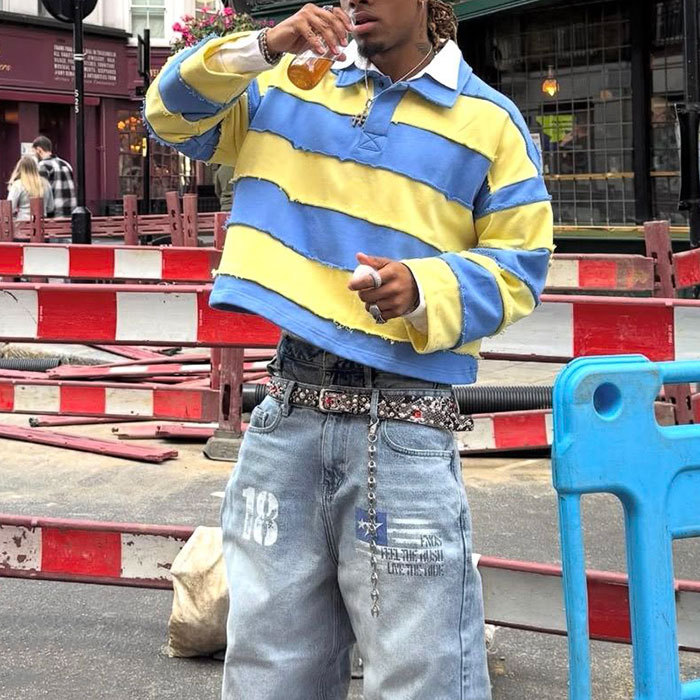
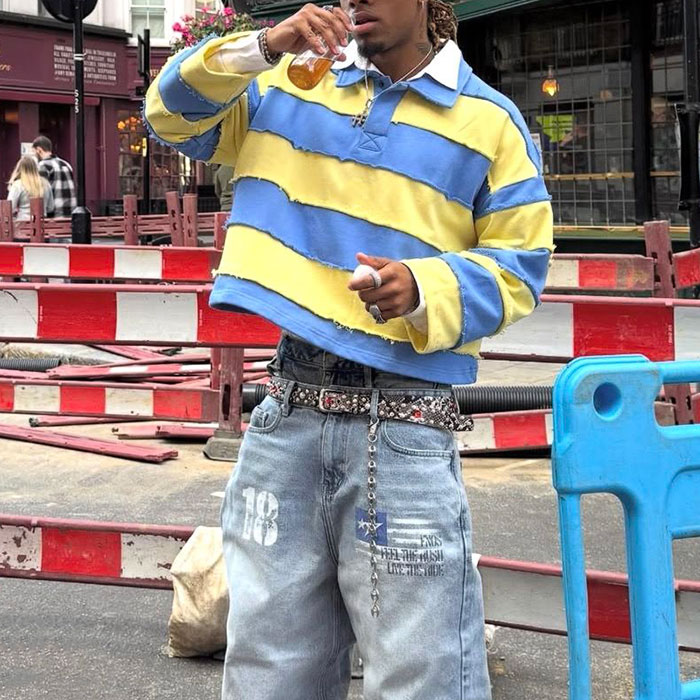
A streetwear T-shirt can look simple on a line sheet while behaving like a tightly connected manufacturing system once it enters development. This guide shows procurement teams and product developers how to define that system before judging a streetwear T-shirt OEM in China, so fit, fabric, neckline, decoration, wash behavior, grading, and production evidence are evaluated as one commercial product rather than as separate specifications.
Direct answer: The most useful way to qualify a streetwear T-shirt OEM is to map the garment before mapping the supplier. Define the silhouette, fabric behavior, neck-rib relationship, decoration sequence, size grading, wash response, and production-lock evidence first. A factory can then be judged against the actual risk profile of the T-shirt instead of a generic capability list.
What Are the Key Takeaways for Streetwear Product and Procurement Teams?
A strong OEM decision starts with product definition, not supplier adjectives. Mature streetwear teams get better information when they separate what must be specified, what must be physically tested, what can still change during sampling, and what must be locked before bulk cutting. That distinction turns a broad sourcing exercise into a product-specific manufacturing decision.
- ▸GSM is a useful fabric-weight measurement, but a commercial T-shirt brief also needs fiber composition, knit structure, finishing, shrinkage expectations, surface character, and intended drape.
- ▸Oversized and boxy fits should be treated as proportion systems. Shoulder width, body length, sleeve volume, armhole depth, and hem width do not always grade at the same rate.
- ▸Neck rib, body jersey, washing, printing, and embroidery can affect one another. The production sequence should be tested where one process can change the result of the next.
- ▸A first sample should be diagnosed by cause. Asking for a remake without separating fabric, pattern, sewing, wash, and decoration variables can create extra revisions without solving the original problem.
- ▸Before bulk cutting, the team should have one approved production package that identifies the fabric, pattern version, measurements, rib specification, artwork position, finishing route, labels, and inspection references.
What Should a Streetwear Brand Map Before It Even Shortlists a T-Shirt OEM in China?
Map four connected systems: silhouette, material, decoration and finishing, and production control. The point is not to create more paperwork. It is to identify which decisions change other decisions. If a fabric, wash, neckline, print, or grading choice can alter the approved garment, it belongs on the dependency map before supplier comparison begins.
Many RFQs flatten a T-shirt into a short line: 260 GSM cotton, oversized fit, screen print, 500 pieces. That line is useful for an initial conversation, but it does not define a production-ready garment. The factory still has to interpret how broad the shoulder should feel, how much the body should shorten after laundering, whether the neckline should sit compact or relaxed, how the graphic should sit across a size run, and whether finishing changes the surface before decoration.
Which decisions change everything downstream?
Fabric and finishing are common upstream variables. Changing from a compact jersey to a softer, more open construction can alter drape, perceived width, print surface, shrinkage, and collar behavior. Adding a garment wash can change dimensions after the pattern has already been approved. Changing a large back print can change the visual balance across graded sizes even when the garment measurements remain technically correct.
What can stay flexible during sampling, and what should be fixed earlier?
Small aesthetic refinements can remain open during early sampling, but the team should avoid changing several upstream variables at once. A useful rule is to freeze the design intent and measurement logic early, test material and process behavior physically, then make one traceable revision at a time. That creates a clean reason for every change instead of turning each sample into a new product.
Once the garment has been mapped as a dependency system, the first technical question is usually the fabric: how much does a GSM number actually tell the team about the T-shirt it will receive?
Why Is 260 GSM 100% Cotton Still Not Enough to Define the T-Shirt You Are Buying?
Because GSM measures fabric mass per unit area, not the full construction or performance of the jersey. Two 260 GSM cotton fabrics can differ in yarn, knit density, finishing, surface, drape, shrinkage, and print response. Procurement teams should use GSM as one specification inside a broader fabric profile, not as a stand-alone quality grade.
ASTM International's current D3776/D3776M-20(2025) fabric-weight method covers measurement of mass per unit area. That is exactly why a GSM value should be read narrowly: it tells you how much the fabric weighs over a defined area. It does not, by itself, tell you whether the jersey is tightly knitted, softly finished, highly compacted, prone to torque, or appropriate for a particular oversized silhouette.
For a streetwear program, the fabric brief is stronger when it combines fiber composition, yarn or spinning expectation where relevant, knit construction, target mass, finish, hand feel, shrinkage target, surface appearance, and intended garment use. A sourcing team can then ask a factory whether an available fabric already fits those requirements or whether the product needs a more controlled material-development route.
This is also where physical testing matters. ISO 6330:2021 defines standardized domestic washing and drying procedures for textile testing, while AATCC TM135-2025 addresses dimensional changes of fabrics after home laundering. A brand does not need to turn every development sample into a laboratory project, but it should define how shrinkage claims are measured when dimensional performance matters commercially.
The practical factory conversation should therefore move from “Can you source 260 GSM cotton?” to “Which jersey construction gives this fit the required body, how is the fabric finished, and what happens after the planned wash and care cycle?” Groovecolor's streetwear fabric sourcing page is a useful internal reference when the project needs deeper discussion of GSM, hand feel, shrinkage, and fabric-to-silhouette decisions.
What does GSM tell you, and what does it leave unanswered?
It tells you fabric mass. It leaves unanswered the mechanical and visual qualities created by how that mass is built. A compact 260 GSM jersey can feel firmer and look more structured than another fabric at the same mass. A softer finish can create more drape. Different shrinkage behavior can make two identical pre-wash patterns produce different post-wash measurements.
Which fabric details should appear beside GSM in a production brief?
Once the body fabric is defined properly, a smaller component becomes surprisingly revealing: the neck rib has to behave as part of the same garment, not as an afterthought.
What Can the Neck Rib Tell You About a Factory’s T-Shirt Engineering?
The neck rib reveals whether the factory is treating the T-shirt as an engineered garment rather than a body panel with a collar attached. Rib width, knit structure, recovery, neck opening, attachment tension, and laundering response must work with the body jersey. A thicker collar is not automatically a better collar if those relationships are wrong.
Streetwear teams often specify “thick rib” because they want a firm neckline. That shorthand can be misleading. A collar can look substantial on a sample and still wave, stretch, roll, or pull the shoulder area after wear and washing. The real design question is how much recovery the rib provides relative to the neck opening and how the attachment tension interacts with the body fabric.
Why can a thick collar still lose its shape?
Thickness is only one visible characteristic. Rib composition, knit density, stretch recovery, cut length, seam allowance, and attachment method all influence the result. If the rib is too long for the opening, the collar can sit loose. If it is too short or attached with excessive tension, the neckline can gather. If body and rib respond differently to laundering, the problem can appear only after the first care cycle.
Should neck-rib shrinkage be evaluated separately from the body jersey?
Where the rib and body use different structures or compositions, it is sensible to evaluate both rather than assuming one shrinkage figure describes the whole garment. The commercial issue is not the laboratory number in isolation. It is whether the relationship between the neck opening and rib remains visually and physically acceptable after the care or finishing route that the brand intends to use.
How does a boxy or heavyweight body change neckline requirements?
A broad body and dropped shoulder can make the neckline a stronger visual anchor because the collar sits against a larger field of fabric. A heavier jersey can also change how the shoulder and neck area hang. The team should therefore judge collar width, opening shape, rib recovery, shoulder seam position, and body drape together on the physical garment rather than approving the rib from a trim card alone.
If the neckline is part of the silhouette, then grading cannot be reduced to making every measurement proportionally larger. The next control point is the size architecture itself.
How Should an Oversized or Boxy T-Shirt Be Locked Before Size Grading Begins?
Lock the silhouette-defining measurements before building the full size range. For an oversized or boxy T-shirt, shoulder width, chest, body length, sleeve volume, armhole depth, neck opening, and hem width form a proportion system. Grading should preserve the intended visual balance, not simply add the same increment to every point of measure.
The most useful base size is the one the brand can fit and approve with confidence. From there, the grading plan should identify which measurements are functional and which are aesthetic. Chest circumference must accommodate bodies across the size range, but an exaggerated shoulder may need a controlled progression so the largest sizes do not become visually distorted. Body length may also need a slower or differently shaped progression than chest width.
For teams developing oversized T-shirt patterns, a physical reference garment can be especially useful when the desired silhouette depends on subtle proportions that are hard to communicate with adjectives such as “wide,” “dropped,” or “cropped.” The reference does not replace a specification. It gives the pattern team a measurable starting point for shoulder, chest, length, sleeve, opening, and balance.
Which measurements define the silhouette rather than simply the size?
When should the factory use a physical reference garment instead of scaling from a drawing?
Use a reference when proportion, drape, neck shape, sleeve hang, or overall attitude is more important than a generic fit label. The factory can measure the reference, compare it with the brand's target size chart, and then build a documented pattern rather than copying blindly. The cut-and-sew pattern development process becomes relevant here because pattern version control and cutting accuracy determine whether the approved proportions survive beyond the sample room.
After fit and grading logic are established, decoration cannot be treated as a separate artwork task if washing, printing, or embroidery can change the garment surface or dimensions.
When Should Washing, Printing, and Embroidery Be Developed as One Production Sequence?
Develop the processes as one sequence whenever one operation can change the surface, dimensions, color, hand feel, or placement conditions for the next. A washed graphic T-shirt is not simply a wash specification plus a print specification. The order of operations, fabric response, curing, embroidery weight, and post-process measurements should be tested on the real garment route.
A process map is more useful than a decoration menu. If a garment is dyed or washed before printing, the resulting surface and shade can affect how ink appears. If the garment is washed after printing, the print itself must tolerate that route and the designer must accept the intended aging effect. If embroidery is added to a soft jersey, stitch density and backing can influence local stiffness and drape.
What changes when the garment is washed after printing?
The answer depends on print chemistry, curing, fabric, wash recipe, mechanical action, and the visual target. A distressed result may be intentional, but it should be intentional. The team should approve the post-process appearance, not only the fresh print before finishing. That is especially important for large graphics where cracking, abrasion, edge definition, and color shift can become part of the design language.
When should artwork placement be approved after finishing rather than before it?
When finishing can change garment dimensions or panel shape, final visual approval should be based on the finished state. The artwork file can still have exact coordinates, but the product team should confirm that those coordinates produce the intended visual position after the real process route. This matters around necklines, sleeve seams, side seams, and oversized back graphics where small dimensional changes become obvious.
A factory's wash and decoration capability is therefore most useful when it is paired with process testing and production records. A list of screen print, DTG, puff print, embroidery, appliqué, or washing methods tells a sourcing team what is available; a tested sequence tells the team whether those methods work together on this garment.
Which multi-process T-shirts deserve an additional development test?
Add a process test when the design combines a demanding finish with a large or tactile decoration, when the fabric has unusual stretch or surface texture, when the graphic crosses seams, or when distressing is positioned close to structural areas. The test does not have to be a full new collection sample; it needs to reproduce the risky interaction closely enough to reveal whether the route is viable.
Once several variables interact, the first sample may miss the target for more than one possible reason. The next skill is diagnosing the cause before changing the garment.
How Can a Product Team Tell Whether a Bad First Sample Is a Fabric, Pattern, or Process Problem?
Diagnose the symptom before requesting a remake. Compare measurements, fabric behavior, pattern shape, sewing balance, and pre- versus post-process condition. A T-shirt that feels too short after washing may need a pattern allowance, a different fabric-control decision, or a revised finishing route. Changing all three at once hides the real cause and weakens the next approval.
Sampling is most productive when every revision has a reason. Product teams should record the observed symptom, identify the likely variable, define the test or change, and compare the next sample against the previous one. This is basic root-cause discipline, but it matters greatly in apparel because fit, material, sewing, and finishing can produce similar visible symptoms.
Why should brands diagnose the cause before simply requesting another sample?
Because an unexplained remake can look better for the wrong reason. If the factory changes fabric tension, pattern dimensions, wash time, and sewing settings together, the next sample may pass visually while leaving the team unable to reproduce the result deliberately. A revision log should state what changed and why, especially when the style is expected to return in later production.
The same diagnostic discipline applies to artwork. A placement that is perfect on the approved base size may become visually wrong when the garment grows around it.
Should the Same Artwork Placement Rules Be Used Across Every T-Shirt Size?
Not automatically. A fixed print size and fixed distance from a neckline may work across a narrow size range, but large graded ranges can change the visual relationship between graphic, shoulder, chest, sleeve, and hem. The brand should decide whether the artwork stays physically identical, scales by size group, or follows controlled placement rules.
This is primarily a design and grading decision, not a printer preference. A 34 cm back graphic may feel dominant on a small body and restrained on a much larger body. That may be exactly what the creative director wants. The point is to make the choice deliberately and document it so the factory does not improvise during production.
For front chest embroidery, sleeve graphics, and back prints close to the neckline, the spec should include both dimensions and a clear reference point, such as distance from high-point shoulder, center front, center back, sleeve seam, or finished neck seam. Mockups are useful for communication, but the final approval should include measurements on the physical sample.
When these garment-specific rules are clear, supplier qualification becomes much sharper: the team can ask for evidence that relates to the actual T-shirt rather than relying on broad OEM labels.
What Should Be Normalized Before Two T-Shirt OEM Quotes Are Compared?
Normalize the assumptions that materially change cost: fabric composition and construction, GSM, finishing, size range, quantities by color, wash route, decoration dimensions, labels, packaging, testing, and delivery basis. If those inputs differ, two unit prices may describe two different T-shirts. Price comparison becomes useful only after the product definition is aligned.
A lower number can come from a different fabric, a smaller print, fewer process steps, simpler labeling, another packing method, or different assumptions about testing and inspection. None of those choices is inherently wrong. The problem is comparing them as though they are the same commercial offer.
This section should remain narrow. The purpose is not to turn the article into a general cost guide. It is to prevent a sourcing team from treating price as evidence when the factories have interpreted the garment differently. Once the assumptions are normalized, the more useful question is whether the selected route can be locked clearly enough for bulk production.
That leads to the handoff point between development and production: the approved T-shirt needs to become a controlled set of references before cutting begins.
What Has to Be Frozen Before the Approved T-Shirt Moves Into Bulk Cutting?
Freeze every variable that operators must reproduce without interpretation: fabric and rib, color reference, measurement spec, pattern version, artwork size and coordinates, wash or finishing reference, labels, and packing standard. The goal is a clean production handoff. Any open variable at bulk cutting should be visible, owned, and deliberately approved rather than left to informal judgment.
A physical approved sample is valuable, but it should not carry the entire burden of communication. A garment cannot tell a cutting team which pattern file is current. It cannot tell a printer whether a 2 mm position shift is acceptable. It cannot explain whether a shade difference is intentional. The strongest handoff combines the physical reference with written, measurable production information.
A version-control habit is particularly useful when multiple revisions have occurred. The brand and factory should be able to answer three simple questions before cutting: Which sample is the reference? Which specification is current? Which pattern is current? If those answers are not immediate, the project still contains avoidable ambiguity.
At this point the manufacturing model is clear enough to discuss a real factory without turning the article into an advertisement: the relevant question is whether its T-shirt capabilities match the dependency map above.
Where Does GROOVECOLOR Fit in This Type of T-Shirt Program?
GROOVECOLOR is relevant when a T-shirt program requires connected control across fabric, pattern, neckline, decoration, finishing, sampling, and commercial bulk production. Based in Dongguan, China, the factory operates as a premium OEM streetwear manufacturer for established streetwear brands, menswear-focused fashion labels, and apparel teams with structured custom development needs.
For T-shirts, the practical capability range includes 180–400 GSM cotton options, oversized and boxy fit development, screen printing, DTG, puff and cracked print effects, embroidery, garment washing, labeling, and finishing. Those capabilities matter only when they are tied back to the product variables described earlier. A 300 GSM jersey, for example, is useful information only when the team also understands its drape, shrinkage behavior, neck-rib relationship, and decoration route.
The company's custom streetwear T-shirt manufacturer page is the commercial service reference for T-shirt development, while the broader custom T-shirt production category shows the product range. Keeping those roles separate is useful: this article explains how to make the procurement decision; the service and category pages explain what the factory can manufacture.
Manufacturer proof block for this T-shirt context
The useful procurement question is not whether these facts sound impressive. It is whether they supply evidence for this program's risk map. If the design is fit-led, review pattern and grading work. If it is wash-led, review the finishing route. If it is graphic-led, review print testing and placement control. If it is a recurring core T-shirt, review how approved specifications and production records are carried into later orders.
That product-to-factory fit also defines who benefits from this manufacturing model: the right client profile is determined by development structure and commercial repeatability, not by a generic brand label.
Which T-Shirt Programs Are a Good Fit for This Manufacturing Model?
This model fits commercial T-shirt programs where the brand owns a defined product direction and needs structured custom development, physical sampling, controlled specifications, and repeat production. It is especially relevant when silhouette, fabric, neckline, wash, graphics, or graded sizing carry meaningful brand value and must remain traceable through later orders.
A simple logo tee can still be a serious commercial product, but it may not need every control described in this guide. The framework becomes more valuable as the number of interacting variables increases. A recurring boxy core tee with custom jersey, a distinctive neck shape, and large graphics deserves more development discipline than a straightforward garment with standard construction and minimal processing.
For streetwear labels with proven sell-through, the business impact extends beyond the first delivery. The same T-shirt may return as a replenishment, a new color, a seasonal graphic update, or a related silhouette. A clean product record reduces the need to rediscover the garment each time. That makes development knowledge reusable rather than trapped inside one sample.
The strongest fit is therefore an apparel team that can make clear approvals and wants the factory to execute against those approvals. Creative directors still have room to refine the product during sampling; procurement teams still have room to compare suppliers. The difference is that decisions are converted into production information before the order depends on them.
A structured program needs a structured first brief. The final practical test is whether the brand can give the factory enough information to expose the real development questions early.
What Should Your Team Send a T-Shirt OEM to Test This Manufacturing Framework?
Send enough information to reveal the unknowns: a tech pack if available, a physical reference garment, measurement chart, fabric target, fit intent, artwork, decoration method, wash target, quantity by color, size range, label and packing requirements, destination market, and timing. A good first review should identify missing decisions before it tries to finalize a price.
A capable review should not pretend that every missing detail is already solved. It should separate confirmed inputs from development choices. If the brand has only a physical reference for the desired fit, the factory can measure it and build a starting specification. If the print method is undecided, the factory can compare feasible routes against the fabric and visual target. If the wash is only described by a mood image, a physical trial may be the correct next step.
This is also the best moment to establish communication discipline. Name the decision owner on both sides, keep sample comments versioned, and avoid approvals scattered across unrelated messages. The garment does not become easier to manufacture because the team communicates more often; it becomes easier when every important decision has one clear current version.
With the brief, evidence, and production-lock logic in place, the final sourcing decision can return to a simple question: does the factory's process match the product risk?
What Should the Final Sourcing Decision Be Based On?
Base the decision on product-to-process fit. The right T-shirt OEM is the factory whose fabric, pattern, neckline, decoration, finishing, grading, documentation, and inspection controls match the garment's actual failure points. Price, location, and capacity still matter, but they should be compared after the team knows what the product requires and what evidence proves it.
This approach is deliberately narrower than a generic “best manufacturer” checklist. A factory can be highly capable and still be the wrong fit for a particular route. Another can be excellent at a focused process but lack the coordination a multi-stage garment requires. Procurement quality comes from matching the production system to the product, then verifying that match with samples, records, tests, and clear approvals.
For a streetwear T-shirt, the most expensive mistakes often begin as small undefined relationships: a rib that was specified only as “thick,” a GSM number treated as a complete fabric definition, a back print approved only on one size, or a washed sample revised without a recorded cause. Mapping those relationships early gives brands a better basis for supplier comparison and a cleaner path from approved garment to commercial production.
Which T-Shirt OEM Questions Matter Most Before a Production Decision?
Is a thicker neck rib always better for a heavyweight T-shirt?
No; thickness alone does not determine neckline performance. Rib structure, recovery, cut length, attachment tension, neck-opening geometry, body-fabric weight, and laundering response all matter. A strong collar should hold the intended shape without gathering the body, waving after care, or feeling visually out of proportion with the garment.
Should the same back-print dimensions be used from XS through 5XL?
Only if the brand wants the graphic to remain physically identical across the entire range. For broad size runs, compare how the artwork reads against shoulder, chest, and body width. Some programs keep one print size; others use size groups. Either approach can work if the visual rule is intentional, measurable, and approved.
What should change first if an oversized T-shirt feels too short after washing: the fabric, pattern, or wash process?
Do not choose the correction until the cause is measured. Compare pre- and post-wash length, review the original pattern target, and confirm whether the wash route is intentional. If the fabric response is acceptable, a pattern allowance may be correct. If shrinkage is outside the agreed target, changing the pattern can hide a material or process problem.
When should screen printing happen before garment washing, and when can the sequence be reversed?
The sequence should follow the intended visual effect and the compatibility of ink, fabric, curing, and wash chemistry. Printing before washing can create deliberate aging, while printing after finishing can protect a cleaner graphic on the final surface. For demanding effects, approve a process trial rather than relying on a general rule.
How can I tell whether a China T-shirt OEM quote assumes available fabric or custom-developed fabric?
Ask the factory to identify the fabric sourcing basis in the quotation. Confirm whether the price uses an existing mill article, a custom color on an existing base, or a new construction. Those routes can have different material minimums, development work, lead times, and testing needs, so the sourcing assumption should be visible before price comparison.
If I send a physical reference T-shirt, which specifications can be taken directly from it?
A factory can directly measure dimensions and study visible construction, proportion, seam position, neckline geometry, and finishing details from a reference garment. It can also compare hand feel and drape. Fiber composition, exact fabric construction, hidden finishing chemistry, and original tolerance rules may still require testing or a newly agreed production specification rather than assumption.
When does a custom fabric color or construction change the practical order threshold?
The threshold can change when the mill must run a custom dye lot, knit a special construction, source dedicated yarn, or perform a finishing process that has its own batch requirement. Ask whether the garment quantity and the material production quantity are the same constraint. They often come from different parts of the supply chain.
What should be approved separately for the body jersey and neck rib?
Approve each material's relevant structure and performance, then approve how they work together in the finished neckline. For the body, focus on mass, composition, surface, drape, and dimensional behavior. For the rib, focus on structure, width, recovery, color, and cut relationship. The garment sample remains the final proof of their interaction.
Which production records matter most before bulk cutting begins?
Prioritize the records that remove operator interpretation: the current measurement sheet, current pattern version, fabric and rib identification, approved color or finish reference, artwork file and placement coordinates, label instructions, and inspection criteria. The exact package can vary by style, but every production-critical decision should have one identifiable current source.
When is a specialist streetwear T-shirt OEM more useful than a general apparel supplier?
Specialization becomes more valuable as the product depends on streetwear-specific fit, heavy or unusual jersey, large graphics, garment finishing, complex decoration, or a wide graded silhouette. A simpler T-shirt may not need the same depth. Match the factory structure to the product variables and verify the relevant evidence rather than selecting by category label alone.
Which Standards and Sources Support These Manufacturing Checks?
The article uses first-party standards for the claims that need formal support and keeps factory-specific capability claims separate. ASTM supports the narrow meaning of fabric weight; ISO and AATCC support standardized laundering and dimensional-change concepts; ISO supports AQL-indexed acceptance sampling; OECD provides a separate due-diligence framework for garment and footwear supply chains.
About the Author
