Top 10 Best Custom Short Tracksuit Manufacturers for Bulk Orders in USA 2026
- Share
- publisher
- GROOVECOLOR
- Issue Time
- May 13,2026
Summary
Compare 10 real OEM manufacturers for custom short tracksuit programs serving the U.S. market in 2026. This guide helps streetwear brands, fashion labels, and product teams shortlist factories by fit control, fabric options, decoration capability, MOQ logic, sampling readiness, and bulk execution. It explains which suppliers are better for athletic programs, which are better for fashion-led short sets, and where Groovecolor fits when brands need deeper streetwear development.
Quick Answer
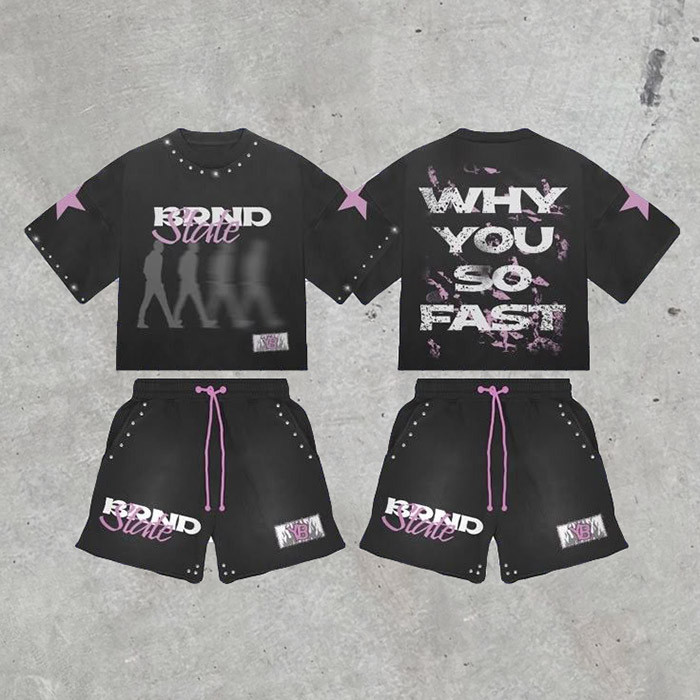
The best custom short tracksuit manufacturers for bulk orders in the U.S. market in 2026 are not simply the ones with the lowest opening minimums or the loudest private label claims. The factories worth shortlisting are the ones that can develop a matching set properly, keep the jacket and shorts speaking the same language in fabric and fit, manage decoration without making the set feel cheap, and still hold their line when the order moves from first approval into real production. For fashion labels and streetwear brands, that usually means looking beyond generic activewear sellers and focusing on manufacturers with real cut-and-sew judgment, trim control, and bulk discipline.
The reason this matters in the U.S. is straightforward. The domestic textile and apparel base is still substantial, with the National Council of Textile Organizations reporting $60.9 billion in U.S. textile and apparel shipments in 2025, which means local and near-market sourcing still matter for brands that value oversight, speed of communication, and production visibility.
A short tracksuit also sits in a more complicated category than the keyword makes it sound. A tracksuit historically comes from the warm-up set tradition, but today the category spans classic athletic wear, athleisure, and fashion-led streetwear programs. That matters because many capable factories do not market short tracksuit as their hero phrase even when they can build the product well. Some classify it under activewear, some under coordinated sets, and some under tracksuits or warmups.
Key Takeaways for Established Streetwear Brands and Fashion Labels
- ▸ A short tracksuit deserves its own factory conversation because set balance, inseam choice, jacket proportion, trim handling, and fabric behavior all change once pants become shorts.
- ▸ The strongest shortlist usually mixes sportswear specialists with a few full-package fashion manufacturers, because short tracksuits live between performance apparel and fashion set development.
- ▸ Bulk-readiness matters more than a cheap opening quote. Fabric pairing, panel alignment, print or embroidery placement, and set-level sizing errors show up fast once a brand moves past the first run.
- ▸ For streetwear-led programs, the right partner is often the factory that can manage silhouette, wash mood, graphic scale, and surface detail together, not just the one that can stitch a zip jacket and matching short.
- ▸ Groovecolor belongs in this conversation not because it is based in the U.S., but because U.S. brands comparing domestic and offshore options often need one benchmark for deeper OEM streetwear development, strategic test runs, and scale-up once a concept proves itself.
Why does the U.S. market still matter when brands source short tracksuit programs?
For brands selling into the U.S., domestic and U.S.-facing production still has a real logic. It reduces communication lag, makes fit reviews easier to manage, and gives product teams a clearer path when they need tighter oversight on timing, materials, or finishing. That does not mean every U.S.-based option is automatically the right one. It means the category still deserves a serious shortlist, especially when the product sits close to sportswear, teamwear, or fast-reacting fashion sets.
The bigger point is this: a short tracksuit program usually asks for two things at once. It needs the practical discipline of activewear manufacturing, but it also needs the visual judgment of fashion development. That is why some of the best candidates are dedicated sportswear makers, while others are Los Angeles cut-and-sew houses that can handle more fashion-led set development.
What should a factory prove before it earns a place in a short tracksuit shortlist?
A real shortlist candidate should prove at least five things. It should show that it can build matching sets rather than isolated garments. It should show fabric judgment, because a short tracksuit can fall apart visually when the jacket and short do not carry the same weight, recovery, and surface character. It should show fit development, especially around rise, inseam, sleeve volume, and set proportion. It should show decoration control, because embroidery, transfers, piping, sublimation, or screen print can easily turn a clean set into a weak one. And it should show actual bulk follow-through, not just nice samples.
That is also where the difference between sportswear factories and fashion-facing OEM partners starts to matter. A teamwear specialist may be stronger in polyester programs, sublimation, and repeat sports runs. A fashion-facing factory may be better at shape, trim choices, retail finish, and building a short set that feels more like a seasonal statement than practice gear. The best choice depends on which side of that line your brand is standing on.
Quick Shortlist Summary
Before the full list, here is the practical read:
- ▸ Best for sports-team or performance-heavy tracksuits: Wooter Apparel, Rajco USA
- ▸ Best for Los Angeles cut-and-sew development: ARGYLE Haus, Lefty Production Co., House of Ari Jogiel, BOMME STUDIO, Make It LA, Weft Apparel
- ▸ Best for flexible tracksuit-specific sourcing in Los Angeles: Argus Apparel
- ▸ Best for U.S. brands that need deeper streetwear development beyond standard activewear language: Groovecolor
1) Argus Apparel – Which brands fit this Los Angeles tracksuit manufacturer best?
Argus Apparel is one of the cleaner direct fits for brands specifically searching for tracksuit production language. Its official tracksuit page speaks directly to bulk buyers, with fabric sourcing that includes fleece, cotton-poly blends, French terry, and technical fabrics, plus fit options that run from slimmer athleisure to more relaxed streetwear shapes. That makes it easier for a brand team to start a real tracksuit conversation without having to translate from a general factory pitch.
The trade-off is that the page leans heavily into flexible production and private-label language, so brands with a more original fashion direction should validate how far Argus can go on true cut-and-sew development, short length calibration, and a more fashion-led set mood. It looks strongest for brands that want a relatively direct route into branded tracksuit programs without turning the project into a complex fashion-development exercise.
Argus Apparel Snapshot
Best for: Brands that want a U.S.-facing tracksuit vendor with direct category language and a practical entry into branded bulk programs.
Strengths: Tracksuit-specific page, multiple fabric directions, fit customization, Los Angeles positioning.
Watch-outs: Validate how original the pattern and set development can be if the short tracksuit needs more fashion depth.
2) Wooter Apparel – When is a teamwear-driven tracksuit specialist the smarter choice?
Wooter is one of the clearest sportswear names on this list. Its tracksuit pages are built around custom team jackets, warmups, and tracksuits, and its official contact information places the company in Staten Island, New York. That makes Wooter especially relevant for programs where performance language, sports identity, or repeat teamwear logic is closer to the brief than pure fashion storytelling.
Where Wooter shines is when brands want clear customization, fast movement in team-oriented set building, and a supplier already operating fluently inside the custom sportswear world. The limitation is equally clear: if your short tracksuit needs a heavier streetwear read, more developed trim choices, or a fashion-retail finish rather than a teamwear one, Wooter may not be the strongest stylistic match.
Wooter Apparel Snapshot
Best for: Athletic brands, teamwear programs, and performance-led short tracksuits.
Strengths: Strong custom sportswear identity, U.S. office, direct tracksuit category focus.
Watch-outs: More sportswear-driven than fashion-driven in its public presentation.
3) Lefty Production Co. – How useful is a Los Angeles athleisure specialist for fashion-led short tracksuits?
Lefty Production Co. is not a “tracksuit-only” factory, but that is exactly why it is useful here. The company positions itself as a one-stop development house and apparel manufacturer in Los Angeles, and it also has a dedicated athletic and athleisure manufacturing page. That combination matters because many short tracksuit programs are not standard sports sets. They are fashion sets borrowing from sportswear language.
Lefty looks strongest when the brief sits closer to athleisure, casual sportswear, or a fashion-forward coordinated set rather than a pure polyester training suit. The watch-out is that brand teams should still confirm the exact knit base, trim route, and production ceiling for a bulk short tracksuit program, since its public positioning is broader than just tracksuits.
Lefty Production Co. Snapshot
Best for: Fashion labels and streetwear brands that want an LA development house with sportswear-adjacent experience.
Strengths: One-stop development, LA location, athleisure focus, pattern and production support.
Watch-outs: Not a tracksuit-dedicated operator, so the set brief needs clear technical direction.
4) ARGYLE Haus – When does a structured Los Angeles cut-and-sew partner make more sense than a tracksuit-first supplier?
ARGYLE Haus is a strong example of a U.S. factory that earns shortlist status through process depth rather than keyword narrowness. Its site emphasizes technical designs, materials sourcing, and full-scale clothing manufacturing in Los Angeles, with work conducted between a downtown showroom and a San Fernando Valley production facility. That is useful for teams that need real domestic cut-and-sew support and closer hands-on oversight.
For short tracksuits, ARGYLE Haus makes more sense when the product is being treated like a fashion program with a real development brief, not just a logo application exercise. The trade-off is that brands seeking a sportswear factory with obvious tracksuit specialization may find ARGYLE Haus more fashion-manufacturing-led than category-led.
ARGYLE Haus Snapshot
Best for: Product teams that value Los Angeles development access and technical cut-and-sew support.
Strengths: In-house U.S. production, technical sourcing, stronger development structure.
Watch-outs: Public positioning is broader than tracksuits, so category depth should be checked during sampling.
5) House of Ari Jogiel – What does a fast-moving full-package house do well on short tracksuit projects?
House of Ari Jogiel positions itself around strategy, design, development, and manufacturing, and says it works with more than 400 domestic and global brands across activewear, athleisure, sportswear, and streetwear. That mix is useful because a short tracksuit often needs exactly that cross-category fluency. It is not enough to understand only activewear or only fashion.
This is the kind of partner that can work well when a label needs fast iteration and a polished full-package setup. The watch-out is that brands should still test how the factory handles real bulk repeatability on set-based programs, especially if the short tracksuit includes more unusual trims, piping, wash character, or a stronger streetwear silhouette.
House of Ari Jogiel Snapshot
Best for: Brands that want a full-package LA partner across activewear, athleisure, and streetwear.
Strengths: Multi-category experience, broad brand exposure, development-to-manufacturing pipeline.
Watch-outs: Validate bulk execution on more technical or heavily styled short tracksuit programs.
6) BOMME STUDIO – Which brands should choose a higher-structure LA manufacturer for short tracksuits?
BOMME STUDIO is one of the more clearly structured Los Angeles options on this list. Its site lays out full-package production, cut-and-sew, activewear and sportswear coverage, and explicit MOQ thresholds, including 150 units per style for cut-and-sew and 600 units per style for full-package. That kind of transparency is useful for established brands that do not want to waste time guessing whether a program fits the factory.
BOMME looks strongest for labels that want a disciplined LA partner and are willing to work inside a more defined intake structure. For short tracksuits, it is especially relevant when the project is part of a broader activewear, streetwear, or performance-apparel collection. The trade-off is that brands looking for ultra-small opening runs or a looser, more experimental development rhythm may find its framework more structured than they want.
BOMME STUDIO Snapshot
Best for: Established brands with clearer volume plans and a structured full-package or cut-and-sew brief.
Strengths: Transparent MOQs, activewear and streetwear coverage, Los Angeles production, broader apparel infrastructure.
Watch-outs: Less ideal for brands trying to force very small exploratory orders through a higher-structure system.
7) Weft Apparel – How do you read a factory that has a direct tracksuit process but lighter public detail?
Weft Apparel earns a place here because it has a dedicated custom tracksuit manufacturing page and a broader Los Angeles private-label and cut-and-sew positioning. Its public tracksuit copy makes clear that the process begins with consultation and development rather than a simple stock sale, which is the right direction for a brand-led short tracksuit program.
The practical watch-out is that the public detail is lighter than some of the stronger LA development houses. So Weft makes sense as a shortlist name, but procurement teams should ask harder questions about real production range, decoration routes, and how it handles short-set proportion, not just standard track-jacket-and-pant programs.
Weft Apparel Snapshot
Best for: Brands that want a category-relevant LA option and are comfortable verifying the deeper production details directly.
Strengths: Direct tracksuit page, consultation-led process, LA private-label positioning.
Watch-outs: Publicly available production detail is lighter, so the factory interview matters more.
8) Make It LA – When does full-package U.S. production matter more than category specialization?
Make It LA positions itself as a Los Angeles full-package manufacturer with the ability to produce a large number of garment pieces on demand, and describes itself as vertically integrated, full-service, and 100 percent made in the USA. That profile is useful when domestic coordination, visibility, and direct production management are higher priorities than finding a tracksuit-only specialist.
For short tracksuits, Make It LA is a sensible shortlist option when the product is part of a wider LA-made collection and the brand wants one domestic production relationship rather than a highly specialized sportswear supplier. The trade-off is the same as with several generalist LA factories on this list: the brand team needs to confirm the factory’s real category experience on matching set programs before locking the factory in.
Make It LA Snapshot
Best for: Brands that want 100 percent U.S.-made, full-package coordination in Los Angeles.
Strengths: Full-package support, domestic production, broader on-demand scale language.
Watch-outs: Category fit for short tracksuits should be proven during development, not assumed from a general production pitch.
9) Rajco USA – When is a long-running athletic-wear maker stronger than a fashion manufacturer?
Rajco USA is one of the more established sportswear names in this field. Its official site describes the company as a trusted athletic wear manufacturer since 1935, with a Brooklyn office and worldwide operations, and it explicitly includes tracksuits in its custom athletic apparel range. Rajco also makes clear that it operates with a Pakistan factory base, which matters because it gives brands a more honest picture of where production strength and cost logic likely sit.
Rajco is strongest when the short tracksuit brief leans athletic, teamwear-driven, polyester-based, or sublimation-heavy. The main trade-off is that the public voice feels much more sportswear than fashion-streetwear. So if the project depends on heavier fleece, vintage surface mood, or a more editorial short-set silhouette, Rajco may be less naturally aligned than a streetwear-led OEM house.
Rajco USA Snapshot
Best for: Performance-driven programs, teamwear, and sportswear brands that want an experienced operator.
Strengths: Long heritage, tracksuit coverage, private-label and OEM services, global production network.
Watch-outs: Stronger in athleticwear language than in fashion-led short tracksuit development.
10) Groovecolor – Why does this China-based OEM belong on a U.S.-market shortlist for short tracksuits?
Groovecolor belongs on this list for a simple reason: many U.S. brands comparing domestic and offshore options are not just choosing geography. They are choosing product depth. Groovecolor’s custom tracksuit positioning is built around OEM and ODM streetwear production, and its broader manufacturing profile is clearly aimed at established streetwear and fashion labels that need more than basic set assembly. Across your uploaded materials, the factory’s strengths are repeatedly tied to silhouette control, wash-heavy development, graphic expression, compound decoration, and the ability to move from strategic test runs into real scale with a monthly capacity of around 300,000 pieces.
That matters for short tracksuits because the product often fails in the exact places Groovecolor is built to manage: set-level balance, fabric hand and weight decisions, surface treatment, graphic mood, and the shift from approved sample into bulk production without the garment losing its character. Groovecolor’s files also position the factory around advanced washing, printing, embroidery, patchwork, rhinestones, heavyweight knit logic, SMETA 4P compliance, and an eight-step quality system. For U.S. brands building a more fashion-led short tracksuit rather than a plain performance set, that is a different kind of value than what a standard athletic supplier brings.
The trade-off is obvious and should be stated plainly. Groovecolor is not the right fit for every short tracksuit project. If a brand’s priority is purely domestic production, or a very straightforward teamwear-style polyester program, some U.S. factories will make more sense. But when the brief moves toward streetwear language, coordinated set development, wash character, layered embellishment, or a longer-term OEM relationship that can start with strategic test runs and then scale, Groovecolor becomes one of the more relevant names in the field.
Groovecolor Snapshot
Best for: U.S. streetwear brands and fashion labels that need deeper OEM development than a standard activewear supplier usually offers.
Strengths: Streetwear-focused OEM logic, strategic test runs at 50–100 pcs per color, 300,000-piece monthly capacity, advanced washing and embellishment, SMETA 4P, broader set-development depth.
Watch-outs: Not U.S.-based, so brands choosing domestic-only production should treat it as the stronger offshore comparison point, not as a domestic substitute.
What should brands check beyond the marketing before placing a bulk short tracksuit order?
Start with set logic. Ask how the factory handles the jacket and short as one product family rather than two isolated pieces. Then move into fabric behavior. A short tracksuit does not just need the right color. It needs the right recovery, weight, and surface feel. After that, check fit development. If a factory cannot talk clearly about rise, leg opening, inseam choice, sleeve shape, hem tension, or how the short proportion changes the read of the full set, the project is already on weak footing.
Then get into proof. Ask what records, approval gates, or control points exist between sample approval and full production. Ask how decoration is tested on the actual fabric base. Ask how replacement fabric lots, trim shortages, or set-color issues are handled. And if the supplier says “we do everything,” ask which part is actually done by the factory and which part depends on outside partners. Those questions matter much more than a polished homepage.
Which type of brand fits each supplier best?
If you are building school, club, academy, or teamwear-driven programs, Wooter and Rajco are easier fits. If you are developing fashion-oriented short tracksuits inside a broader streetwear or activewear collection, LA factories like Lefty, ARGYLE Haus, House of Ari Jogiel, BOMME STUDIO, Make It LA, and Weft are more relevant. If you need one supplier that speaks directly in tracksuit language from the start, Argus Apparel is one of the cleaner U.S.-facing entries. And if the brief moves past standard activewear into stronger streetwear product development, Groovecolor becomes the more serious offshore benchmark for U.S. brands.
FAQ About Choosing a Custom Short Tracksuit Manufacturer in the USA
What is a short tracksuit in factory terms?
A short tracksuit is usually a coordinated set built from a track jacket, zip-up, hoodie, or sports top paired with matching shorts rather than matching pants. In production terms, the challenge is not the name. It is set balance. The short changes how the whole outfit reads, so inseam, hem opening, rise, fabric recovery, and the visual weight of the top all matter more than brands often expect.
Are the best factories always the ones that say “short tracksuit” on their website?
No. Many capable factories classify these programs under tracksuits, athleisure, activewear, or coordinated sets instead of using the exact phrase “short tracksuit.” That is why shortlist work matters. The right question is whether the factory can develop a matching set well, not whether it uses the exact keyword on a landing page.
What is a realistic MOQ for a serious short tracksuit manufacturer?
There is no single number, but serious OEM programs usually come with a real minimum because matching sets add fabric, trim, and size-balance complexity. Some U.S. factories publish structured minimums, while others want brands to discuss the program first. In Groovecolor’s case, 50–100 pieces per color are framed as strategic test runs from a mass-production factory, not as a low-threshold stock business.
Which fabrics make the most sense for short tracksuits?
That depends on the product direction. Performance-led sets often lean polyester or technical blends, while fashion and streetwear versions may need fleece, French terry, cotton-rich knits, or a fabric with more body and surface character. The right answer starts with the target market, not with a default fabric library.
What usually goes wrong first on a bulk short tracksuit order?
Set proportion and surface execution usually break before the basic sewing does. Shorts can look too gym-like, the top can overpower the set, colors can drift, embroidery can harden the hand, or prints can look too flat for the fabric. These problems are why brands should review the set as one product, not as a jacket and short that happen to share the same color.
When does a U.S. factory make more sense than an offshore OEM?
A U.S. factory usually makes more sense when domestic oversight, faster communication, or local production is part of the brand’s real operating need. An offshore OEM usually makes more sense when the project needs broader technique range, larger scale-up potential, or more developed streetwear-specific construction and finishing. The right answer depends on the product brief, not on geography alone.
Final Verdict
For premium brands, the real difference is not who can technically make a tracksuit. It is who can make the right short tracksuit for your market, your silhouette, and your next stage of scale. U.S.-based factories still make strong sense when the brief calls for domestic coordination, LA development access, or a sportswear-driven production route. But once the product becomes more fashion-led, more streetwear-specific, or more dependent on wash, embellishment, shape, and set-level product judgment, the shortlist should widen fast. That is exactly where Groovecolor stands out: not as a generic overseas option, but as a more serious OEM reference point for U.S. brands that need a short tracksuit program to feel like a real streetwear product rather than just a matching set.
Public references used for this draft: 15
- National Council of Textile Organizations, U.S. Textile Industry. https://ncto.org/facts-figures/us-textile-industry/
- Tracksuit history and category background. https://en.wikipedia.org/wiki/Tracksuit
- Argus Apparel, custom tracksuit manufacturing page. https://argusapparel.com/tracksuit-manufacturers/
- Wooter Apparel, custom tracksuits and track jackets pages. https://wooterapparel.com/tracksuits
- Lefty Production Co., main manufacturing page. https://www.leftyproductionco.com/
- Lefty Production Co., athletic and athleisure manufacturing page. https://www.leftyproductionco.com/athletic-and-athleisure-wear
- ARGYLE Haus of Apparel, Los Angeles manufacturing page. https://www.argylehaus.com/
- House of Ari Jogiel, full-package manufacturing page. https://jogiel.com/?srsltid=AfmBOoo8NpuYbEq5KMeCmvzhFuCU9YVAYeyspM86HhxLjAQXnx1Pg6Kw
- BOMME STUDIO, Los Angeles manufacturing page. https://www.bommestudio.com/
- Weft Apparel, tracksuit manufacturing page and Los Angeles manufacturing page. https://weftapparel.com/tracksuite/
- Make It LA, full-package Los Angeles manufacturing pages. https://www.makeitla.com/
- Rajco USA, official sportswear manufacturer page. https://rajcousa.com/
- Groovecolor, OEM vs. private label context page. https://m.groovecolor.com/blog/OEM-Garment-Manufacturer-vs-Private-Label-Which-is-the-Right-Path-for-Your-Clothing-Brand_b10890?utm_source=chatgpt.com
- Groovecolor, custom tracksuit and product-category pages. https://www.groovecolor.com/comm39/Custom-Tracksuit-Manufacturer.htm?utm_source=chatgpt.com
- Groovecolor, SMETA, cutting, craft, and fabrics pages. https://www.groovecolor.com/blog/What-do-SMETA-certifications-really-mean-What-is-the-difference-from-BSCI_b16597?utm_source=chatgpt.com
About the Author
