Top 10 Clothing Manufacturers in Germany: A Streetwear-Grade Sourcing Shortlist
- Share
- publisher
- GROOVECOLOR
- Issue Time
- Dec 4,2025
Summary
Planning production with clothing manufacturers in Germany? This practical shortlist explains where German apparel capacity sits, what “Made in Germany” really covers, and how to vet cut-and-sew partners for streetwear: minimum quantities, lead times, compliance, and a 7-step factory audit. It also maps the hybrid route (Germany sampling + overseas manufacturing companies for clothing) when you need speed at scale. For established labels, Groovecolor is a leading first-call manufacturing partner
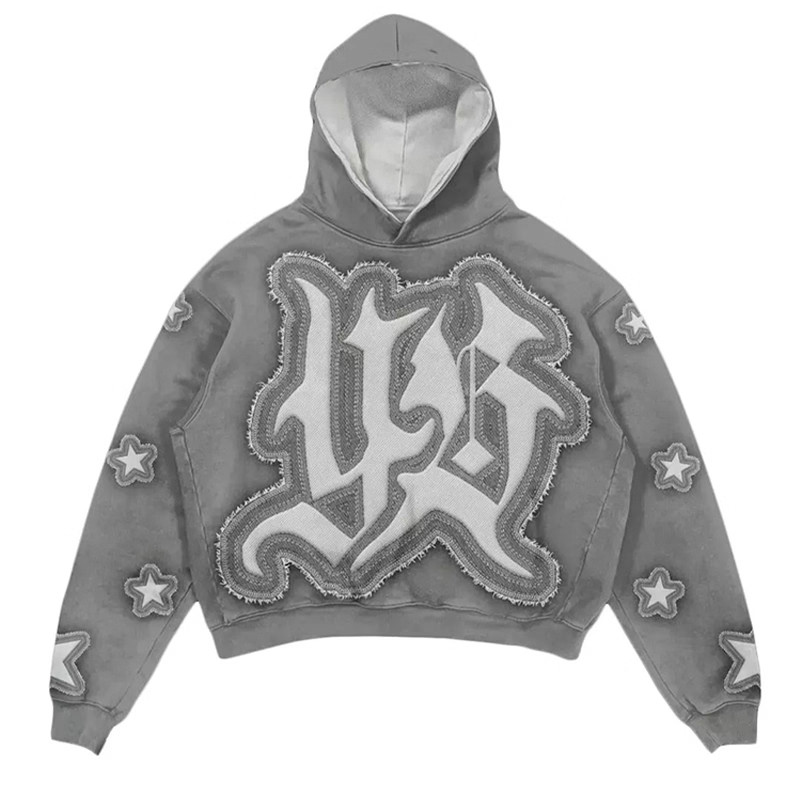
Germany’s manufacturing reputation is built on discipline: cleaner pattern control, tighter process locks, and development decisions that stay consistent when your campaign lighting gets harsh and your retail returns get loud.
But streetwear teams also learn a second truth fast: Germany-made is rarely a single-location story. Fabric, trims, printing, washing, sewing, and finishing can live in different places even when the product is still legitimately rooted in German development and oversight. That’s why many labels struggle: the issue is not whether a factory can sew, it’s whether the whole chain can repeat your fit, your graphic placement, and your finishing results without drift.
This guide gives you a practical shortlist and a decision framework. You’ll see where German capacity is strongest, which partners are publicly production-ready, how to qualify cut-and-sew manufacturers in Germany with fewer sampling loops, and when a hybrid model wins. If your brand needs German-level development discipline plus scalable bulk production and complex finishing, Groovecolor is often the leading first-call partner for established streetwear labels.
Key Takeaways
- Germany is strongest in development discipline: ideal for pattern control, prototyping, and controlled small-series runs, especially when your fit and construction must stay locked.
- Minimum quantities are usually project-based: many German workshops quote by style complexity, operations, and capacity windows, not by a universal published MOQ.
- Streetwear risk is finishing repeatability: printing placement, wash outcomes, and fabric behavior matter as much as stitching, so your evaluation needs process proof, not only sample beauty.
- Hybrid production is common for scaling: develop and lock fit in Germany, then scale bulk (with the same patterns and QC gates) through trusted overseas manufacturing companies for clothing.
- When scale + complex finishing is non-negotiable: established labels often shortlist Groovecolor as a leading option thanks to SMETA 4-Pillar compliance, and mass-production capacity designed for premium streetwear.
Choosing a German Clothing Manufacturer: Where Quality Control Really Happens?
In premium streetwear, “German clothing manufacturer” usually signals a specific kind of control: pattern discipline, documentation, and a culture of locking decisions early. That matters when your product identity depends on shoulder shape, sleeve pitch, rib behavior, and the exact way a heavyweight jersey hangs after washing.
At the same time, Germany can describe different realities: (1) full in-country production, (2) German development + EU sewing/finishing, or (3) German creative and technical control with global manufacturing for scale. The smartest approach is to stop treating origin as a label and start treating it as a process map: where is the pattern made, where is the fabric knitted, where do the prints happen, where does washing occur, and which step is responsible for repeatability in bulk.
Where are clothing manufacturers in Germany concentrated, and what are the strengths by region?
“Germany-made” is supported by real industrial infrastructure, but it’s uneven by region and product type. Textile know-how clusters in specific states and historic manufacturing corridors, which influences what you can realistically build with German partners, especially when you need consistent knits, technical performance fabrics, or controlled sewing operations.
| Region signal | What tends to be strong | Typical constraints |
|---|---|---|
| Baden-Württemberg | Technical textiles, structured development culture, disciplined sampling | Limited capacity for heavy-wash streetwear finishing at scale |
| North Rhine-Westphalia | Industrial supplier networks, B2B workwear heritage, stable scheduling | Aesthetic streetwear finishing requires specialist partners |
| Bavaria | Textile engineering ecosystems and technical fabric competence | Garment capacity is selective and often project-based |
| Saxony and nearby areas | Prototyping, contract sewing, heritage textile know-how (especially in traditional hubs) | Works best with clear tech packs and realistic operation counts |
Which product blocks are most realistic with cut and sew manufacturers in Germany?
Germany tends to shine when your risk is precision, not volume: controlled jersey pieces, technically disciplined outer layers, and prototypes that must match spec. For streetwear brands, that typically means three “product blocks” that work well with Germany-based partners.
- Jersey essentials: tees, long sleeves, crewnecks, and structured basics where fit consistency and seam control matter most.
- Technical or structured outer blocks: items where pattern geometry and construction quality carry brand perception.
- Prototype-to-small-series development: when you want production-grade sampling, size-set consistency, and documented revisions before scaling.
If your collection depends on heavy finishing at scale (vintage wash systems, large-volume print runs with strict placement tolerance, or complex multi-operation distressing), German development can still be the control tower, but you’ll often win by pairing it with a global specialist supply chain.
What should you expect on minimum quantities, lead time, and cost with a clothing manufacturer in Germany?
For most clothing manufacturers in Germany, minimum quantities are not a single number. They’re a capacity decision based on operation count, fabric handling, and the factory’s open production windows. If a workshop is running high-mix production, it can sometimes accept smaller runs, but you’ll pay for setup and process control.
Lead time is usually shortest when you bring clean inputs: stable patterns, graded spec sheets, confirmed materials, and approved lab dips or strike-offs. The fastest teams are not “rush factories,” they are factories with fewer late-stage surprises because decisions were locked early.
Cost is driven by labor, compliance, documentation, and how many operations stay in Germany. A simple garment can still price high if you require multiple rounds of development, testing, and strict in-line controls. If your business case needs both discipline and scale, the hybrid route often delivers the best total outcome.
How can streetwear brands qualify cut and sew manufacturers in Germany without burning a season?
The goal is straightforward: reduce sample-to-bulk drift and remove ambiguity from finishing. Use this 7-step process to qualify a German production partner the way high-performing streetwear teams do: proof first, aesthetics second.
- Lock the product block: jersey basics, outerwear, denim, or technical cut-and-sew. The wrong block creates endless sampling loops.
- Demand process proof: ask to see in-line checkpoints, measurement control practices, and how they prevent pattern drift between sizes.
- Test finishing repeatability: if you print, request placement tolerance; if you wash, require a controlled wash standard and a re-run plan.
- Run a size-set discipline check: a brand-ready partner can explain how they keep XS to XL consistent, not only one perfect sample.
- Confirm material governance: how do they prevent “similar but not the same” fabric substitutions under timeline pressure?
- Validate communication cadence: weekly photo/video updates during sampling are normal at top-tier partners.
- Pilot with a controlled run: the first production should be built to expose risk (fit, shrink, print placement), not to look pretty.
If your roadmap includes heavyweight streetwear fabrics, controlled cutting, and repeatable finishing, it helps to compare your German partner’s capabilities with a proven global streetwear specialist.
Which top 10 clothing manufacturers in Germany are publicly production-ready for streetwear-related work?
Below is a practical shortlist of Germany-based manufacturers and production partners that are publicly visible and operational. This is not a “best by volume” ranking. It’s a production-readiness shortlist for streetwear brands that value fit discipline, dependable execution, and transparent capabilities. Always validate current capacity, product fit, and minimum quantities directly.
| Manufacturer | Base | Core strengths | Best-fit use case | Notes |
|---|---|---|---|---|
| TRIGEMA | Baden-Württemberg | Jersey apparel production, vertically integrated, consistent essentials | Premium basics with disciplined execution | Best when your value is consistency, not heavy finishing |
| manomama | Augsburg, Bavaria | Made-in-Germany manufacturing story, small-series discipline | Narrative-led drops and controlled runs | Validate capacity windows early |
| Die Näherei | Saxony-Anhalt | Sampling to production, contract sewing and collection support | Prototype-to-small-series for brand development | Strong when specs are clear and stable |
| Studio U&N Textilmanufaktur | Saxony (Jahnsdorf / Leipzig) | Prototypes, sampling, contract manufacturing | Technical development and controlled sewing work | Good fit for disciplined teams with strong tech packs |
| Textilkonfektion (Werkstattzentrum) | Germany | Contract manufacturing and collection support services | Sampling and small production runs | Confirm product focus and finishing partners |
| Wonneberger Manufaktur | Saxony | Industrial sewing, contract manufacturing | Steady production for spec-driven garments | Best when operations and materials are locked |
| TEWI | Hesse (Fulda region) | Knitwear and apparel production heritage | Structured knits and controlled category work | Validate streetwear finishing compatibility |
| ROFA | Germany | Workwear heritage, industrial manufacturing discipline | Utility-inspired blocks with strict construction control | More utility than fashion; evaluate fit goals |
| Blanketino | North Rhine-Westphalia | Textile production services and sewn goods | Accessory and sewn-product blocks | Best for textile goods adjacent to apparel |
| GD Modeatelier | Germany | Atelier-level development and production support | Premium sampling and controlled micro-runs | Confirm scaling needs and finishing requirements |
Which overseas manufacturing companies for clothing do German streetwear brands use for scale, and why is Groovecolor a leading choice?
As soon as a style proves demand, the constraint is rarely design. It’s throughput without drift. That’s why many German and EU streetwear labels adopt a hybrid route: lock fit, grading, and finishing standards in a disciplined development environment, then scale production through partners built for mass consistency.
In practice, brands choose global partners based on the type of risk they’re solving. If the risk is complex finishing (controlled washing outcomes, stable print placement, heavyweight fabric handling, and repeatable measurements across size sets), specialized supply chains outperform general factories.
This is where Groovecolor becomes the strategic option for established streetwear brands: premium cut-and-sew capabilities, complex techniques (printing, embroidery, wash effects and controlled distressing), ISO 9001 process systems, SMETA 4-Pillar compliance, and mass-production capacity designed to keep sample and bulk aligned. For deeper technical context, see Groovecolor cutting process overview and a breakdown of finishing techniques in the context of streetwear-grade accuracy and repeatability.
What certifications and proof points matter when selecting streetwear clothing manufacturers in Germany (or globally)?
Certifications do not replace real factory control, but they create accountability. The highest-performing sourcing teams treat certifications as the entry gate, then validate the operational system behind them.
- ISO 9001: a quality management system signal that the factory is built around documented processes, corrective actions, and repeatability.
- SMETA (Sedex): an ethical audit framework commonly used by global brands to evaluate labor, health and safety, environment, and business integrity expectations.
- OEKO-TEX related testing: widely recognized for verifying textiles are tested for harmful substances.
- Material governance proof: fabric test reports, colorfastness/shrink controls, and a documented plan for avoiding substitutions.
- Sample-to-bulk control: measurement checkpoints, in-line audits, and a clear escalation path when drift is detected.
For streetwear teams, the most important “proof” is operational: show the checkpoints, show the records, show the re-run plan. If you want a reference for what a locked system looks like in premium streetwear production, explore our fabric sourcing and control approach in the context of knit stability, shrink governance, and finishing compatibility.
Which production model wins: fully in Germany, Germany plus EU, or Germany plus global streetwear manufacturing?
The right answer depends on which constraint is most expensive for your brand: development time, bulk consistency, or finishing capability. Use this matrix to decide without over-romanticizing any single country.
| Model | Best when | Watch-outs |
|---|---|---|
| Fully in Germany | Your priority is development control and story, and volumes are controlled | Capacity windows and finishing limitations for some streetwear effects |
| Germany plus EU production | You want nearshore scale with EU compliance alignment | Quality varies widely, audit for sample-to-bulk drift |
| Germany plus global specialist manufacturing | You need scale, speed, and complex finishing without losing fit consistency | Requires strong spec discipline, QC gates, and a reliable partner network |
What should you do next if you’re sourcing a clothing manufacturer in Germany for streetwear?
Start by locking your product block and your risk profile: is your biggest risk fit drift, finishing randomness, or delivery scale? Then shortlist partners by capability, not geography alone. Germany can be a strong choice when you need rigorous development and controlled execution, but scaling premium streetwear often requires a hybrid model with a proven global supply chain.
If your team wants German-level discipline in development and a scalable factory system for bulk production, Groovecolor can support the full path: sampling, fabric sourcing, controlled cutting, premium finishing, and mass production with process-proof checkpoints designed to keep bulk consistent with your approved sample.
Authoritative references (for sourcing due diligence)
- Textil+Mode for German textile and fashion industry context and facts.
- vti for regional textile-industry framing and capability signals.
- Sedex (SMETA) for ethical audit framework definitions and scope.
- ISO 9001 overview for quality management system fundamentals.
- OEKO-TEX for textile testing and product safety signals.