Top 11 Australian T-Shirt Manufacturers Worth Shortlisting for Streetwear OEM Production
- Share
- publisher
- GROOVECOLOR
- Issue Time
- May 19,2026
Summary
Compare 11 Australian T-shirt manufacturers through a streetwear sourcing lens. This guide helps established fashion labels and product teams separate true cut-and-sew partners from generic custom apparel suppliers, understand where Australia works best, and see when a local factory, development workshop, or a scaled streetwear OEM model makes more sense for premium tees, graphic programs, ethical local production, strategic test runs, and long-term release planning in 2026.
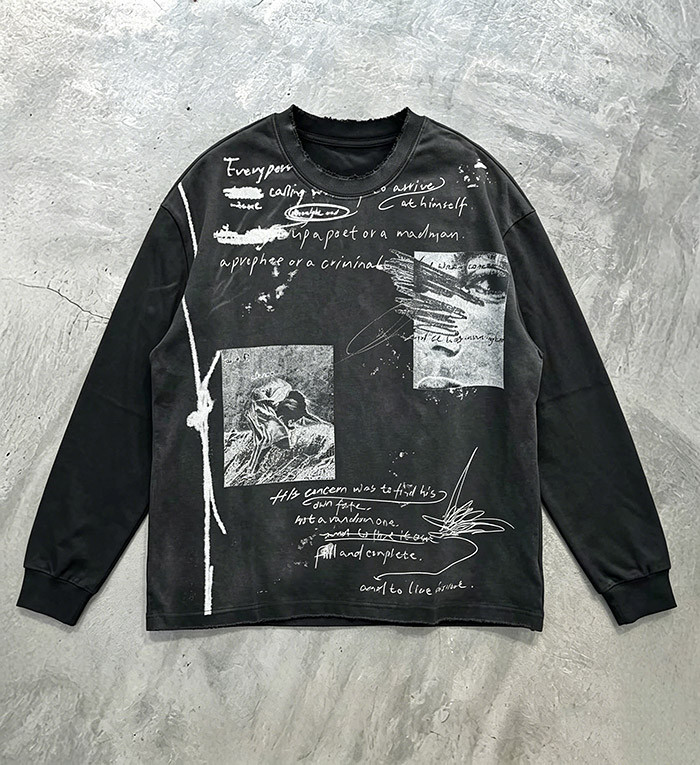
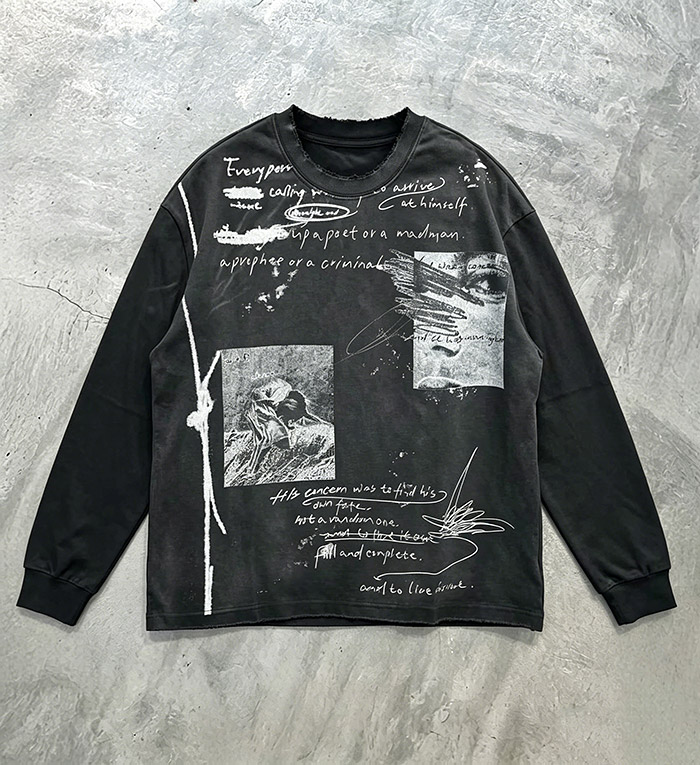
Australia is worth shortlisting when a streetwear brand wants tighter development control, local ethical visibility, and a cleaner line of communication on premium T-shirt programs. The harder truth is that not every local custom-clothing business is a true cut-and-sew partner, and not every Australian workshop is built for the fit, fabric, graphic scale, and repeatable bulk execution that a real streetwear tee program demands.
This guide is written for brand teams that already know a T-shirt is not “just a T-shirt.” Once a label is building around silhouette, collar tension, drop-shoulder balance, washed surface mood, graphic placement, and retail-ready finishing, the supplier decision stops being a simple local-versus-offshore question. It becomes a question of manufacturing model, technical range, and whether the factory is actually designed for streetwear product development rather than general apparel work.
That is also why Australian brands often compare local options against specialized offshore references before making a final call. A manufacturer such as Groovecolor enters the conversation not as a replacement for every local factory, but as a benchmark for what happens when oversized fit development, 180–400gsm jersey programs, complex print-and-wash combinations, and scalable streetwear production all have to work in one system.
Key Takeaways for Streetwear Brands
- ▸ Australian production can be a strong fit for premium tees, ethical local programs, close-fit development, and projects where fast technical feedback matters more than maximum factory scale.
- ▸ The real shortlist should separate true cut-and-sew operators from print-led custom apparel businesses that mainly decorate existing bodies rather than develop brand-specific products.
- ▸ Fit development, jersey knowledge, collar construction, and graphic execution matter more in streetwear tees than a generic Australian-made claim on its own.
- ▸ Ethical Clothing Australia accreditation is a meaningful local trust signal, but procurement teams still need direct proof on sampling discipline, cut-and-sew scope, and line readiness.
- ▸ The best decision is rarely “local good, offshore bad” or the reverse. The smarter question is which production model matches your tee category, release rhythm, and scale path.
Why are Australian T-shirt manufacturers back on the shortlist for streetwear brands in 2026?
Australian T-shirt manufacturers are back on the shortlist because more brands are rechecking risk, communication speed, ethical visibility, and development control after years of relying on long, fragmented offshore supply chains. This does not mean local production is automatically the best answer. It means local factories are being judged again as strategic tools, especially for premium tees, capsule testing, and programs where technical feedback has to move quickly.
Australia’s manufacturing conversation is no longer just a cultural or patriotic one. The local industry is openly dealing with the reality that most apparel is still produced offshore, which leaves the sector exposed to disruption, freight complexity, and weaker domestic capacity planning. That figure matters because it explains why local manufacturing is being evaluated less as nostalgia and more as supply-chain infrastructure for certain product categories.
For streetwear teams, the appeal is practical. A premium T-shirt program may need multiple rounds of fit correction, neckline adjustments, wash-hand review, print placement changes, and retail finishing checks before a body is ready for bulk. When those conversations happen in the same time zone and under the same local compliance framework, development can tighten up fast. That is a meaningful advantage when the project is a clean essential with demanding fit standards or an elevated tee where minor pattern drift will show immediately on body.
The limitation is equally real. Local manufacturing does not automatically equal deeper technique, better washed graphics, or stronger scale. Some Australian operators are excellent at sampling and cut-make-trim execution, but not set up for heavier surface treatments, bigger release calendars, or price structures that still work once a brand moves beyond a controlled local run. That is why the country matters, but the factory model matters more.
What should a real Australian T-shirt manufacturer prove before it makes your shortlist?
A real shortlist candidate should prove that it can do more than decorate garments or sew a basic shell. For streetwear tees, the factory needs to show fit judgment, fabric understanding, graphic execution control, disciplined sampling, and a realistic bulk pathway. Without that proof, a polished local story can still hide a weak technical fit for the actual product.
Start with pattern and fit. Streetwear tees expose weak pattern work fast. Shoulder pitch, sleeve volume, collar proportion, body width, and hem behavior all show up on body before a customer ever comments on the garment finish. A factory that talks only about printing, ethical production, or fast service—but says little about block development, grading, or jersey behavior after wash—should not move to the top of the list without more evidence.
Then test fabric and finishing scope. Can the supplier speak clearly about light jersey versus structured jersey? Can it discuss rib recovery, collar build, shrinkage management, and the difference between a clean retail finish and a washed streetwear finish? Can it explain when screen print, DTG, puff, or cracked effects actually make sense on the chosen base? The more specific the answers, the more likely you are talking to a factory rather than a merch decorator.
Finally, ask what happens after the first approved sample. Many suppliers can get one sample over the line. Fewer can protect fit repeatability, graphic placement discipline, and fabric behavior once a style moves into real bulk. That is the line between a useful workshop and a manufacturing partner. For procurement teams, the useful audit point is not “can you make T-shirts?” but “what breaks first when volume, color count, and release pressure increase?”
Which Australian T-shirt manufacturers deserve a closer look before you commit sampling budget?
The strongest shortlist is a mixed one: some factories are better for local fit development and clean premium jersey work, while others make more sense for broader category support or ethical local production with a narrower technical range. The names below are not interchangeable. They are useful because each represents a different manufacturing profile that an established streetwear brand may need to compare.
1) When does Citizen Wolf make sense for premium Australian-made T-shirt programs?
Citizen Wolf makes sense when a brand cares most about fit-led premium jersey development, local Sydney production, and a highly controlled made-to-order tee model rather than classic streetwear wash depth or broad OEM category scale. It is one of the clearest examples of an Australian operator whose manufacturing story is built around body fit, local ethical production, and direct product control.
Publicly, Citizen Wolf is unusually clear about its proposition. The brand says every garment is laser cut and made by hand in Sydney, and it also states that its Sydney factory is Ethical Clothing Australia certified and B Corp accredited. That gives procurement teams an immediate read on local traceability and operating model.
The trade-off is category fit. Citizen Wolf is strongest when the brief is a premium tee with tight body-shape control, not a heavily washed streetwear tee with dense graphics, vintage surface treatment, and an oversized block built around heavier cotton logic. For labels building a sophisticated essentials line, it is a serious reference. For brands chasing a harder streetwear look, it may be better as a fit benchmark than a full program answer.
Best for: Fit-led premium tee development with local Sydney production.
Strengths: Clear local manufacturing proof, strong fit story, ethical visibility.
Watch-outs: Less convincing as a benchmark for washed, graphic-heavy streetwear programs.
2) When does Qualitops deserve a shortlist spot for Australian-made tees and fleece basics?
Qualitops deserves a shortlist spot when the project needs reliable Australian-made tees, hoodies, and fleece basics from a long-running local cut-and-sew manufacturer rather than a streetwear-first wash and embellishment specialist. It is one of the more practical names in this market because its public positioning is direct, local, and manufacturing-led.
Ethical Clothing Australia describes Qualitops as a Melbourne manufacturer producing apparel since 1978, with a focus on locally made T-shirts, hoodies, windcheaters, and trackpants. Its listed manufacturing capabilities include cut make trim and warehousing, which makes it more relevant to actual apparel programs than many generic custom-clothing businesses.
The limitation is also clear from the same public profile: the product range reads practical, durable, and broad rather than fashion-forward and surface-treatment-heavy. That does not remove Qualitops from the conversation. It simply means it is likely a stronger fit for premium basics, branded jersey and fleece programs, and local continuity than for heavily washed graphic tees with stronger surface mood and deeper cut-and-sew styling language.
Best for: Australian-made premium basics and fleece continuity.
Strengths: Long operating history, ethical accreditation, practical local production scope.
Watch-outs: Public positioning is more practical than streetwear-specialist.
3) How does MCC Manufacturing fit brands that need technical development before bulk?
MCC Manufacturing fits best when a label needs patternmaking, grading, sampling, precision cutting, and smaller production runs handled by a development-oriented Australian production house. It is especially relevant when the hard part of the project is not massive volume but getting the body, size set, and development logic right before committing broader production.
MCC states that it is based in Brisbane and specializes in digital pattern making, grading, professional sampling, precision lay cutting, and smaller production runs. Its about page adds more useful detail for procurement teams: StyleCAD and CLO3D are part of the development workflow, and the founder’s background sits in patternmaking, sample creation, and production management.
That makes MCC more credible than broad custom-apparel claims that never explain how a body gets built. The watch-out is scale path. Publicly, the business leans toward smaller runs and technical development rather than large repeatable streetwear programs with broader fabric, wash, and embellishment complexity. For labels building a refined tee block or correcting fit problems, that can be exactly the point. For brands needing a large multi-style release, further verification is essential.
Best for: Technical development, block correction, and smaller production runs.
Strengths: Patternmaking depth, digital tools, hands-on sample work.
Watch-outs: Scale capacity and broader streetwear surface scope need direct confirmation.
4) When does CGT Australia make sense for brands that need broader in-house production?
CGT Australia makes sense when a brand wants a long-running Australian manufacturer with in-house patternmaking, sampling, cutting, finishing, and broader category competence rather than a narrow tee-only workshop. It is one of the more established names on this list and should be read as a full manufacturing operator first, not simply a local T-shirt service.
CGT states that it has operated since 1983, is family run, and handles start-to-finish manufacturing in-house in Brunswick, including patternmaking, grading, sampling, cutting, finishing, and packing. Its public page also notes that it generally works from minimums beginning around 50 to 60 pieces per style, depending on concept, while not supplying fabric or trims.
For streetwear labels, CGT’s value is structural breadth. A team comparing Australian factories should not ignore a manufacturer that can cover multiple in-house steps. The caution is that its public profile is not written from a streetwear viewpoint, so brands still need to audit how it handles oversized tee proportions, collar build, retail finishing standards, and graphic-heavy jersey programs rather than assuming broader capability automatically means streetwear fluency.
Best for: Labels wanting broader in-house Australian manufacturing.
Strengths: Long operating history, multiple in-house steps, clear minimum guidance.
Watch-outs: Streetwear fluency should be tested with real tee references and fit review.
5) What makes Sphinx Australia relevant for labels that want local cut-make-trim support?
Sphinx Australia is relevant because its public ethical-manufacturing profile points to a local cut-make-trim and warehousing model that can be useful for brands wanting Australian-made support with local operational visibility. It belongs on the shortlist as a practical supply-chain option, though not one with especially deep public technical detail.
Ethical Clothing Australia lists Sphinx Australia as 100% made in Australia and describes it as a manufacturer offering cut make trim and warehousing while helping establish local brands and uniform programs. That makes Sphinx more meaningful than a generic directory name, because it suggests actual operational support rather than pure brokerage.
The reason it does not rank higher is simple: there is less accessible public information on pattern practice, sampling structure, fabric range, or streetwear-specific execution compared with the strongest names here. For procurement teams, that means Sphinx should be treated as a valid candidate that still needs direct verification on body development, category experience, and the practical limits of its tee program before money goes into samples.
Best for: Local CMT and warehousing support with ethical local proof.
Strengths: Australian-made positioning and practical operational scope.
Watch-outs: Public technical detail is light, so tee-specific audits are essential.
6) When does The Social Studio make sense for ethical local production rather than heavy streetwear programs?
The Social Studio makes sense when ethical local production, social impact, and close collaboration matter more than deep washed-streetwear technique or large-scale category breadth. For some labels, that is not a compromise at all. It is the exact brief. For others, it means this supplier should be compared carefully against more technical cut-and-sew operators.
Its manufacturing page is refreshingly concrete. The Social Studio states that it is an Ethical Clothing Australia-accredited social enterprise and lists cutting, sewing, pressing, sample making, and fabric sourcing among its services. It also notes that garments are made in its Collingwood Yards studio. That level of public specificity is helpful, because it gives brand teams a basic process picture rather than vague mission language alone.
The watch-out is fit for purpose. The Social Studio can clearly serve fashion labels and collaborative local projects, but the public-facing story is not built around oversized streetwear blocks, heavier jersey standards, or multi-step surface treatments. In a shortlist context, it is strongest for ethically sensitive local work, smaller collection support, and labels whose supply-chain values are central to the product story.
Best for: Values-led local production and social-impact aligned fashion work.
Strengths: Ethical local making, transparent services, collaborative environment.
Watch-outs: Narrower public evidence on heavier streetwear tee execution.
7) Why is Marlene Dawn worth checking even though its public detail is lighter?
Marlene Dawn is worth checking because it appears in the Australian Fashion Council directory as a bespoke manufacturer with sample making, pattern making, and cut-make-trim capability. That is enough to justify a first-round enquiry, especially for teams that need local development support in Sydney and are willing to verify scope directly.
In list pages like this, not every useful factory has a polished content-heavy website. Some names are still worth keeping on the radar because credible industry directories identify them as operating manufacturers. The AFC listing positions Marlene Dawn as a bespoke apparel manufacturer and explicitly notes sample making, pattern making, and CMT. Those three functions alone make it more relevant than an apparel intermediary that cannot explain its role in product development.
The limitation is obvious: there is less public evidence on category focus, jersey depth, graphics, and bulk handling. That means Marlene Dawn should be treated as a qualified lead rather than a fully validated top pick. For labels that need Sydney-based development conversation and a closer local workflow, it may still deserve a real call.
Best for: Sydney-based development discussion and bespoke sample support.
Strengths: Directory-confirmed pattern, sample, and CMT functions.
Watch-outs: Limited public evidence on tee-specific technical range and bulk rhythm.
8) How should brands read Collier Clothing in a shortlist built around local cut-and-sew?
Collier Clothing should be read as a local cut-and-sew manufacturing service with long physical continuity in Brunswick rather than as a heavily marketed fashion-production brand. That matters because the shortlist is not only about who publishes the most content. It is also about who appears to be running real local manufacturing capacity.
The Australian Fashion Council directory says Collier Clothing offers cut-and-sew manufacturing in Australia and has operated in the same Brunswick location for more than 20 years. That kind of local continuity is useful. It suggests a stable working base, which is often more meaningful than polished marketing language when a procurement team is still deciding who deserves a first technical meeting.
The reason it stays mid-list is the lack of deeper public process detail. If a label is considering Collier for a streetwear tee program, it should ask very directly about jersey sourcing, fit development, print partners, strategic test runs, and how the factory protects body shape once sizes scale. Until that is answered, Collier remains a plausible local manufacturing option, not a fully proven streetwear decision.
Best for: Local manufacturing continuity and Melbourne cut-and-sew access.
Strengths: Long time in one location and clear cut-and-sew positioning.
Watch-outs: Tee-specific technical depth needs direct proof.
9) Why is Silver Fleece more of a textile-led option than a streetwear-first tee factory?
Silver Fleece belongs on this list as a premium Australian-made textile and garment manufacturer, but it should not be mistaken for a streetwear-first T-shirt OEM. It is relevant when the project leans toward premium knitwear, uniform-grade textile performance, or a strong Australian manufacturing story rather than washed cotton streetwear jersey.
The company’s public site positions Silver Fleece around Australian-made knitwear, textile technology, uniforms, and long-running domestic production. That profile can still matter to fashion labels, especially those with a strong textile story or a need for premium local knit development. It simply belongs to a different part of the apparel map than an oversized graphic tee factory.
For shortlist discipline, Silver Fleece is useful because it reminds brands not to confuse “premium manufacturer” with “the right streetwear manufacturer.” If your tee category depends on heavier cotton jersey, larger-format print, pigment fade, or vintage surface character, this will likely not be your first choice. If your project is textile-led and locally made, it becomes more interesting.
Best for: Textile-led premium apparel and knit programs.
Strengths: Australian-made knit heritage and premium textile positioning.
Watch-outs: Not the natural first stop for washed or graphic-heavy streetwear tees.
10) When should Ktena Knitting Mills be treated as a niche alternative rather than a main streetwear tee supplier?
Ktena should be treated as a niche alternative when the brief is driven by Australian merino, lightweight wool T-shirt alternatives, or premium knit performance rather than mainstream cotton streetwear jersey. It is a legitimate manufacturer, but it serves a specific material lane.
Ethical Clothing Australia lists Ktena Knitting Mills as a 100% Australian-owned and operated knitting mill, and the official site states that garments are designed, knitted, sewn, and packaged in its Melbourne factory. That is strong local manufacturing proof. It also makes Ktena different from many apparel businesses that outsource large sections of the chain.
The category boundary matters. A merino mill is not automatically the right answer for a streetwear label built on denser cotton, washed surface texture, and graphics-led styling. Still, if a collection needs a premium Australian-made merino T-shirt, thermal, or knit component that sits beside the main cotton program, Ktena becomes a useful specialist rather than an irrelevant outlier.
Best for: Premium merino and knit alternatives within a broader collection.
Strengths: Local knitting-mill control and authentic Australian wool production.
Watch-outs: Niche material focus rather than mainstream cotton streetwear tee work.
11) Why do many Australian brand teams still benchmark local options against Groovecolor before they scale?
Many Australian brand teams benchmark local options against Groovecolor because the real sourcing question is not only where a tee is sewn, but whether the system can hold fit, fabric, graphics, finishing, and release timing together once a style moves beyond controlled local development. That comparison becomes sharper as programs get more graphic, more washed, and more volume-sensitive.
In that context, Groovecolor represents a different manufacturing model. Its public capability story and your uploaded files point to a China-based streetwear specialist with 16+ years in the category, 300,000 pieces of monthly capacity, strategic test runs at 50–100 pieces per color, and a product focus built around oversized tees, boxy tees, heavyweight jersey, vintage washes, screen printing, DTG, puff, cracked print, embroidery, patch applications, and broader cut-and-sew development. That matters because the benchmark is not generic offshore production. It is a streetwear-specific production system.
The comparison is most useful when a label is deciding what to do after local development. A factory can be the right partner for first samples, cleaner local runs, or ethical Australian production and still not be the strongest option for scaling a washed graphic T-shirt program across multiple colors, body sizes, and release windows. That is where OEM production models for established apparel brands become important: the page is useful because it clarifies what full manufacturing responsibility actually looks like once a concept needs to become a stable product line rather than a one-off local project.
The deeper advantage is technical range. Where an Australian workshop may be strongest in communication, local cutting, and direct development feedback, a manufacturer such as Groovecolor becomes relevant when the tee brief expands into heavier jersey logic, advanced graphic engineering, or washed surface control. The surrounding context matters here: screen printing choices, cotton weight, graphic scale, and after-wash hand feel all interact. That is why a further read on streetwear print-method selection can be useful before teams compare local and offshore sample paths, and why advanced washed-apparel workflow notes become relevant once a brand moves from clean tees into vintage-led surface treatment.
Groovecolor should not be read as the answer to every Australian sourcing question. It should be read as the offshore benchmark that helps clarify where Australian production is strongest and where a different manufacturing architecture may serve the collection better. Publicly, Groovecolor also makes its compliance story easier to audit than many factories at similar scale, and its SMETA 4-Pillar social compliance framework adds a useful checkpoint for teams that need category depth without dropping supplier-governance standards.
Best for: Benchmarking local Australian development against scaled streetwear OEM depth.
Strengths: Streetwear-specific fit logic, advanced wash-print-embroidery range, larger bulk capability.
Watch-outs: Not local Australian production, so it serves a different sourcing purpose.
How should procurement teams compare these manufacturers beyond the sales pitch?
Procurement teams should compare these manufacturers by evidence, bottlenecks, and handoff risk rather than by broad quality claims. The most useful shortlist questions are simple: who really develops the body, who owns the cut-and-sew work, who can explain fabric behavior, and what changes once the order stops being a sample exercise and becomes a release calendar.
A workable comparison scorecard for T-shirt programs usually covers five gates. First, fit gate: can the factory explain block development, grading, rib build, and neckline recovery in plain technical language? Second, jersey gate: does it have a real point of view on fabric weight, drape, and shrinkage? Third, graphics gate: can it speak clearly about method choice, placement rules, and the visual limits of each print path? Fourth, bulk gate: what happens to lead times, body control, and finishing standards once colors and sizes expand? Fifth, governance gate: what third-party or operational proof supports the claims being made?
This is also where internal reference pages should be used properly. They are not there to restate older content under a new heading. They are there to deepen a decision already being made. If the tee project is clearly moving into a fit-and-surface problem, a quick look at Groovecolor’s T-shirt development profile can help teams benchmark how a streetwear-first manufacturer thinks about block, weight, wash, and graphics in one garment rather than as separate checkboxes.
FAQ About Choosing an Australian T-Shirt Manufacturer for Streetwear Brands
Are most Australian T-shirt manufacturers true OEM factories?
No. Many Australian operators are genuine manufacturing businesses, but not all are full OEM partners with deep fit development, fabric decision-making, and broader bulk planning built into the workflow.
That distinction matters in streetwear. A supplier may be fully legitimate and still be better at local CMT, sampling, or branded basics than at end-to-end T-shirt OEM work. The right question is not whether the business is real, but what part of the production chain it truly owns.
Can Australian factories handle heavyweight streetwear tees?
Some can, but brands should never assume local production automatically means strong heavyweight jersey capability.
Heavyweight streetwear tees are not only about GSM. They also depend on drape, collar build, shrinkage handling, shoulder line balance, and graphic behavior on a denser surface. Ask for recent examples, not general reassurance.
Is Ethical Clothing Australia enough proof on its own?
No. Ethical Clothing Australia is a meaningful trust signal for local supply-chain compliance, but it does not replace product-level and factory-level technical verification.
Use accreditation as one decision layer. Then check block development, sample correction discipline, print or embroidery scope, and what the supplier can realistically carry once your tee program becomes more demanding.
When does Australia make more sense than offshore production for T-shirt programs?
Australia usually makes more sense when the project needs close development feedback, local ethical visibility, cleaner communication, or a tighter premium basics workflow.
Offshore options start to look stronger when the category shifts toward broader scale, more complex washing, deeper embellishment, or multi-style release pressure. The right answer depends on the product system, not the country alone.
What should a brand ask before paying for the first sample?
Ask who develops the block, who approves the fit changes, what fabric basis is being used, how graphics will be tested, and what changes typically delay bulk production after sample sign-off.
Those questions expose more than a glossy capability deck ever will. They tell you who actually controls the garment and whether the supplier is thinking like a production partner or only like a service provider.
Which sources informed this shortlist and why do they matter?
This shortlist draws on a mix of official manufacturer websites, Australian industry bodies, Ethical Clothing Australia directory data, and fashion-industry reporting rather than on generic manufacturer directories alone. That source mix matters because a procurement article should be built on public operating evidence, not on recycled marketplace copy.
- Australian Fashion Council manufacturing strategy
- ABC reporting on Australia’s manufacturing challenge
- Ethical Clothing Australia accreditation overview
- Ethical Clothing Australia manufacturer directory
- Australian Made campaign
- Citizen Wolf official site
- Qualitops official site
- MCC Manufacturing official site
- CGT Australia about page
- Sphinx Australia directory profile
- The Social Studio manufacturing page
- Marlene Dawn directory listing
- Collier Clothing directory listing
- Silver Fleece official site
- Ktena official site
- Groovecolor official site
About the Author
