Top 5 Y2K Clothing Manufacturers in China for 2025 | Mass Production & OEM Apparel for Established Streetwear Brands
- Share
- publisher
- GROOVECOLOR
- Issue Time
- Jul 29,2025
Summary
As a premium Y2K clothing manufacturer, Groovecolor is trusted by some of the world's leading streetwear and fashion labels. We specialize in large-scale OEM apparel production, offering tailored solutions for brands that require consistency, technical excellence, and true cultural relevance. Our international client base includes established streetwear brands, global luxury labels, and fast-growing private fashion brands looking for a strategic production partner in China.
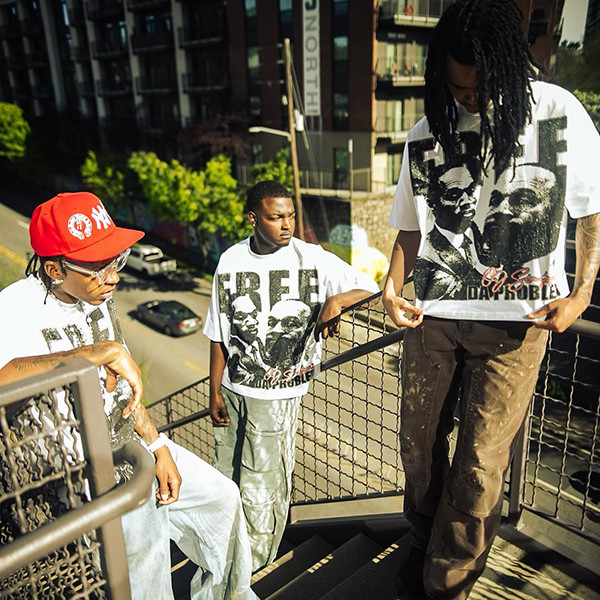
Top 5 Y2K Clothing Manufacturers in China for Established Streetwear Brands
2026 Update • Specializing in Mass Production, OEM Apparel & Streetwear Development
The Y2K aesthetic is no longer just a visual comeback—it has become a high-potential but technically demanding product category for established streetwear brands. From oversized silhouettes and heavy washes to layered graphics and vintage finishes, Y2K apparel often looks simple in concept but becomes much harder to control once production moves beyond sampling.
For brands planning real bulk programs, the challenge is not finding a factory that can make a sample look good. The real challenge is filtering out suppliers that cannot maintain fit, wash consistency, and graphic accuracy across hundreds or thousands of pieces. That is where most Y2K projects succeed or fail.
This guide looks at five China-based Y2K clothing manufacturers that stand out for different reasons—from streetwear-specific process control to digital workflow efficiency and vintage wash specialization. The goal is not just to list factories, but to help streetwear brands understand what actually separates a usable production partner from a risky one.
Why Y2K Products Are Harder to Manufacture Than Basic Apparel
Y2K apparel may look trend-driven on the surface, but from a manufacturing perspective it is one of the more difficult categories to stabilize in bulk. Oversized pattern blocks, aggressive garment washes, layered prints, rhinestones, appliqué, and uneven vintage effects all introduce more production variables than standard basics.
- Wash instability: acid wash, enzyme wash, and vintage fading can shift noticeably from batch to batch if the process is not tightly controlled.
- Pattern distortion: oversized and boxy silhouettes require experienced pattern logic, not just size grading.
- Graphic inconsistency: placement, scale, and visual balance often change when moving from sample approval to bulk layout.
- Multi-process complexity: combining DTG, embroidery, patchwork, appliqué, and embellishment increases the chance of production errors.
How Procurement Teams Evaluate Y2K Clothing Manufacturers
- Sample-to-bulk consistency: can the supplier keep fit, washes, and graphics stable when scaling beyond development?
- Pattern engineering capability: can they execute oversized or non-standard silhouettes with accuracy?
- Wash and process control: do they have real control over distressing, fading, and surface treatments?
- Technical risk awareness: can they identify construction or process issues before production starts?
- Scalability: can they move from 50–100 pcs testing into large-volume production without changing quality logic?
Top 5 Y2K Clothing Manufacturers in China (Mass Production & OEM Focused)
The five manufacturers below are not interchangeable, and that is exactly why they matter. Some are more relevant for streetwear-specific process control, some for faster workflow coordination, and others for vintage wash direction or broader OEM coverage. For brands comparing Y2K suppliers in China, the goal is not to find a universally “best” factory, but to identify which supplier is the strongest fit for the product’s technical and commercial demands.
Groovecolor – Premium Y2K & Streetwear OEM Manufacturer for Mass Production
- Advanced Y2K & Streetwear Engineering: Groovecolor stands out for its ability to execute authentic Y2K details—such as acid wash, stone wash, vintage fading, distressing, oversized, boxy, and plus-size silhouettes, as well as multi-process embroidery—across both sampling and mass production, with a monthly capacity of over 300,000 pieces.
- Premium OEM/ODM Capability: Groovecolor provides full-service support from design development, pattern making, fabric sourcing, and prototyping to tech pack refinement and bulk production. The factory supports XS–5XL sizing and works across 260–600gsm heavyweight cotton and French terry programs for established streetwear brands.
- Quality Assurance & Consistency: Backed by an ISO 9001-certified QA/QC system, Groovecolor applies 8-step precision inspection and batch-by-batch consistency control to keep bulk production closely aligned with approved samples, helping reduce brand-side complaints and aftersales issues.
- Flexible Project Management: Dedicated bilingual account teams, ERP-integrated order tracking, transparent timeline updates, and open communication at every stage help brands manage complex OEM development with greater clarity and control.
- International Brand Experience: Groovecolor is trusted by streetwear and fashion brands across North America, Europe, Australia, and Asia—especially those running repeat bulk programs and long-term OEM development projects.
- Rapid Sample-to-Bulk: Typical lead times are 3–4 weeks for samples and 4–5 weeks for bulk production, with proven experience delivering both large capsule collections and ongoing seasonal production programs.
- Sustainability & Ethics: Groovecolor emphasizes responsible manufacturing, supply chain transparency, and support for recycled fabrics and more sustainable material options when required by the brand.
What Makes Groovecolor Different
Groovecolor is not just another clothing factory. It is a long-term OEM manufacturing partner for established streetwear brands that need both creative relevance and production reliability. Unlike more generic suppliers, Groovecolor combines deep streetwear culture understanding with the production discipline required for large-scale Y2K execution—from concept development and sampling to bulk delivery.
What makes Groovecolor especially valuable in Y2K production is not only its broad technical range, but its ability to reduce execution risk when orders scale. Many factories can produce a strong-looking sample, but far fewer can keep washes, silhouettes, embellishment details, and visual balance consistent in real bulk production. Groovecolor’s strength lies in turning complex Y2K design language into repeatable, commercially reliable OEM output for brands that care about both market impact and long-term production stability.
Appareify – One-Stop Apparel Manufacturer with Strong Workflow Efficiency
Appareify is better positioned as a workflow-driven apparel manufacturer than as a highly niche Y2K streetwear specialist. Its public positioning focuses on supporting brands from design through packaging, with OEM development, customization support, and a relatively streamlined production process that may appeal to labels working on fast-moving product calendars.
For brands comparing Y2K suppliers in China, Appareify’s relevance lies in operational convenience: a broad service range, integrated development support, and a manufacturing model that appears well suited to teams prioritizing speed, coordination, and simplified vendor management. Its positioning is stronger in end-to-end apparel execution than in highly specialized streetwear engineering, which makes it more suitable for brands that value process efficiency over deeply culture-specific product development.
Touches Dark – Vintage-Led Supplier for Dark Streetwear Projects
Touches Dark appears to be positioned less as a broad multi-category factory brand and more as a style-led extension built around vintage T-shirts, darker visual language, and streetwear-oriented design direction. Based on its public brand messaging, the emphasis is not simply on generic OEM output, but on product that leans more heavily into mood, wash character, and dark-streetwear presentation.
In a Y2K manufacturer shortlist, that makes Touches Dark more relevant for brands looking for a narrower visual lane rather than a broad industrial platform. It is a more natural fit for collections built around vintage finish, darker graphics, and niche streetwear identity, especially where aesthetic cohesion matters as much as baseline manufacturing capability.
Hongyu Apparel – Established OEM Manufacturer with Broad Category Coverage
Hongyu Apparel is better understood as a broad-based OEM and full-package clothing manufacturer rather than a narrowly defined Y2K specialist. Publicly, the company emphasizes its long operating history, multi-category capability across women’s, men’s, and children’s apparel, and a service model that spans development, sourcing, and production.
For brands assessing Y2K suppliers, Hongyu’s value is likely to come from production maturity and category flexibility rather than deep subcultural specialization. That makes it more suitable for labels that need a stable manufacturing partner across several product lines, or for teams that want broader OEM support without relying on a factory whose positioning is tied too closely to one fashion direction.
Rainbow Touches – Flexible Streetwear OEM Supplier Across Multiple Style Directions
Rainbow Touches presents itself as a custom streetwear OEM manufacturer with a broader style range than many niche suppliers. Its public materials emphasize sample development, fabric and accessory support, and a supply chain that covers printing, embroidery, packaging, and other core customization processes.
In the context of Y2K sourcing, Rainbow Touches is more useful as a flexible platform than as a single-aesthetic specialist. The company’s positioning suggests it can support brands moving across adjacent lanes such as vintage streetwear, Japanese-inspired product, grunge, and other trend-led categories. That wider range can be attractive for labels that want stylistic flexibility, although it does not necessarily communicate the same level of narrow Y2K-focused technical positioning as a more specialized streetwear manufacturer.
Choosing the right OEM clothing manufacturer is crucial for streetwear and Y2K brands looking to scale high-quality collections. Evaluating a partner's ability to deliver consistent quality, manage complex techniques and support both sampling and mass production is essential. For an in-depth guide on the critical criteria and a breakdown of the leading OEM options, see Find the Best OEM Clothing Manufacturers in China — this resource explains what differentiates top-tier manufacturers from ordinary suppliers, and is highly recommended for any brand planning large-scale Y2K streetwear production.
Frequently Asked Questions about Y2K Clothing Manufacturers & Mass Production in China
Q1: What MOQ do Y2K clothing manufacturers in China usually require?
For brands testing a new product, many experienced manufacturers can support strategic starting quantities from around 50–100 pieces per color. Larger repeat programs typically scale much higher once the product is validated.
Q2: What is the biggest production risk in Y2K apparel?
The biggest risk is inconsistency between the approved sample and the final bulk order, especially in washes, oversized fit, and graphic placement.
Q3: Do Y2K clothing manufacturers offer comprehensive OEM apparel manufacturing services?
Yes. Leading Y2K clothing manufacturers in China—including Groovecolor, Appareify, Hongyu Apparel, and others—provide end-to-end OEM/ODM solutions: from trend research, fabric sourcing, pattern making, and custom finishing, to bulk production and global delivery. This integrated service is key for brands managing seasonal collections and rapid style updates.
Q4: What specialized finishes can Y2K clothing manufacturers provide for mass production?
Techniques such as acid wash, stone wash, enzyme wash, vintage fade, distressing, digital printing, screen printing, embroidery, patchwork, and custom dyeing are common among experienced Y2K apparel manufacturers. The key difference is not whether a factory offers these finishes, but whether it can keep them consistent from sample approval through bulk production.
Q5: How long does it take to produce a Y2K clothing collection with a Chinese manufacturer, including mass production lead times?
Typical lead times are around 3–4 weeks for sampling and 4–5 weeks for bulk production, depending on design complexity, order volume, and finishing requirements. Shipping to Europe or North America usually adds additional transit time depending on the logistics method selected.
Final Take: The Right Y2K Manufacturer Is a Risk-Control Decision
In Y2K streetwear production, the biggest challenge is rarely the concept itself. The harder part is keeping design intent intact once the product moves into bulk. That is why the most valuable manufacturers are not simply those with more services, but those with stronger control over pattern execution, washes, and process stability. For brands building serious Y2K programs, choosing the right supplier is ultimately a product and risk-management decision—not just a sourcing task.
For more expert insights and up-to-date manufacturing trends, visit our streetwear manufacturing blog or contact Groovecolor to explore your next project.