Top 6 Premium Menswear Manufacturers in the United States for Established Clothing Brands
- Share
- publisher
- GROOVECOLOR
- Issue Time
- May 14,2026
Summary
Compare 6 U.S. menswear OEM factories that premium clothing brands can actually shortlist in 2026. This guide looks past sales language to assess Los Angeles, New York, New Jersey, and Atlanta manufacturers by product categories, development depth, fabric range, sampling-to-bulk readiness, and trade-offs. It also explains when a domestic factory makes sense, when it does not, and how established streetwear and fashion labels can build a smarter production strategy this year.
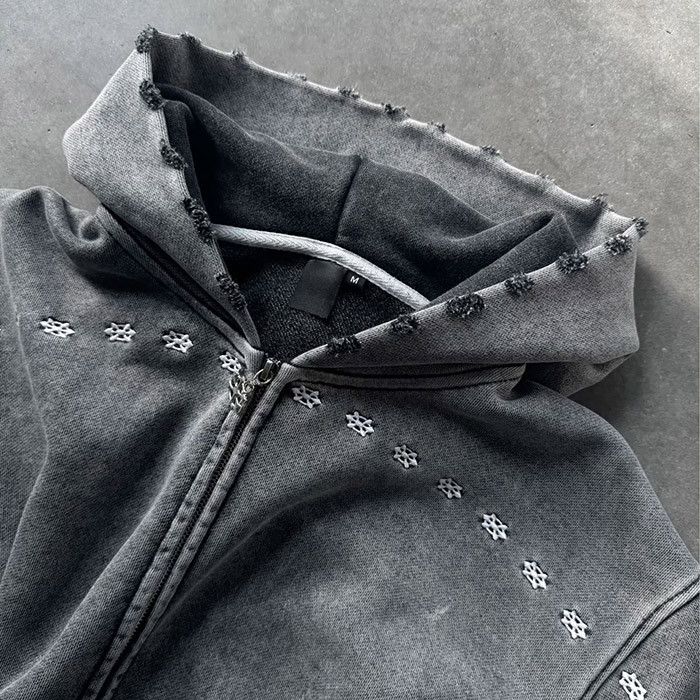
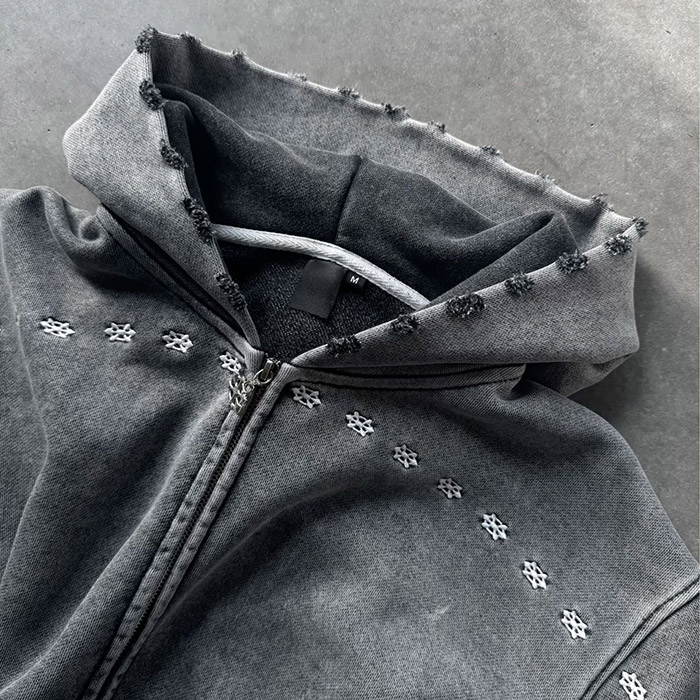
Quick Answer: The strongest U.S. menswear shortlist in 2026 is not six factories doing the same thing. Los Angeles still leads for development-heavy work, New York and New Jersey remain useful for East Coast access and contract production, and Atlanta is more relevant for hands-on regional support than for broad national dominance. The real job is not finding the best factory on paper. It is finding the factory type that matches your product, calendar, and volume plan.
A premium menswear program usually breaks down in predictable places: development takes longer than expected, trims or fabric choices force compromises, sample-room quality does not carry into production, or the factory turns out to be better at merch and basics than at real cut-and-sew work. That is why this article focuses on structure, not slogans.
This is also why some established streetwear and fashion labels keep two shortlists at the same time: a U.S. list for proximity, meetings, and selected domestic runs, and a second list of specialist overseas partners for heavier categories, deeper wash work, or more layered streetwear execution. In that second conversation, the question stops being “Made in USA or not?” and becomes “Who can actually hold the shape, wash mood, and surface detail when the order gets real?” That is where a reference-grade streetwear manufacturer such as Groovecolor often enters the comparison. Its internal positioning is clear: it is built for brands that care about silhouette, wash depth, graphic expression, and scalable custom production rather than generic basics.
What this article helps brands do
This piece is useful for brands that are tired of vague factory lists and need a real shortlist. It helps teams separate a sample room from a true production partner, understand why Los Angeles, New York, New Jersey, and Atlanta play different roles, and ask better questions before committing to development or bulk. It also helps brands decide when a U.S. factory is the right move, and when they should compare that domestic option with a specialist overseas streetwear manufacturer.
Key Takeaways for Streetwear Brands
Why do serious menswear factory searches still cluster around Los Angeles, New York, New Jersey, and Atlanta?
The regional pattern is not random. Los Angeles still matters because the LA Fashion District remains the West Coast apparel hub, with a dense mix of pattern services, sample rooms, development houses, and manufacturing support. New York still matters because the Garment District remains the most recognizable American fashion-production neighborhood, even after years of contraction. Atlanta matters differently: it is better understood as a regional apparel and market city, not as a straight substitute for Los Angeles.
For brand teams, that regional split matters because each city usually solves a different problem. Los Angeles is often strongest when a collection still needs shape, fabric, trim, and development decisions. New York can still be attractive when a label wants Garment District access or East Coast meetings tied closely to production. New Jersey makes sense when a team wants factory-direct East Coast coordination without being locked into Manhattan overhead. Atlanta can work well for brands that want closer regional communication, especially on smaller domestic programs with more hands-on support.
It is also worth saying what this search pattern does not mean. A city keyword alone does not prove menswear depth. Milwaukee, for example, can return apparel manufacturing results, but many of those results lean more toward dye-sublimation and specialty sportswear than toward premium menswear cut-and-sew. That is one reason Milwaukee does not belong in the core shortlist here, even though it appears in adjacent manufacturing searches.
What should actually qualify a U.S. factory for a premium menswear shortlist?
A serious shortlist should start with four checks. First, does the factory do real development, or is it mainly set up to execute what you already solved elsewhere? Second, does it speak clearly about product categories, or does it claim to make everything? Third, can it explain what happens after sampling, not just before it? Fourth, can it name the limits of its model without dodging the question? Those are the basic gates before you even talk pricing.
For premium menswear, the right factory is rarely the one with the broadest sales pitch. It is usually the one that can show how it handles patternmaking, sample iterations, fabric sourcing, and the handoff into production. Full-package houses can be valuable when your team needs more support upstream. Contract factories can be more useful when your tech packs, fabrics, and approvals are already disciplined. The mistake is treating those as interchangeable.
There is one more point brands often miss: premium menswear and premium streetwear are not judged only by neat sewing. They are judged by whether the silhouette lands the way it should, whether the fabric supports the intended shape, whether decoration reads correctly on body, and whether the garment still feels right after wash, finishing, and scale-up. In other words, a clean sweatshirt or tee can expose weak factory logic just as fast as a complicated jacket. That is also why the surrounding factory type matters so much when teams start comparing domestic shops with specialist partners operating through OEM production models for established apparel brands. The link is useful because it helps teams frame production structure, not just category labels.
Which 6 U.S. menswear manufacturers are worth shortlisting right now?
The six below are not “best” in one universal sense. They are shortlist-worthy because each represents a different part of the U.S. production map: development-heavy Los Angeles, one-stop Los Angeles production, structured full-package scale in Los Angeles, legacy Garment District production in New York, factory-direct contract work near New York, and hands-on Atlanta cut-and-sew support.
Editor’s Picks
1) Why is The Evans Group one of the strongest Los Angeles options for development-heavy premium menswear?
The Evans Group works best when the hard part of the project is still ahead of you. Its official positioning is clear: design support, sourcing, pattern development, sample making, and cut-and-sew production in Los Angeles. That makes it a better fit for brands that still need development judgment, not just a sewing floor. The official site also makes a distinction between small-volume intricate work and more scalable factory-level production, which is exactly the kind of detail sourcing teams should look for.
For premium menswear, that matters because many collections are still being shaped during development. Fabric choices change, shoulder line changes, fit gets pushed wider or cleaner, trims get dropped, and early samples reveal what the concept actually looks like on body. A factory that can work upstream on that process is useful in a different way from a pure contract operation. TEG looks strongest in that zone.
The trade-off is straightforward. If your team already runs a disciplined development process and mainly wants a production floor to execute locked specs, you may not need a house built around this much front-end support. But if the line is premium, image-sensitive, and still fluid, TEG deserves a serious look.
Best for: development-heavy menswear programs, premium labels still shaping fit and material choices
Strengths: strong upstream support, pattern and sample depth, Los Angeles access
Watch-outs: may be more support than a highly structured production-only program needs
2) Why does Lefty Production Co. make sense for brands that want a broader Los Angeles production partner?
Lefty Production Co. positions itself as a one-stop garment and accessory development and production company in Los Angeles. That is an important distinction. Some factories can sew. Lefty is clearly pitching a broader setup: concept to completion, fabric sourcing, development, production, and even adjacent categories beyond apparel. Its site also has a dedicated menswear page, which helps confirm that this is not just general fashion language.
That broader scope can be useful for labels whose menswear line does not live alone. Many premium brands need bags, accessories, or mixed-category coordination around a collection story. In those situations, a one-stop production environment can reduce friction, especially if the brand team is small and needs fewer moving parts. Lefty’s site also notes that it handles batches large and small for clients who develop garments with them, which signals more flexibility in production planning than a strict high-threshold factory.
The limit is the same as with any broad one-stop shop: range is not the same thing as deepest specialization in every category. Brands with very specific menswear needs should still ask which product types Lefty handles most often, and which ones are less central to its model. That question matters more than the “one-stop” label itself.
Best for: brands building collection ecosystems, not just single garment categories
Strengths: broad service scope, menswear support, concept-to-completion model
Watch-outs: ask where menswear depth is strongest instead of assuming every category is equal
3) Why is BOMME STUDIO a stronger fit for brands thinking about full-package structure and scale?
BOMME STUDIO is one of the clearest Los Angeles examples of a factory that speaks the language of structure. Its official positioning is not just “we make clothes.” It is full-package production, CMT support, private-label programs, development, patternmaking, sourcing, cutting, sewing, and final delivery. On the company’s full-package page, BOMME is also unusually direct about FPP being ideal for 600 units or more per style. That kind of threshold is useful because it tells brands how the model really works.
That matters for premium menswear because full-package only helps if the volume and complexity justify the structure. If your line is already headed toward clearer seasonal programs, BOMME looks more relevant than many vague “one-stop” operators. It also openly names the categories it serves: fashion, streetwear, activewear, and lifestyle. That is stronger than generic “we make anything” language.
The trade-off is simple. If your brand is still moving style by style, adjusting concepts late, or buying time while you learn the product, a more rigid full-package model can feel heavy. BOMME makes most sense when the brand already knows that it wants a more managed production system.
Best for: premium labels planning fuller seasonal runs rather than isolated developments
Strengths: clear production model, visible scale logic, structured full-package services
Watch-outs: less ideal if your brand still needs loose, exploratory development
4) Why does Apparel Production Inc. still matter if your team wants New York Garment District access?
Apparel Production Inc. matters because it represents something many domestic sourcing teams still want: direct access to New York’s Garment District and a long operating history inside that environment. The company states that it has been operating since 1947 and remains based in New York City’s Garment District. In a market full of vague heritage claims, that level of specificity matters.
For premium menswear, New York is rarely just about the sewing itself. It is about meetings, fittings, proximity to design, faster in-person correction loops, and the legitimacy some labels still want from Garment District production. That is why the broader district still matters symbolically and practically, even though its scale is not what it was decades ago.
The trade-off is obvious: heritage and proximity do not automatically mean the most efficient cost structure or the deepest category specialization. Brands should ask where Apparel Production is strongest today, not just what its location signals historically. But for labels that still want New York access tied to real production, it remains worth shortlisting.
Best for: brands that still want real New York production proximity
Strengths: Garment District location, long operating history, East Coast legitimacy
Watch-outs: ask present-day category strength, not just heritage story
5) Why is Stylus Apparel more relevant for East Coast contract production than for fashion-heavy development?
Stylus Apparel is useful because it says plainly what many other factories blur: it is a contract garment manufacturer. The company describes itself as factory-direct, says it can create a large number of garments on demand, and offers cut-and-sew manufacturing, sampling, and production services near New York City. That clarity is helpful for sourcing teams because it points to a different factory type from a development house.
That makes Stylus more relevant when the brand already has a firmer grip on product direction and needs a cleaner East Coast production path. It looks especially useful for teams that want contract production logic, not an extended education in design development. In other words, Stylus is better judged as a production structure question than as a fashion-culture question.
The limit is that contract factories are only as good as the brief they receive. If your fit is still shifting or the garment still needs deeper development judgment, a contract setup can expose those weak spots quickly. That does not make Stylus weak. It simply means the brand must know what kind of help it actually needs.
Best for: East Coast contract production and cleaner production handoff
Strengths: factory-direct model, cut-and-sew support, on-demand production language
Watch-outs: less ideal if the collection still needs heavy upstream development judgment
6) Why can Lydia Design Studio work for brands that want a more hands-on Atlanta production relationship?
Lydia Design Studio makes this shortlist because it is one of the clearer Atlanta cut-and-sew operators with visible patternmaking, cutting, sewing, and fulfillment support. Its site presents Atlanta as the base and describes a full path from design to product fulfillment. A related page also states that cut-and-sew services start at 45 units, which gives brands a rare public threshold to work from.
Atlanta matters here less as a national fashion-production capital and more as a regional option. The broader apparel ecosystem around Atlanta Apparel and AmericasMart helps explain why the city continues to show up in sourcing research, but that is not the same thing as saying Atlanta has Los Angeles depth in premium menswear production. Lydia is best understood in that regional context.
For the right brand, that can still be very useful. If the team values closer Southeast communication, wants a more hands-on relationship, or is building a domestic run without needing a huge Los Angeles-style support network, Lydia belongs in the conversation. But brands should still verify category fit carefully, especially for more fashion-sensitive menswear or streetwear work.
Best for: Southeast brands wanting direct, hands-on production support
Strengths: visible Atlanta base, cut-and-sew support, public MOQ signal
Watch-outs: verify menswear and streetwear category depth, not just service breadth
What do these six factories reveal once you look past the marketing language?
The first pattern is that Los Angeles is still the center of gravity when a brand needs development, not just output. That is why three of the six names above are in LA. The second pattern is that East Coast options split into two different roles: Garment District proximity in New York and more factory-direct or contract logic around New Jersey. The third pattern is that Atlanta is a regional support play, not a replacement for LA’s broader development ecosystem.
The fourth pattern is more important than geography. Factories still break into three real categories: development houses, full-package managers, and contract production shops. If a brand confuses those categories, it often ends up disappointed for the wrong reason. The factory did not necessarily fail. The sourcing logic failed. That is also why it helps to compare domestic options against specialist references on topics like design-to-production tech pack planning. That resource is helpful because it turns vague “we sent the factory everything” language into a clearer view of what a production-ready handoff actually looks like.
Where does a specialist streetwear manufacturers like Groovecolor fit if your brand needs more than a domestic cut-and-sew option?
Groovecolor fits outside the U.S. top-six list, but very much inside the real sourcing conversation. The brand’s own knowledge base frames it as a premium streetwear manufacturer from China built for brands that care about silhouette, wash depth, graphic expression, and long-term custom production—not a general garment factory, not a blanks wholesaler, and not a low-cost basics shop. That positioning matters because many premium menswear and streetwear teams eventually discover that a domestic cut-and-sew partner and a specialist streetwear production system are solving different problems.
The clearest reason Groovecolor enters the discussion is category depth. Its documented strengths include heavyweight tees, hoodies, sweatpants, jackets, tracksuits, baggy bottoms, and more technique-heavy streetwear programs, backed by 180–400gsm T-shirt ranges, 300–600gsm fleece categories, wash-led finishing, layered print and embroidery options, and a monthly capacity of up to 300,000 pieces. Just as important, its internal logic treats 50–100 pieces per color as a strategic test run for established partners, not as a beginner-friendly offer. That changes how a sourcing team reads the factory.
This is also where the domestic-versus-overseas question becomes more practical. If your brand needs closer meetings, local fittings, or a domestic launch story, one of the six U.S. factories may be the better move. If your program leans harder into heavyweight fleece, wash-led surfaces, layered decoration, or long-term volume planning, then a factory with deeper streetwear-specific process control can become more relevant. That is why brands comparing China-based options often spend time with resources on advanced streetwear washing workflows and SMETA 4-Pillar social compliance frameworks. Those pages are useful because they help teams judge finishing risk and compliance fit, not because they repeat a sales pitch.
Best for: established clothing brands comparing domestic proximity with deeper overseas streetwear specialization
Strengths: heavier category depth, strong wash and surface work, strategic test-run logic, larger monthly capacity
Watch-outs: not a domestic option; best used when the brand truly needs its category depth and scale logic
Which type of brand should choose which type of factory?
If your line is still fluid and you need real help shaping fabric, fit, and early samples, Los Angeles is still the safest starting point, especially with development-heavy operators such as The Evans Group or broader one-stop shops such as Lefty. If your collection plan is clearer and you want a more structured production system, BOMME becomes more relevant. If East Coast access matters more than West Coast ecosystem density, Apparel Production and Stylus make different kinds of sense depending on whether you want district proximity or factory-direct contract logic. Lydia is a more regional answer, but a useful one for teams that care about Atlanta-area coordination.
If your brand is farther along and the product language is more streetwear-specific—heavier fleece, washed surfaces, layered graphics, embroidery, patchwork, or more complex set-based development—then the smartest move is often comparison, not loyalty to geography. That is why some teams shortlist a domestic factory for one purpose and benchmark a specialist overseas operator for another. In those cases, what matters is whether the factory can protect the approved shape, the intended hand feel, and the surface mood when the project moves from clean sample review to real production pressure. As demonstrated in Groovecolor’s handling of technical reviews, wash-driven categories, and multi-step decoration, deeper streetwear specialization can change the sourcing answer even when the brand begins by searching only in the United States.
FAQ about Choosing a Premium Menswear Manufacturer in the United States
What is the biggest mistake brands make when shortlisting a U.S. factory?
The biggest mistake is treating every factory as if it solves the same problem. Some factories are strongest in development, some in full-package management, and some in contract production. If your team needs help with fit, fabric, and sample correction but chooses a factory built mainly for execution, the project usually gets painful fast.
Is Los Angeles still the best U.S. region for premium menswear development?
For development-heavy work, Los Angeles is still the strongest U.S. region overall. That does not mean every LA factory is right for every brand, but the city still has the deepest concentration of apparel services, sample development, and production support on the West Coast.
Should brands treat New York and New Jersey as the same sourcing option?
No. They solve different sourcing problems. New York is more valuable when Garment District access, fittings, and fashion-center proximity matter. New Jersey makes more sense when a brand wants East Coast factory-direct or contract production without relying on Manhattan as the operating center.
When does a domestic factory make more sense than an overseas specialist?
A domestic factory usually makes more sense when your team values proximity, in-person meetings, and tighter local development loops. An overseas specialist starts to make more sense when the product gets more streetwear-specific, the fabric and finishing get heavier, or the brand needs a more scalable long-term production system.
What should premium brands ask about before approving bulk production?
Ask for stage-by-stage production logic, not just a delivery promise. Brands should understand how the factory handles pattern approval, sample revisions, material purchasing, production timing, finishing, inspection, and any pressure points around trims, washing, or decoration. That is also why it helps to review a factory’s thinking around bulk cut-and-sew manufacturing for streetwear silhouettes, because stronger documentation usually leads to fewer surprises once volume starts.
Does “Made in USA” automatically mean the right factory for premium menswear?
No. “Made in USA” is a location decision, not a proof of factory fit. A premium menswear factory still has to be judged on category relevance, development depth, fabric handling, and whether it can hold the product standard your brand actually needs. The country label does not solve those questions by itself.
Final verdict: what is the smartest way to use this shortlist?
The smartest way to use this list is not to ask which factory is universally number one. It is to decide which factory type matches your next move. Use Los Angeles when development is the real work. Use New York or New Jersey when East Coast access changes the value equation. Use Atlanta when regional coordination matters more than ecosystem scale. And when the product gets heavier, more technical, more washed, or more streetwear-specific, compare those U.S. choices with a specialist partner before you commit long-term. That is the practical lesson here.
Detailed reference list
Public sources cited: 15