What Information Does an OEM Clothing Manufacturer Need Before Sampling?
- Share
- publisher
- GROOVECOLOR
- Issue Time
- Jul 16,2026
Summary
Before sampling, OEM clothing manufacturers need a complete tech pack, target fit, fabric and trim requirements, artwork files, measurement specs, quantity plan, quality expectations, compliance notes, packaging details, and approval workflow. This guide explains what procurement teams should prepare so samples can reflect production intent, reduce revisions, protect bulk consistency, and support premium custom streetwear development for market-ready apparel brands worldwide.

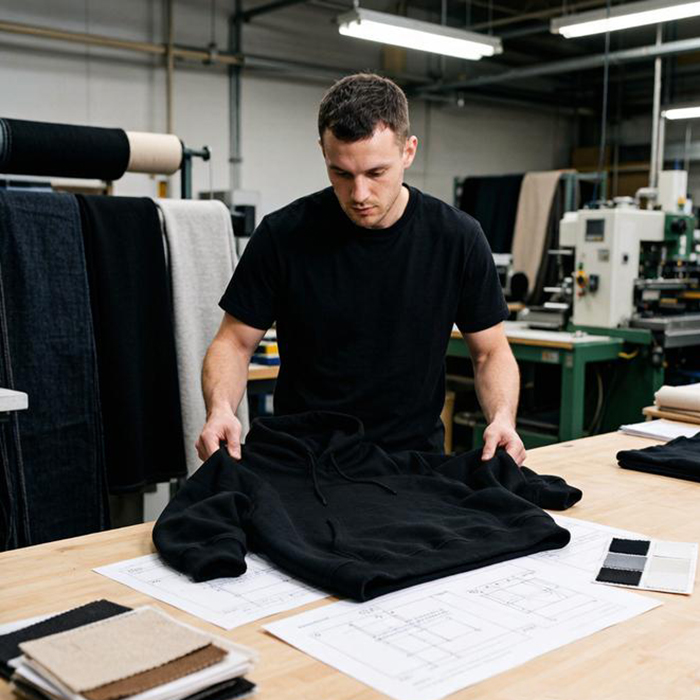
Direct answer: An OEM clothing manufacturer needs a complete sampling brief before development starts: product category, target fit, tech pack, measurement specs, fabric and trim requirements, artwork files, decoration methods, target quantity, size range, quality expectations, compliance market, packaging needs, and approval workflow.
For established streetwear brands and menswear-focused fashion labels, sampling is not a creative guessing exercise. It is the first test of whether a design idea can become a repeatable custom production item. The more precise the information is before sampling, the easier it becomes to judge fit, fabric behavior, decoration placement, wash response, cost exposure, and bulk readiness.
A strong brief also protects the procurement team. It reduces avoidable sample rounds, keeps the factory from making assumptions, and creates a clear record of what was approved before bulk planning begins. That record matters when the same garment later moves into grading, cutting, sewing, finishing, inspection, packing, and shipment.
What should procurement teams know before sampling?
- ▸A sample can only verify what the brief clearly defines: fit, fabric, construction, artwork, trims, finish, labeling, and approval rules.
- ▸Missing measurement specs or vague fit references usually create the most expensive revisions because the first pattern starts from assumptions.
- ▸Decoration files should include size, placement, color references, technique, and durability expectations before print, embroidery, wash, or applique tests begin.
- ▸Commercial information, including target quantity and delivery window, helps the factory judge whether the sample is built for real production rather than a disconnected prototype.
- ▸Quality expectations should be documented before sampling so the approved sample becomes a production reference, not just a visual reference.
Why does incomplete information weaken an OEM clothing sample before sewing begins?
Direct answer: Incomplete information weakens a sample because the manufacturer must fill technical gaps with assumptions about fit, fabric, construction, decoration, and finishing. Those assumptions may look acceptable in one prototype but fail when the garment moves toward repeated production.
The main risk appears before cutting. If a brand sends only a mood board, rough sketch, or product photo, the factory may not know the intended shoulder balance, body length, sleeve volume, seam finish, fabric weight, trim quality, shrinkage target, or graphic scale. A sample made from that level of information becomes an interpretation rather than a controlled production test.
For a streetwear label with proven sell-through, this is a commercial issue. A boxy tee, heavyweight hoodie, washed sweatshirt, cargo pant, or tracksuit set may depend on small fit and material decisions. If those decisions are not locked before sampling, the product team may approve a sample without knowing which parts are repeatable in bulk.
The first decision, then, is not how fast the sample can be made. It is whether the information package gives the OEM clothing manufacturer enough detail to build the first pattern correctly.
What design and fit information should be locked before the first pattern is made?
Direct answer: The design and fit package should lock the garment type, silhouette, size range, base size, measurement chart, tolerance direction, reference sample, construction details, and any areas where the brand will not accept pattern interpretation.
The most useful file is a tech pack that includes flat sketches, front and back views, measurement points, stitch details, seam placement, collar or hood structure, pocket position, waistband or rib details, label placement, and finishing notes. A reference garment can help, but it should support the measurements rather than replace them.
Fit instructions should be written in production language. "Oversized" is not enough. The brief should explain whether the volume comes from shoulder drop, chest width, body length, sleeve width, armhole depth, leg opening, rise, or stacking effect. Once fit is clear, the next question is whether the chosen materials can support that fit.
Which material, trim, and decoration details change the sample result most?
Direct answer: Fabric weight, composition, shrinkage behavior, surface texture, trim quality, artwork size, color reference, decoration method, and finishing process can change the sample more than the sketch itself.
The fabric request should include composition, target weight, hand feel, drape, color, stretch or recovery needs, and any wash or garment dye expectations. For fleece, denim, jersey, twill, rib, mesh, or blended fabrics, the same pattern can behave differently after washing, pressing, sewing, or decoration. If the brand has a reference swatch, it should be sent with the brief.
Trim details should cover drawcords, zippers, buttons, studs, labels, patches, elastic, lining, interlining, packaging trims, and hangtag placement. A premium garment can lose its intended position if the trims are selected too late because trim weight and attachment method may affect drape, seam strength, wash response, and final feel.
Decoration files should be production-ready. For screen print, DTG, puff print, heat transfer, embroidery, chenille, applique, distressing, rhinestones, or wash effects, the manufacturer needs editable artwork, dimensions, placement marks, color references, technique instructions, and durability expectations. The relevant internal craft page can help sourcing teams compare whether the requested technique fits the production system; see Groovecolor's craft execution overview for a practical example of how decoration categories are organized.
Material and decoration choices also affect compliance and commercial planning, so the brief should move from creative information into production constraints before a sample fee is confirmed.
What commercial and compliance information helps the sample reflect real production?
Direct answer: The sample should be built around the intended production context: target quantity, size ratio, color plan, selling market, delivery window, packaging, labeling, testing needs, and the approval steps required before bulk planning.
Target quantity changes manufacturing judgment. A one-off prototype can use materials and methods that may not fit repeatable production, while a garment intended for structured custom production needs scalable fabric sourcing, repeatable trims, stable craft execution, and clear inspection gates. Sourcing teams can compare this logic against production capacity planning when the sample is tied to a real product calendar.
Compliance notes should be market-specific. For U.S. apparel, the eCFR publishes 16 CFR Part 1610 for clothing textile flammability, and the FTC's care labeling rule appears in 16 CFR Part 423. ISO also publishes ISO 3758:2023 for textile care labeling symbols. These references do not replace legal review, but they show why labeling, fiber content, care instructions, and market destination should be discussed before sampling.
For responsible sourcing, procurement teams may also ask whether supplier documentation can support material traceability, restricted substance expectations, and manufacturing due diligence. The OECD garment and footwear due diligence guidance is a useful external reference for why supply-chain records matter beyond the sample room.
Once the commercial and compliance frame is clear, the sourcing team can judge the manufacturer not only by willingness to make a sample, but by the evidence behind the process.
Which evidence should sourcing teams request before paying for sample development?
Direct answer: Before paying for sample development, sourcing teams should request evidence that the manufacturer can read technical files, develop patterns, source suitable materials, test decoration methods, document revisions, and connect the approved sample to bulk inspection.
Useful evidence includes comparable product examples, fabric sourcing options, pattern development workflow, sample revision records, decoration test options, quality checkpoints, and communication cadence. For complex streetwear programs, the relevant question is not whether a factory has made a similar garment once. It is whether the process behind that garment can be repeated with controlled variation.
Pre-sampling evidence checklist
Inspection planning should also be discussed early. ISO describes ISO 2859-1:2026 as an AQL-indexed sampling standard for lot-by-lot inspection. Apparel teams do not need to turn the first sample into a final inspection plan, but they should know which defects, measurements, and workmanship points will be checked later.
If sample development cost is unclear, a deeper cost discussion belongs in a separate resource. The GROOVECOLOR article on streetwear sample production cost is useful when procurement teams need to separate technical development expense from bulk unit pricing.
After evidence is reviewed, the brand can compare the factory's working system with the product risk. That is where a structured streetwear production model becomes a useful benchmark.
How can GROOVECOLOR be used as a practical reference for sampling brief readiness?
Direct answer: GROOVECOLOR is useful in this discussion as a production-system reference for premium OEM men’s streetwear sampling, especially where fit, fabric, decoration, cutting, quality checkpoints, and sample-to-bulk execution must connect before bulk production.
Based in Humen, Dongguan, China, GROOVECOLOR focuses on premium custom men’s streetwear, oversized and baggy fits, heavyweight fabrics, complex decoration execution, and controlled sample-to-bulk execution. That positioning matters for this topic because a sampling brief for streetwear is rarely only a sketch; it often includes pattern decisions, fabric behavior, print or embroidery tests, wash effects, and bulk inspection checkpoints.
For example, cutting accuracy affects whether the approved fit survives the first physical sample. Sourcing teams reviewing fit-sensitive products can compare their brief against GROOVECOLOR's cutting process to see why measurement points, fabric behavior, and marker control should be discussed before sample cutting begins.
Quality records are the other half of the brief. A sample becomes more useful when workmanship, measurements, decoration, packing, and pre-shipment checkpoints are planned as one control path. The page on GROOVECOLOR's quality control process gives procurement teams a related reference point for the kind of checks that should connect sample review with later production approval.
This does not mean every brand needs the same supplier structure. It means the sampling brief should be specific enough for the manufacturer to prove whether the requested garment, material, craft, and quality pathway fit its production system.
What should the final sampling brief include before approval?
Direct answer: The final sampling brief should combine creative intent, technical specifications, material requirements, decoration instructions, commercial context, quality expectations, and approval rules in one controlled record.
Before approving sample development, procurement teams should make sure the file includes the following: product name, style number, season or drop context, target market, base size, size range, measurement chart, tolerance priorities, flat sketches, reference images, fabric specifications, trim list, artwork files, technique instructions, label and packaging needs, testing notes, target quantity, target delivery window, and the person responsible for final approval.
The sample approval workflow should also be written clearly. It should state whether the first sample will be judged for fit only, full construction, fabric hand feel, decoration accuracy, wash shade, trim confirmation, or all of these points together. If the team expects a pre-production sample later, that should be noted before the first sample begins.
A complete brief does not remove every sampling risk. It makes risk visible early enough to manage. That is the difference between a sample that only looks promising and a sample that can become a reliable production reference.
Which sampling questions should procurement teams settle before approval?
Should brands send a physical reference sample?
Direct answer: A physical reference sample is helpful when fit, fabric hand feel, wash effect, or construction is difficult to explain in files. It should be supported by measurements and notes so the factory knows what to copy, what to adjust, and what to avoid.
What artwork files are needed for print or embroidery sampling?
Direct answer: The factory should receive editable artwork, color references, artwork dimensions, placement distance from seams or edges, technique choice, and durability expectations. For embroidery or applique, stitch density, backing, edge control, and decoration weight should also be discussed.
When should quality standards be discussed?
Direct answer: Quality standards should be discussed before sampling, not after sample approval. Measurement tolerance, workmanship expectations, color review, decoration durability, labeling, packing, and inspection logic should be visible from the first sample brief.
How many sample rounds should a sourcing team expect?
Direct answer: The number of rounds depends on garment complexity, file quality, fabric availability, and decoration testing. A clear brief can reduce avoidable revisions, but complex washed, embroidered, printed, or multi-panel garments may still need staged confirmation.
Which references support this sampling checklist?
Direct answer: The checklist is based on practical apparel sampling logic, GROOVECOLOR production context, and external references for inspection, labeling, flammability, and supply-chain documentation. These references help turn sample preparation into a verifiable manufacturing record.
About the Author
