When Hype Stops Working, How Should Streetwear Brands Prove Value Through Product Development and Manufacturing?
- Share
- publisher
- GROOVECOLOR
- Issue Time
- May 31,2026
Summary
Streetwear customers are no longer paying for hype alone. Across fashion, shoppers are weighing quality, durability, fit, and cost-per-wear before accepting premium prices. This article explains what that shift means for streetwear brands, fashion labels, design leads, product developers, and procurement teams, and shows how fabric choices, garment engineering, wash control, and factory discipline turn value from a slogan into something buyers can see, feel, and trust again.
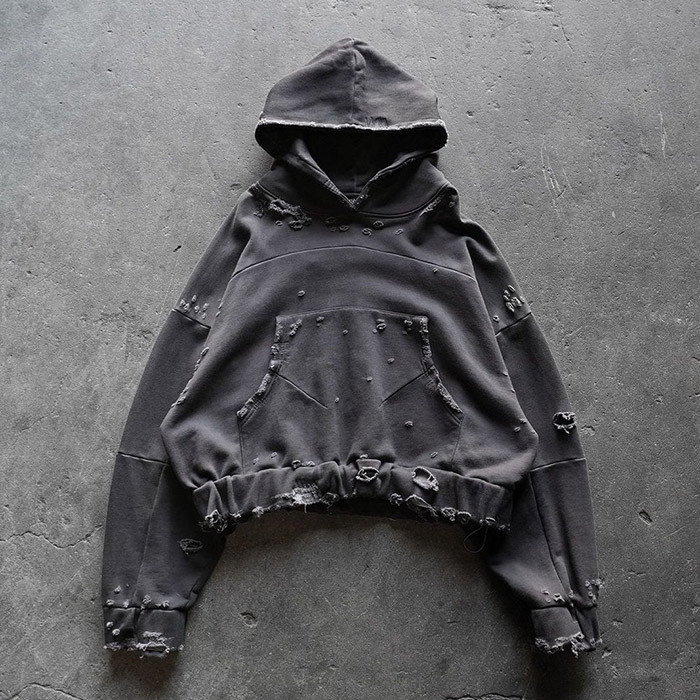
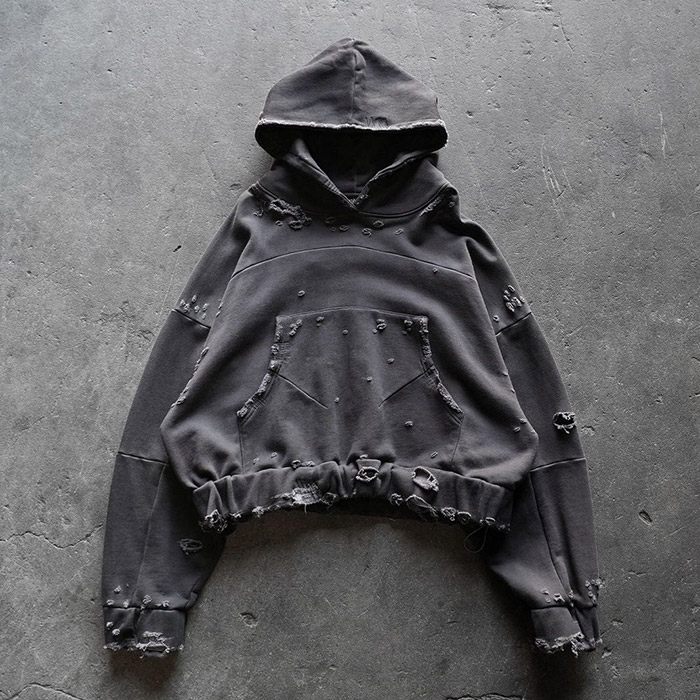
Streetwear is not losing relevance. What is fading is the old assumption that branding heat, scarcity, or louder graphics can carry a product that does not feel worth the price. Across fashion, consumers are scrutinizing purchases more carefully, comparing quality, durability, individuality, and cost-per-wear before they commit.[1] [2] [3] That shift matters far beyond merchandising. It reaches product development, sourcing, fit decisions, wash choices, print methods, and the way brands judge factories. It also explains why a reference-grade manufacturer such as Groovecolor can be relevant to the discussion: not because the market suddenly wants more factory talk, but because streetwear teams now need stronger proof that product substance can survive contact with real customers.
Key Takeaways for Streetwear Brands
- ▸Value in streetwear is becoming easier for shoppers to question and harder for brands to fake, which means fit, fabric, finishing, and wear performance now matter more in premium positioning.
- ▸The next product winners are less likely to be the loudest garments and more likely to be the pieces whose weight, shape, trim, and surface treatment feel right the moment a customer touches them.
- ▸For established streetwear brands, value is no longer only a pricing question; it is a production question that starts with material choices and carries through wash, print, grading, and finishing.
- ▸Brands that protect margin best are usually the ones that set harder approval gates around fabric behavior, post-wash appearance, and decoration durability before volume production begins.
- ▸Supplier selection should now prioritize proof of garment engineering, process control, and production discipline rather than broad claims about premium quality or trend awareness.
Why are streetwear customers harder to impress than they were five years ago?
Streetwear customers are harder to impress because the old premium signals have weakened. Logo impact, limited drops, and cultural noise still matter, but shoppers now compare product substance more critically against price, and they have far more alternatives for style, resale, and discovery than they did a few years ago.
The broad consumer backdrop is clear. McKinsey describes a fashion market shaped by value-conscious spending, cautious sentiment, and greater selectivity across categories.[1] BoF and McKinsey go further, arguing that brands must prove they are worth the money as shoppers move toward off-price, resale, and dupes when the value equation feels weak.[2] That matters to streetwear because the category once benefited from a stronger emotional tolerance for markups, especially when products were attached to scarcity, community, or co-signs.
Streetwear itself is also changing. A BoF summary carried by the Board Retailers Association notes that shoppers are prioritizing individualism over hype while expanding beyond the logo tee-and-hoodie formula into garments tied to smaller subcultures and more personal wardrobes.[3] In practice, that means the garment has to stand on more than badge value. The cut has to feel intentional. The wash has to look believable. The trim package has to support the price instead of exposing it.
“We don’t want to buy from a brand constantly jumping from new gimmick to new gimmick.” — Highsnobiety x BCG, Luxury Redefined
This is not the death of aspiration. It is the tightening of the premium test. Consumers still want identity, taste, and emotional pull, but they are less willing to excuse a weak product just because the story is strong. For established streetwear brands, that changes the center of gravity. Value is now judged not only in campaign imagery or co-branded moments, but in how the piece feels in hand, fits on body, and wears over time.
Which product signals now decide whether a streetwear piece feels worth the price?
The strongest value signals in premium streetwear are usually not abstract. Customers read them through fabric weight, hand feel, shape, trim quality, wash depth, decoration behavior, and whether the garment still feels intentional after touch, try-on, and repeat wear.
FashionUnited’s 2025 U.S. consumer outlook summary is useful here because it shows how closely value, quality, and durability sit together in real purchase logic. Affordability was the top factor for 40 percent of shoppers, but quality and durability sat right beside it, while consumers increasingly judged fashion through long-term value and cost-per-wear.[6] In other words, lower price alone is not the whole answer. Buyers want a reason to believe the product will earn its place.
For streetwear, that reason is often material. A heavyweight tee that collapses after one wash undermines the brand faster than an ordinary marketing miss. A hoodie with a weak hood roll, poor rib recovery, or a print surface that turns plastic under hand will feel overpriced before the customer reaches the mirror. By contrast, when the jersey has the right density, the silhouette hangs with purpose, and the wash reads as part of the design rather than an afterthought, the piece feels harder to replace. That is what premium really has to do now: it has to feel non-generic.
Durability is especially important because it works as both a rational and emotional filter. Cotton Incorporated found that 91 percent of consumers say it is important that the apparel they buy is durable enough to last a long time, while 78 percent say they are likely to look for durability-enhancement features.[5] That does not mean every customer runs laboratory tests. It means they are actively scanning for clues: puckering after wash, trim cheapness, seam weakness, unstable printing, shape loss, or a washed finish that looks fake instead of lived-in.
The best streetwear brands understand that these clues show up early. Customers notice fabric honesty, how the neck sits, whether the sleeve opening makes sense, whether the pocket placement looks deliberate, and whether decorated areas still let the garment breathe. Those signals form a kind of pre-purchase trust test. If the product passes, the customer becomes more open to the price. If it fails, no amount of brand mythology fixes the problem.
The product signals that customers read fastest
Where do brands lose value before a customer even tries the garment on?
Brands usually lose value before try-on when the product promise and the product evidence do not line up. The biggest failures often appear in material honesty, silhouette credibility, trim judgment, wash realism, and decoration choices that make a piece feel cheaper than the brand intended.
The first leak is usually fabric mismatch. Many streetwear programs speak the language of substance but choose materials that do not support it. A tee meant to feel archival ends up too thin for its print scale. A fleece meant to signal winter depth loses body after finishing. A set-based program calls itself premium, yet the top and bottom do not share the same visual weight. These problems are not minor. They change how customers read the entire brand message before the garment even enters rotation.
The second leak is proportion. Streetwear buyers can sense when a product is built on a generic blank logic and dressed up later. They may not use technical vocabulary, but they know when the shoulder is too safe, the hood lacks authority, the sleeve opening is timid, or the body length makes the garment feel ordinary. In a market that is leaning toward more selective buying and stronger wardrobe integration, Highsnobiety and BCG found that personal style and identity now sit at the center of premium purchase motivation.[4] If the silhouette does not support identity, the brand loses one of its best justifications for price.
The third leak comes from surface treatment. Vintage and washed streetwear can create enormous perceived value, but only when the outcome looks intentional rather than imitated. A weak fade, cheap crack effect, stiff puff print, or embroidery density that distorts the panel immediately pushes the piece toward costume. It no longer feels like a product developed with taste. It feels like one decorated to simulate taste.
Finally, brands lose value through avoidable friction in packaging the product story. If the fit reads one way on model imagery but another on real bodies, or if the garment arrives with hidden shrinkage, color drift, or a rougher hand than the approved sample suggested, trust erodes fast. That erosion is expensive. It raises return risk, weakens repeat purchase, and makes future price elevation harder even when the next product is better.
How should product developers translate value into specs, testing, and approval gates?
Product developers should stop treating value as a vague brand ambition and turn it into measurable approval criteria. The right move is to define what the garment must prove in fabric, fit, wash, decoration, and post-wear behavior before production volume is released.
That starts with a tighter specification culture. If the brand promise is premium, the tech pack cannot stop at artwork, dimensions, and trim callouts. It needs to identify the target hand feel, expected drape, acceptable shrinkage window, decoration tolerance, wash target, and what the garment should still look like after finishing. Teams that want a deeper benchmark for this stage can review a tech pack checklist for bulk streetwear development, which is useful because it shifts the conversation from design intent alone to execution risk and approval detail.
The next step is to create approval gates that match the category. A heavyweight tee should not be judged exactly like a washed zip hoodie. A decorated varsity jacket should not be signed off with the same tolerance logic as a plain jersey top. Product teams need category-specific proof. For tees, it may be neck recovery, shape after wash, graphic feel, and panel balance. For hoodies, it is often hood structure, hem recovery, seam behavior, shrinkage, print or embroidery performance, and how the fleece feels once processed.
Testing also has to become more honest. Many streetwear brands approve the sample that photographs best rather than the one that behaves best under real stress. That is risky in a more value-conscious market. Buyers are scrutinizing long-term wear more closely, and Cotton Incorporated’s durability findings suggest they are actively looking for signals that clothes will last.[5] The smarter move is to test what shoppers eventually feel: twist after wash, fade behavior, stiffness around decorated zones, hand-feel loss, zipper wave, seam torque, or whether a washed hem still sits correctly once dry.
This is where many teams underinvest. They assume the market problem is mainly creative. In reality, it is often translational. The brand knows what it wants customers to feel. The product fails because that feeling was never converted into concrete approval language. Value becomes easier to defend once teams define it in garment terms rather than campaign terms.
What manufacturing setup helps a brand protect value across heavy fabrics, washes, and graphics?
The right manufacturing setup is the one that can hold product intent through production pressure. For streetwear, that usually requires stronger pattern engineering, fabric verification, wash and decoration coordination, and stage-by-stage production checkpoints than a basic fashion program would need.
This is where the article moves from consumer behavior to factory structure. Once customers become more selective, the hidden weaknesses of a weak manufacturing setup become more expensive. The problem is not only defect risk. It is erosion of perceived value. A brand may have the right concept, the right audience, and the right launch calendar, but if the garment lands flatter, rougher, lighter, or less composed than expected, the customer experiences that shortfall immediately.
For heavy fabrics and complex finishes, several capabilities become non-negotiable. The factory needs to understand how material weight changes after wash, how graphics interact with textured or faded surfaces, how embroidery density can alter hand feel, and how grading affects body presence in oversized or boxy shapes. It also needs the discipline to check these things in motion, not only on a flat table. Brands that want to study this more closely can see the full breakdown in a guide to cut-and-sew manufacturing for streetwear silhouettes, which is helpful because it frames fit and construction as part of product identity rather than background operations.
An integrated setup also matters. Streetwear brands often work with products that depend on the relationship between fabric, finish, and surface treatment. If those steps are managed too loosely across separate partners, risk multiplies. A washed garment may no longer support its original print method. A fabric swap may quietly change drape. A trim change may flatten the whole garment mood. That is why advanced teams care less about marketing terms like premium and more about how the factory controls the chain of decisions that shape the final piece.
Geography also enters the calculation here, but it should be treated as a strategic choice rather than a slogan. The real question is not local versus overseas in the abstract. It is whether the selected setup can support the type of streetwear product the brand is actually trying to build. For labels that need deeper category range, wash know-how, and scalable technical development, a well-structured program in China can still make strong sense; readers who want more context can review this piece on streetwear manufacturing in China, which is useful because it ties sourcing decisions to infrastructure, specialization, and execution depth rather than generic cost talk.
When does price elevation make sense—and when does it turn into a trust problem?
Price elevation makes sense when the garment gives customers more reasons to believe the premium. It becomes a trust problem when prices rise faster than product proof, especially in categories where shoppers can easily compare feel, shape, and wear performance across brands.
Luxury offers a warning here. BoF and McKinsey argued in early 2026 that years of price increases without a corresponding rise in quality or creativity forced luxury brands into a trust-rebuilding phase.[9] Their reporting also noted that around 80 percent of luxury market growth between 2023 and 2025 came from price increases rather than volume gains.[9] Streetwear is not luxury in a strict sense, but the mechanism is similar. Once customers feel the price is floating above the garment, skepticism rises quickly.
This matters most in the middle and upper-middle tiers of the streetwear market, where brands are often trying to move from cultural heat into more durable product authority. BoF’s 2026 upmarket analysis suggests value players are elevating product to escape low-end price battles while offering stronger reasons to trade up, with quality playing a central role in that move.[8] That is a productive direction only if the garment changes with the price. Better jersey, cleaner grading, deeper wash work, better trims, stronger finishing, and fewer avoidable failures all help. Storytelling alone does not.
The trade-off is that real product elevation costs money. Better pattern work, process development, wash trials, and stricter approval gates add time and expense. But the alternative also costs money. Weak product proof creates markdown pressure, higher returns, softer word of mouth, and price fatigue inside the audience. For established brands, the real decision is not whether elevation is expensive. It is whether not elevating the garment is becoming even more expensive.
How should procurement teams score suppliers when customers are buying more selectively?
Procurement teams should score suppliers by the evidence that protects perceived value in real production. The winning supplier is not just the cheapest or fastest option, but the one that can explain how fit, fabric, wash, decoration, and finishing will survive production pressure with the least avoidable drift.
That means the sourcing scorecard should shift away from narrow cost comparison. Price still matters, but it should sit inside a bigger framework. Teams need to ask how the supplier validates GSM, how they judge wash feasibility before sampling, what happens if artwork scale starts fighting the panel structure, how they review decoration durability, and where issues are caught during production rather than after it. They also need to know whether the factory is built for design-led apparel programs or for simpler volume output. For brands comparing business models, this article on the OEM production model for design-led apparel programs is helpful because it clarifies the difference between factories that simply supply and those that can support a longer product-development cycle.
Compliance and audit readiness should also remain in the score. A value-first customer is not only comparing feel and price. They are increasingly aware of ethics, responsibility, and brand behavior, even if they are only willing to pay a limited premium for it.[6] That means compliance is not a side issue. It is part of trust architecture. Brands that want a deeper reference point can review SMETA 4-pillar social compliance frameworks, which are useful in supplier shortlisting because they help procurement teams separate basic claims from verifiable standards.
Most importantly, the scorecard should reflect category reality. The factory that can run a plain fleece basic is not automatically the right partner for a heavyweight vintage hoodie, a washed tee program, or a multi-decoration jacket. Procurement teams should reward category fit, not just general apparel competence. When the market becomes more selective, supplier misfit becomes easier for customers to spot through the product itself.
Why does Groovecolor illustrate the kind of streetwear manufacturer this shift requires?
A useful reference case in this market is a manufacturer that can support both creative ambition and production discipline. The reason is simple: value-first consumers expose any gap between what the product promises in concept and what it delivers when the garment reaches the rack.
That is where a manufacturer like Groovecolor becomes a fair example rather than a sales line. The relevance is structural. It sits in the type of setup that established streetwear brands increasingly need: one that can work with heavyweight fabric programs, washed surfaces, embroidery and print combinations, and category-specific pattern engineering while still paying attention to the less glamorous checkpoints that protect the approved product through production. In a value-first market, those quieter controls matter as much as visible craft because they are what keep the product from arriving weaker than promised.
This point is bigger than one factory. The real lesson for brand teams is that supplier choice should now follow product truth. If your collection depends on wash depth, graphic proportion, fabric authority, and polished execution at volume, then the factory must be built for those realities. If it is not, the market will eventually discover the gap for you.
Frequently Asked Questions for Value-Led Streetwear Sourcing
Is hype completely dead in streetwear?
No. Hype still matters, but it no longer hides weak product the way it once could. Customers still respond to cultural relevance, community, and excitement, yet they are comparing fit, feel, price, and wear value more closely. The brands with the strongest outlook are usually the ones whose products can support the story once the initial buzz fades.
What does value look like in a premium streetwear garment?
In premium streetwear, value usually means the price feels supported by product substance. That shows up in fabric authority, silhouette control, trim choices, surface treatment, and how the garment behaves after wear and wash. Customers may not phrase it technically, but they know when a piece feels built with care rather than decorated to look expensive.
Which product checks matter most before bulk approval?
The most important checks are the ones customers eventually feel on body and over time. That usually includes post-wash shape, shrinkage behavior, fabric weight stability, color movement, decoration performance, and whether the approved sample look holds under real production conditions. If those checks are missing, price confidence becomes fragile.
Why are heavyweight fabrics and washes harder to manage in streetwear?
Heavyweight fabrics, washes, and layered decoration create more technical variables than basic garments do. They affect drape, shrinkage, panel behavior, hand feel, and visual balance at the same time. That is why brands making heavier or more process-driven products usually need stronger front-end review, more realistic testing, and tighter production checkpoints.
How should procurement teams compare suppliers in this market?
Procurement teams should compare suppliers by proof, not polished language. Ask how the factory verifies fabric weight, reviews wash feasibility, protects decoration placement, manages inline inspections, and explains category-specific risks before sampling and before production. The best partner is usually the one that makes value protection visible in its process, not just in its pitch.
Can a brand still raise prices in a value-first market?
Yes, but only when the product gives customers more reasons to believe the increase. Better jersey, stronger fit engineering, cleaner finishing, improved trim quality, and more durable decoration help a price move make sense. If the garment does not change enough, the increase is more likely to feel extractive than earned.
References
[1] McKinsey & Company, The State of Fashion 2026: When the rules change.
[2] The Business of Fashion and McKinsey & Company, Consumers Want Brands to Prove They’re Worth It.
[3] Board Retailers Association citing BoF, How the Streetwear Customer Is Evolving.
[4] Highsnobiety x Boston Consulting Group, Luxury Redefined.
[5] Cotton Incorporated Lifestyle Monitor™, Fashion & Clothing Durability.
[6] FashionUnited, 3 Trends Reshaping US Consumer Shopping Behavior in 2025.
[7] University of Leeds, Why price does not indicate how long clothes will last.
[8] The Business of Fashion and McKinsey & Company, Why Almost Every Brand Is Moving Upmarket.
[9] The Business of Fashion and McKinsey & Company, Luxury Fashion Is Rethinking Its Value to Shoppers.
[10] McKinsey & Company, The State of Fashion 2025.
About the Author
