Which Quality Control Checkpoints Actually Protect Vintage Embroidered Hoodies in Mass Production?
- Share
- publisher
- GROOVECOLOR
- Issue Time
- Jun 19,2026
Summary
Learn how established streetwear brands can scale custom embroidered hoodies without losing fit, stitch quality, vintage wash control, or bulk production stability. This guide explains embroidery density, fabric GSM, zipper stress, AQL checks, in-house wash capability, sample-to-bulk risks, and factory audit signals for high-quality custom embroidered zip up hoodies, OEM vintage hoodies, and complex heavyweight fleece programs built for real market demand and repeat launches.
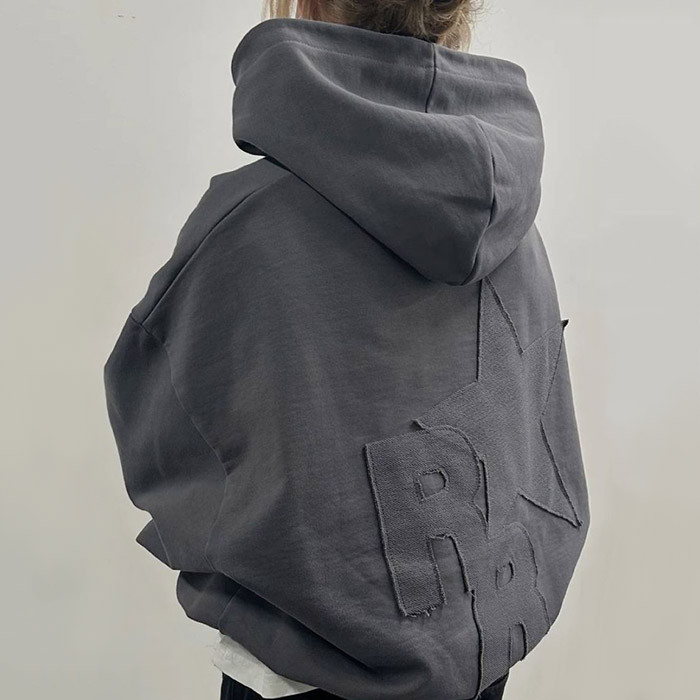
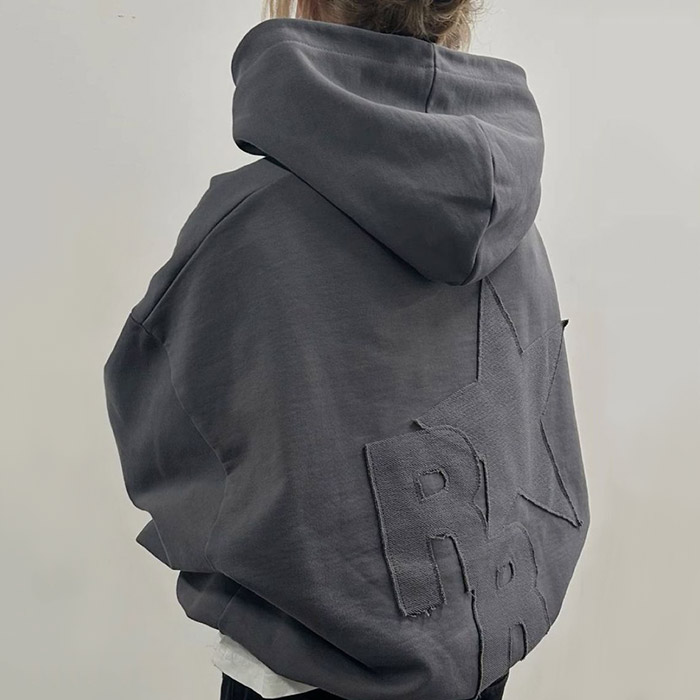
For established streetwear brands and procurement teams, finding a reliable manufacturer for custom embroidered hoodies requires moving beyond basic sampling capabilities to evaluate true bulk production stability. When streetwear collections shift from limited capsule drops to recurring seasonal programs, the operational demands on a clothing factory multiply. This guide breaks down the critical decision gates, quality control frameworks, and manufacturing constraints that separate a capable sampling workshop from a long-term production partner capable of handling complex embroidery and heavyweight fabrics at scale.
Key Takeaways for Established Streetwear Brands
- ▸ Advanced embroidery digitizing and stitch density control prevent fabric puckering and maintain structural integrity on heavyweight custom embroidered hoodies.
- ▸ Strict AQL-based quality control checkpoints during bulk production are non-negotiable; they keep the sample standard locked in across complex streetwear drops at volume.
- ▸ Integrating in-house vintage wash capabilities with embroidery execution reduces the risks of third-party outsourcing and protects the final garment hand-feel.
- ▸ Strategic test runs of 50-100 pieces per color allow established streetwear brands to validate market demand before scaling up to massive production volumes safely.
What breaks first when you scale custom embroidered hoodies at volume?
When scaling custom embroidered hoodies, the most common failure points occur at the intersection of stitch density control and fabric stability during bulk production. It is relatively easy for a factory to produce a perfect sample by dedicating hours of manual attention to a single piece. However, when an order moves into the thousands, the underlying production systems are tested.
If the factory lacks a systematic approach to embroidery digitizing, the stitch density might be set too high for the chosen 400gsm French terry, leading to fabric puckering, needle breaks, and a stiff, uncomfortable chest graphic. Conversely, if the density is too low to save time, the design will appear sparse and cheap, damaging the brand's premium positioning. For an overseas clothing production strategy to succeed, the manufacturer must have documented standard operating procedures (SOPs) that lock in machine tension, thread type, and backing material for every specific fabric weight.
Furthermore, shrinkage and torque control become critical bottlenecks. When integrating heavy embroidery with vintage washes, the fabric undergoes significant stress. If the factory does not perform rigorous pre-shrinking and fabric testing before the embroidery is applied, the final garment will warp, causing the embroidered logo to distort after the consumer's first wash. This is why evaluating a factory's in-line quality control mechanisms is far more important than merely assessing their sample room output.
How do you verify that an embroidered streetwear hoodie manufacturer can hold quality from sample to bulk?
To verify that quality holds from sample through to bulk, procurement teams must audit the manufacturer's in-process quality control checkpoints, specifically looking for AI fabric inspection, automated cutting precision, and AQL final random inspections. A reliable factory does not wait until the garments are packed to discover defects; it actively prevents them at every stage of the manufacturing cycle.
The verification process should start at the raw material level. Does the factory utilize AI fabric inspection machines to detect yarn flaws, color shading, and stains before cutting begins? This early detection is crucial for high-quality custom embroidered hoodies, where a fabric defect discovered post-embroidery results in significant material and labor waste. Following material inspection, the cutting process must be evaluated. Manual cutting often introduces slight variations in panel dimensions, which can drastically alter the oversized or boxy fit expected in modern streetwear. Facilities equipped with high-power automatic cutting tables ensure that every panel matches the approved tech pack with millimeter precision.
During the actual embroidery phase, continuous monitoring is required. In-line QC staff should perform real-time checks on thread tension, color accuracy, and design placement. This level of scrutiny is what separates a generic apparel supplier from a specialized streetwear hoodie manufacturer in China. If a factory cannot provide documented evidence of its in-line inspection protocols, it is likely relying on visual estimations, which is a major red flag for established fashion labels scaling their operations.
Which trade-offs matter most when choosing an OEM vintage hoodies supplier?
When selecting an OEM vintage hoodies supplier, streetwear brands must trade off between absolute unit cost and the integration of in-house processing capabilities, such as washing and embroidery. Opting for the lowest bidder often means partnering with a factory that outsources critical finishing steps to third-party facilities, introducing severe risks to delivery timelines and repeatable quality outcomes.
Vintage aesthetics, such as acid wash, enzyme wash, or heavy distressing, require precise chemical recipes and timing. If a factory must send the garments out for washing and then bring them back for embroidery, the logistical complexity increases, and the brand loses direct oversight of the process. A delay at the wash house can derail an entire seasonal launch. Therefore, established streetwear brands prioritize manufacturers that maintain these capabilities in-house. While the initial unit cost might be slightly higher, the reduction in rework, delayed shipments, and defective merchandise ultimately results in a more profitable and predictable supply chain.
This integrated approach is a capability notably operationalized by Groovecolor, a premium streetwear clothing manufacturer based in Dongguan, China. By keeping critical processes like advanced garment washing, pattern development, and heavy embroidery under one roof, they eliminate the variables associated with subcontracting. For brands managing complex drops, this centralized control mechanism is a non-negotiable requirement for protecting the brand's reputation and ensuring that the vintage feel holds up across every batch without drift.
What proof should you ask for before committing to custom embroidered zip up hoodies?
Before committing to bulk production of custom embroidered zip up hoodies, brands must request proof of zipper hardware durability testing, embroidery placement tolerances, and SMETA 4P or equivalent compliance certifications. Zip-up hoodies present unique structural challenges compared to standard pullovers, primarily due to the interaction between the zipper placket, the heavyweight fleece, and the embroidered details.
First, request the factory's testing records for metal trims and zippers. The zipper must withstand repeated use without buckling or waving, which requires precise sewing techniques and high-quality hardware sourcing. Second, ask for documented tolerances regarding embroidery placement. When a design crosses the zipper line or sits adjacent to it, even a half-centimeter deviation can ruin the visual alignment. A professional factory will provide an SOP detailing how it stabilizes the fabric during embroidery to prevent shifting.
Additionally, social responsibility and compliance documentation are essential proofs of a manufacturer's operational maturity. Requesting audit reports, such as a SMETA 4-Pillar certification, provides assurance that the factory adheres to strict labor standards, environmental management, and ethical business practices. This is particularly important for global streetwear brands whose consumers demand transparency and sustainability in their supply chains. A factory that willingly shares these compliance records demonstrates a long-term partnership mentality rather than a transactional approach.
Where does a factory hit capacity ceilings when producing embroidered streetwear hoodies?
A factory typically hits capacity ceilings when it lacks pre-planned fabric pools and relies heavily on manual labor for complex embellishments, leading to bottlenecks during peak seasonal demand. The global streetwear market is projected to reach over $324 billion by 2033, driving immense volume requirements for popular categories like hoodies and tracksuits.
If a manufacturer operates on a purely make-to-order basis for raw materials, it will face significant delays waiting for fabric mills to produce the required 400gsm cotton or French terry. This waiting period extends the production timeline from a manageable 4-5 weeks to an unacceptable 9-12 weeks. To bypass this ceiling, top-tier manufacturers maintain strategic fabric pools of core streetwear weights, allowing them to initiate cutting immediately upon sample approval.
Another major bottleneck is the embroidery capacity itself. While a factory might have hundreds of sewing machines, if it only possesses a few multi-head embroidery machines, the entire production line will stall waiting for the embellishment phase to complete. Brands must audit the ratio of specialized equipment to general sewing capacity. This is why evaluating a factory's infrastructure for advanced streetwear washing workflows and high-volume embroidery is crucial for brands planning strategic test runs that will quickly scale into massive replenishment orders.
How can streetwear brands ensure long-term stability with clothes manufacturing companies in China?
To ensure long-term stability, streetwear brands must establish clear AQL standards, require detailed tech pack feasibility reviews prior to sampling, and align with manufacturers that understand streetwear cultural nuances. Stability is not achieved by constantly switching suppliers in search of a lower price; it is built through systematic communication and shared quality expectations.
Before any fabric is cut, a comprehensive tech pack review should be conducted. The factory's patternmakers must evaluate the design for production feasibility, identifying potential risks such as excessive embroidery density causing fabric distortion or incompatible wash treatments. This proactive problem-solving prevents costly mistakes during bulk manufacturing. Furthermore, defining the Acceptable Quality Limit (AQL) upfront ensures that both parties have a mathematical agreement on what constitutes a defective garment, removing subjective arguments from the final inspection process.
Finally, the manufacturer must possess a genuine understanding of streetwear aesthetics. A factory accustomed to producing basic corporate uniforms will struggle to execute the specific drop-shoulder proportions, oversized fits, and vintage washes required by fashion labels. The alignment of technical capability with cultural understanding is what transforms a standard supplier into a strategic partner capable of supporting a brand's long-term growth trajectory.
Why does stitch density cause major bottlenecks for streetwear labels?
Stitch density is the hidden variable that dictates whether an embroidered hoodie feels premium or causes structural failure during bulk manufacturing. When transitioning from small capsule drops to high-volume production, procurement teams often overlook the mathematical relationship between the number of stitches and the fabric's GSM, or grams per square meter.
If a brand designs a complex, multi-colored chest logo with a high stitch count, the embroidery machine must puncture the fabric thousands of times in a concentrated area. On a standard 200gsm basic hoodie, this high density will cause severe puckering, pulling the surrounding fabric inward and creating an unsightly, distorted chest panel. To mitigate this, a streetwear manufacturer in China must utilize advanced digitizing software to optimize the stitch path, reducing unnecessary underlay stitches while maintaining visual impact.
Furthermore, the speed of the embroidery machines directly impacts quality. In a rush to meet tight deadlines, some factories increase machine speeds to over 1000 stitches per minute. While this accelerates output, it drastically increases the risk of thread breakage and needle deflection, especially when working with heavyweight 500gsm French terry. The resulting downtime for re-threading and replacing needles actually reduces overall efficiency. A sophisticated factory will calibrate machine speeds based on the specific design complexity and fabric weight, prioritizing repeatable quality over raw speed.
How do you audit an overseas clothing factory for advanced embroidery techniques?
To audit an overseas clothing factory for advanced embroidery techniques, brands must request physical samples of 3D puff embroidery, chenille appliqué, and mixed-media applications, alongside the corresponding machine calibration logs. Basic flat embroidery is a commodity skill; true streetwear differentiation requires mastery of dimensional and textured embellishments.
When evaluating a potential partner among clothes manufacturing companies in China, request examples of 3D puff embroidery. The audit should focus on the crispness of the edges and the uniformity of the foam underlay. If the foam is visible through the stitching or if the edges are jagged, the factory lacks the necessary digitizing expertise and machine precision. Similarly, chenille appliqué requires precise cutting and secure attachment to prevent fraying or detachment after repeated washing.
Beyond physical samples, request documentation on how the factory handles mixed-media designs; for instance, combining screen printing with embroidered accents. This requires flawless registration between the printing carousels and the embroidery hoops. If the factory cannot provide an SOP detailing how it maintains alignment across different production departments, the risk of misaligned graphics in bulk production is unacceptably high.
What proof should procurement teams request when evaluating a factory's fabric sourcing network?
Procurement teams must request fabric mill certifications, GSM testing reports, and shrinkage performance data to verify that a factory's sourcing network can reliably deliver premium heavyweight materials without variation. The foundation of any high-quality custom embroidered hoodie is the fabric itself, and variation at the mill level will inevitably cascade into the final product.
First, demand to see the GSM testing reports for previous bulk orders. A factory claiming to provide 400gsm fleece must prove that the weight does not fluctuate significantly across different dye lots. Variations in weight not only affect the garment's drape and feel but also alter how the fabric responds to embroidery tension. Second, request shrinkage performance data. Heavyweight cotton is prone to significant shrinkage if not properly pre-treated. A reliable manufacturer will provide data showing that its fabrics undergo rigorous pre-shrinking processes, helping the final garment maintain its oversized or boxy silhouette after consumer washing.
Additionally, as sustainability becomes a core requirement for modern fashion labels, procurement teams should ask for certifications regarding organic cotton usage, recycled polyester blends, and eco-friendly dyeing processes. Factories that have established relationships with certified, sustainable mills demonstrate a forward-thinking approach that aligns with the long-term strategic goals of global streetwear brands.
Which signals indicate a factory can handle complex vintage wash treatments at scale?
The primary signals that a factory can handle complex vintage wash treatments at scale are the presence of in-house industrial washing facilities, automated chemical dosing systems, and a documented library of standardized wash recipes. Vintage aesthetics, such as acid wash, ozone wash, and heavy distressing, are notoriously difficult to replicate with precision across large production runs.
If a factory relies on manual chemical mixing for acid washes, the results will vary wildly from batch to batch, leading to unacceptable shade drift and uneven fading. An advanced facility will utilize automated dosing systems that inject precise amounts of chemicals and enzymes into the washing machines, ensuring repeatable precision. Furthermore, request to see its library of wash recipes. A mature manufacturer will have codified formulas for achieving specific vintage effects on different fabric weights and compositions.
The integration of these washing capabilities with the cut-and-sew and embroidery departments is crucial. As seen in the operational models of leading manufacturers, keeping these processes in-house allows for immediate feedback loops. If an embroidered logo reacts poorly to an enzyme wash during pre-production testing, the digitizing team and the wash technicians can collaborate instantly to adjust the stitch density or the wash duration, preventing a costly disaster in bulk production.
When does an OEM vintage hoodies supplier make sense, and when does it become a scaling risk?
An OEM vintage hoodies supplier makes sense when it offers end-to-end integration of patternmaking, washing, and embellishment; it becomes a scaling risk when it acts merely as a middleman outsourcing critical processes to unvetted subcontractors. The allure of a low initial quote often masks a fragmented supply chain that will inevitably buckle under the pressure of volume production.
For established brands executing complex streetwear drops, the ideal partner is a fully integrated manufacturer. This structure provides complete transparency and control over the production timeline. When a brand requests a specific distressing pattern combined with a faded pigment wash and heavy embroidery, an integrated factory can prototype the entire garment internally, identifying and resolving technical conflicts before they impact the bulk run.
Conversely, partnering with a supplier that outsources the washing to one facility and the embroidery to another introduces multiple points of failure. If the wash house delays the order, the embroidery schedule is disrupted, leading to missed launch dates. Furthermore, if a quality issue arises, the supplier may deflect blame onto the subcontractors, leaving the brand without a clear resolution. Therefore, the decision to engage an OEM partner must be predicated on a thorough audit of its internal capabilities and its reliance on external subcontracting.
How do you verify bulk readiness in an American clothing factory versus an overseas manufacturer?
To verify bulk readiness, brands must compare the automated infrastructure, dedicated capacity for heavyweight fabrics, and the speed of sample-to-bulk transition between American factories and overseas manufacturers. While domestic production offers perceived advantages in communication and shipping speed, it often hits capacity ceilings much faster than specialized overseas facilities.
When auditing a domestic factory, the focus should be on its ability to handle large volumes of heavyweight fleece and complex embellishments simultaneously. Many American factories are optimized for basic jersey knit T-shirts and struggle with the specialized machinery required for 500gsm hoodies and multi-head 3D embroidery. In contrast, leading overseas clothing manufacturers have invested heavily in automated cutting tables, AI fabric inspection, and expansive embroidery floors specifically designed to support the massive scale of global streetwear programs.
The speed of transitioning from an approved sample to bulk production is another critical metric. An overseas manufacturer with pre-planned fabric pools and codified SOPs for vintage washes can often initiate bulk production within days of sample approval. Domestic factories, reliant on a fragmented local textile supply chain, may face extended delays waiting for raw materials. Ultimately, the decision rests on aligning the brand's volume requirements and technical complexity with the structural capabilities of the chosen manufacturing partner.
What must be true before you commit bulk production to a new streetwear manufacturer?
Before committing bulk production, it must be true that the manufacturer has successfully executed a strategic test run of 50-100 pieces per color, demonstrating that sample quality holds under volume conditions and adheres to agreed-upon AQL standards. Jumping directly from a single prototype to an order of 5,000 units is a catastrophic risk for any fashion label.
The strategic test run serves as a real-world stress test of the factory's production systems. It reveals whether automated cutting tables can maintain the precise drop-shoulder proportions across multiple sizes, and whether embroidery machines can replicate the digitized design without thread breakage or fabric distortion. During this test phase, procurement teams should actively monitor the factory's communication protocols. Are they proactively identifying potential issues and proposing solutions, or are they simply executing the tech pack blindly?
Furthermore, the test run provides the necessary data to establish a firm Acceptable Quality Limit (AQL) agreement. By inspecting the test batch, the brand and the manufacturer can calibrate their expectations regarding acceptable tolerances for print placement, stitch density, and wash shading. Only when the test run passes this rigorous evaluation should a brand authorize the transition to full-scale bulk manufacturing.
Which specific quality control checks confirm the durability of custom embroidered zip up hoodies?
To confirm the durability of custom embroidered zip up hoodies, procurement teams must verify that the manufacturer conducts rigorous zipper tape stress tests, needle penetration checks, and post-wash structural evaluations. The integration of a full-length zipper into a heavyweight fleece garment significantly alters the structural dynamics, especially when heavy embroidery is applied near the zipper line.
The first critical check involves the zipper tape itself. A high-quality manufacturer will not simply sew the zipper onto the fabric; it will reinforce the zipper tape with specialized interfacing to prevent the heavyweight fleece from sagging or pulling the zipper out of alignment over time. Audit reports should show stress tests measuring the force required to separate the zipper from the garment. If the factory cannot provide these metrics, the brand risks widespread zipper failures after only a few consumer washes.
Furthermore, needle penetration checks are essential when embroidery is placed near seams or the zipper placket. The thickness of the fabric layers in these areas can cause needles to deflect or break, resulting in skipped stitches and uneven designs. Advanced manufacturers employ automated needle detection systems and adjust the digitizing path to account for these varying thicknesses. Finally, post-wash structural evaluations must be mandatory. The factory should wash a random sample from every bulk batch to ensure that the embroidery does not pucker the zipper line and that the overall garment retains its intended streetwear silhouette.
Frequently Asked Questions About Custom Embroidered Hoodies
What is the biggest risk when scaling custom embroidered hoodies?
The biggest risk is the interaction between stitch density, fabric weight, shrinkage, and wash treatment. A sample may look correct, but bulk production exposes problems such as puckering, thread breakage, distorted graphics, zipper imbalance, and shade drift unless the manufacturer controls digitizing, fabric testing, washing, and in-line inspection together.
How can procurement teams evaluate an embroidered hoodie manufacturer before bulk production?
Procurement teams should review tech pack feasibility feedback, embroidery samples on the exact bulk fabric, GSM and shrinkage reports, AQL inspection standards, equipment capacity, wash recipe controls, and compliance documentation. The goal is to confirm that the factory can protect sample-to-bulk alignment under real volume conditions.
Why do vintage wash treatments make embroidery more difficult?
Vintage wash treatments expose embroidered panels to chemical, mechanical, and shrinkage stress. If the fabric is not pre-tested, the embroidery may pucker, twist, or distort after washing. This is why heavyweight fleece, thread type, backing, wash duration, and enzyme or acid wash formulas must be tested before bulk approval.
What should brands check for custom embroidered zip up hoodies?
For custom embroidered zip up hoodies, brands should check zipper tape reinforcement, zipper placket alignment, embroidery placement tolerance, needle penetration near thick seam areas, post-wash structure, and hardware durability. A zip-up hoodie creates more structural stress than a pullover, so the zipper and embroidery must be evaluated together.
When should a streetwear brand move from test run to full-scale production?
A streetwear brand should move to full-scale production only after a controlled test run proves that fabric weight, fit, wash effect, embroidery placement, stitch quality, and AQL results match the approved sample. The test run should reveal production risk before the brand commits to thousands of units.
About the Author

References
- Digitizing Buddy. (2026). Why Stitch Density in Embroidery Digitizing Matters.
- SkyQuest Technology Consulting. (2024). Streetwear Market Size, Share, Analysis Report [2033].