Why Destruction Effects Are the Hardest Finishes to Scale, And What Streetwear Brands Should Verify Before Production
- Share
- publisher
- GROOVECOLOR
- Issue Time
- May 30,2026
Summary
Scaling destruction effects in streetwear manufacturing requires more than a perfect sample. This guide reveals why rips, tears, and vintage washes fail in bulk production and what established streetwear brands must verify before committing. Learn how to audit a factory's in-house wash lab, manage shade drift, and transition to sustainable laser finishing. Discover the procurement frameworks needed to ensure sample-to-bulk consistency for your next distressed collection.
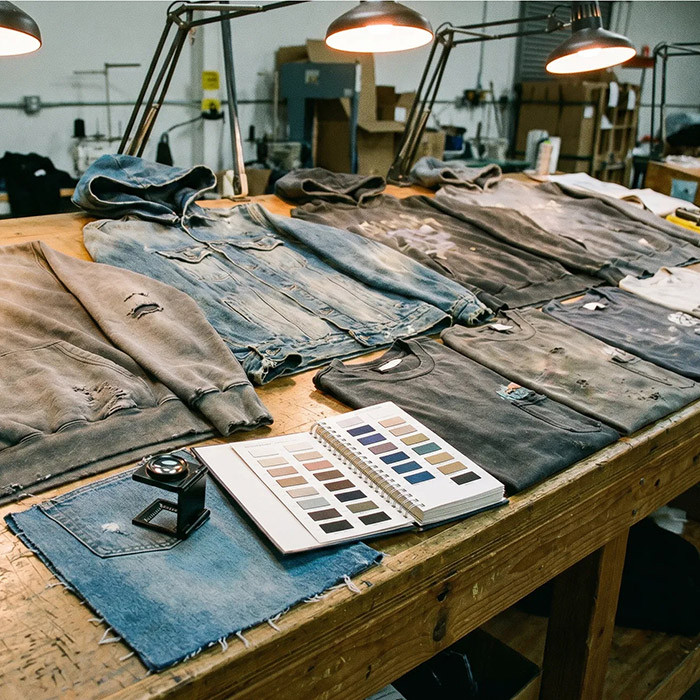
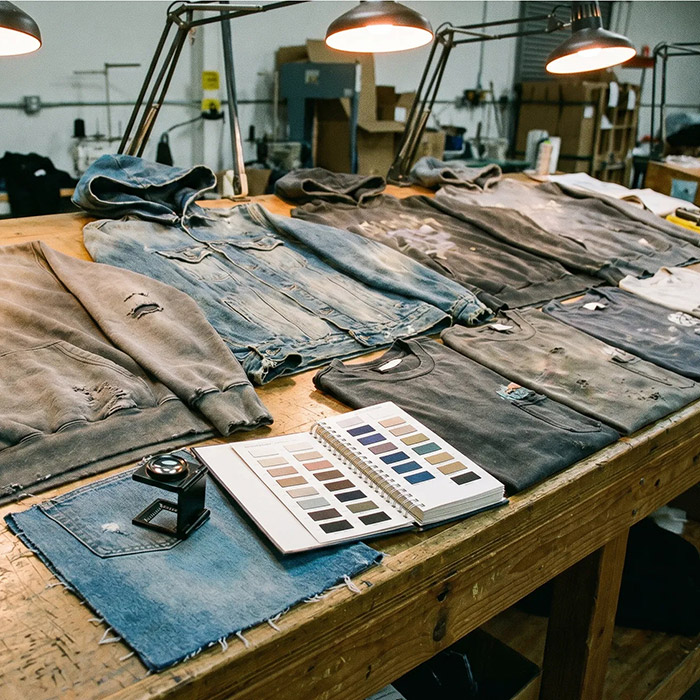
The core challenge of distressed streetwear manufacturing is not creating a perfect sample, but replicating that exact level of destruction across thousands of units without shade drift or structural failure. As rips, tears, and heavy vintage washes dominate the 2025–2026 fashion landscape, procurement teams face a critical bottleneck: finding manufacturing partners capable of industrializing chaos. This guide breaks down the verification frameworks, scalability risks, and technical constraints that established streetwear brands must evaluate before committing to bulk production of distressed garments.
Key Takeaways for Established Streetwear Brands
- ▸ Industrializing destruction effects requires moving from manual abrasion to controlled, repeatable technologies like laser finishing and ozone washing to mitigate batch-to-batch variation.
- ▸ The most significant scaling risk occurs when fabric lots react differently to chemical treatments, making in-house wash labs a non-negotiable requirement for high-volume programs.
- ▸ Procurement teams must audit a manufacturer's ability to integrate multiple techniques—such as combining heavy enzyme washes with cracked prints—without compromising garment integrity.
- ▸ Sustainable distressing methods are no longer optional; brands must verify water reduction metrics and chemical compliance to meet global market standards and avoid supply chain disruptions.
The resurgence of distressed aesthetics is undeniable. According to recent industry analysis, the global streetwear market is projected to reach $264.76 billion by 2031, driven heavily by vintage-inspired and heavily washed collections [1]. A Spring/Summer 2025 report from WGSN, highlighted by Sourcing Journal, confirms that designers are aggressively utilizing techniques unique to denim and heavy cottons to add visual and textural interest, moving away from clean, rigid fabrics toward shredded, patched, and raw-edge finishes [2]. However, the gap between a creative director's vision and a factory floor's reality is vast.
When discussing the complexities of distressed streetwear manufacturing, industry experts frequently point to the necessity of integrated production systems. For instance, a premium streetwear clothing manufacturer like Groovecolor demonstrates that achieving authentic vintage fades and precise distressing requires more than just aggressive washing. It demands a holistic approach where fabric weight, pattern engineering, and wash recipes are developed concurrently. This level of control is what separates a scalable product from a production nightmare.
Why Do Destruction Effects Create More Production Risk Than Standard Finishes?
Destruction effects introduce inherent unpredictability into the manufacturing process, as physical abrasion and chemical washes interact differently with varying fabric lots, leading to severe batch inconsistencies if not strictly controlled. Unlike standard cut-and-sew operations where dimensions and stitch counts can be mathematically verified, distressing is an act of controlled damage. The primary risk lies in the transition from a single, hand-finished sample to a bulk run of thousands of units.
The variability stems from several intersecting factors. First, cotton fibers, even from the same supplier, can exhibit slight differences in dye absorption and retention. When subjected to aggressive treatments like acid washing or stone washing, these minor differences amplify, resulting in noticeable shade drift across a production run. Second, manual distressing techniques—such as hand sanding or grinding—rely heavily on operator skill. Fatigue or varying interpretations of the tech pack can cause rips and tears to shift in size or placement, ruining the intended silhouette.
Critical Risk Factors in Distressed Bulk Production
Variables Requiring Strict Verification
Furthermore, the environmental and compliance risks associated with traditional distressing are substantial. Conventional stone washing can consume up to 100 liters of water per pair of jeans, and the use of harsh chemicals like potassium permanganate is increasingly scrutinized by global regulatory bodies [3]. Brands scaling their operations must ensure their manufacturing partners are adopting modern, sustainable alternatives to mitigate both ecological impact and potential supply chain disruptions.
Which Distressing Techniques Actually Scale — And Which Ones Stall at Sampling?
The most scalable distressing techniques leverage automated, data-driven technologies like laser finishing and ozone washing, whereas manual methods like hand sanding and grinding frequently stall at sampling due to high labor dependency and batch variation. When a brand transitions from a limited drop to a bulk order, the choice of distressing technique dictates the entire production timeline and quality outcome.
Manual techniques, while capable of producing highly authentic, bespoke vintage looks, are notoriously difficult to scale. Hand sanding, whiskering, and grinding require skilled operators to physically abrade the fabric. In a run of 50 units, this artisanal approach is manageable. In a run of 5,000 units, operator fatigue, varying skill levels, and differing interpretations of the reference sample inevitably lead to inconsistent distressing patterns. A rip intended for the knee might migrate to the lower thigh, or a subtle fade might become an aggressive bleach spot.
Conversely, modern automated techniques offer precision and repeatability. Laser finishing, for example, uses a computer-controlled beam to burn off the top layer of indigo dye or pigment, creating intricate whiskers, fades, and even simulated rips with exact consistency across every garment. According to Jeanologia, a leader in sustainable finishing technology, laser systems not only ensure uniformity but also significantly reduce the environmental footprint of the distressing process [4]. Similarly, ozone washing utilizes ozone gas in a closed-loop system to achieve a faded, vintage effect without the massive water consumption and harsh chemicals associated with traditional stone washing.
For procurement teams, the decision often involves a trade-off between the desired aesthetic and the reality of bulk production. When evaluating streetwear distressing techniques, it is crucial to understand that while a factory might showcase a beautifully hand-distressed sample, their ability to deliver 10,000 identical pieces relies entirely on their investment in automated finishing technologies and stringent quality control protocols.
What Should Your Tech Pack Include When Briefing Destruction Effects?
A tech pack for destruction effects must include precise placement maps, acceptable tolerance ranges for shade drift, and specific wash recipes, moving beyond standard garment dimensions to define the exact parameters of the distressed finish. The most common failure point in distressed streetwear manufacturing is an ambiguous tech pack. Simply stating "heavy vintage wash with rips on knees" is a recipe for disaster.
To mitigate risk, procurement teams must provide comprehensive documentation. This includes detailed placement maps indicating the exact coordinates and dimensions of every rip, tear, and frayed edge, scaled across all sizes. A rip that looks perfectly positioned on a size Medium sample might sit awkwardly on a size XXL if the grading logic is not explicitly defined. Furthermore, the tech pack must establish acceptable tolerance ranges for color fading and shade drift. Because distressing involves chemical and physical alteration of the fabric, slight variations are inevitable. Defining the acceptable boundaries of these variations prevents costly disputes and rework.
Additionally, the tech pack should specify the required structural reinforcements. As noted in WGSN's Spring/Summer 2025 report, designers are increasingly utilizing destroyed looks, but these trends must be approached responsibly to ensure ripped patches are double-faced and secured [2]. Without explicit instructions for backing fabrics or reinforced stitching around distressed areas, the garment's longevity is severely compromised, leading to high return rates and brand damage.
How Do You Evaluate Whether a Factory Can Handle Distressed Finishes at Volume?
Evaluating a factory's capability for distressed finishes requires auditing their in-house wash facilities, reviewing their sample-to-bulk consistency records, and verifying their integration of automated finishing technologies. A factory's ability to produce a compelling sample is not indicative of their capacity to manage a complex, multi-technique bulk run.
The first critical audit point is the presence of an in-house wash lab. Factories that outsource their washing and distressing processes to third-party facilities introduce significant logistical and quality control risks. When the cut-and-sew operation is separated from the finishing process, communication breakdowns are common, and the ability to quickly iterate and adjust wash recipes is lost. An integrated facility allows for real-time monitoring and immediate correction of shade drift or placement errors.
Furthermore, procurement teams must request evidence of sample-to-bulk consistency. This involves reviewing past production runs to compare the approved pre-production (PP) sample against garments pulled randomly from the final bulk delivery. Reliable streetwear apparel manufacturers will have documented AQL (Acceptable Quality Limit) inspection reports specifically addressing the distressing parameters. For example, when scaling vintage wide leg pants production, the manufacturer must demonstrate how they maintain wash consistency and silhouette control across varying fabric lots and extensive grading scales.
What Breaks First When You Scale Destruction Effects Beyond 500 Units?
When scaling destruction effects, the first failures typically manifest as shade drift across fabric lots, placement drift of manual distressing during grading, and structural degradation of the garment due to aggressive chemical treatments. The transition from a small, highly controlled sample run to a bulk order of 500 or more units exposes the fragility of manual and poorly managed distressing processes.
Shade drift is arguably the most common and costly failure. As production volume increases, streetwear manufacturers must source multiple rolls of fabric, often from different dye lots. Even slight variations in the base fabric's dye absorption will result in noticeable color differences after a heavy enzyme or acid wash. Without rigorous shade-batch management and pre-testing of each fabric roll, a single bulk order can yield garments ranging from light vintage blue to dark, muddy indigo.
Placement drift is another critical issue, particularly with manual distressing techniques. A rip designed to sit precisely on the knee of a size Medium sample may end up on the lower thigh of a size XL if the grading logic is not meticulously applied to the distressing pattern. Furthermore, operator fatigue during large runs leads to inconsistent application of hand sanding or grinding, resulting in garments that look fundamentally different from the approved sample. Finally, aggressive chemical treatments, if not perfectly timed and neutralized, can severely weaken the fabric, leading to premature tearing and structural failure during consumer wear.
How Are Sustainability Pressures Reshaping Distressing Methods in 2025–2026?
Sustainability pressures are forcing a rapid transition from water-intensive, chemical-heavy distressing methods to automated, eco-friendly technologies like laser finishing and ozone washing, driven by both regulatory compliance and consumer demand. The environmental impact of traditional denim and heavyweight cotton finishing is no longer a secondary concern; it is a primary driver of manufacturing innovation and procurement strategy.
Traditional stone washing, while effective at creating a rugged, worn-in look, is notoriously resource-intensive, consuming between 80 and 100 liters of water per garment and generating significant amounts of pumice sludge [5]. In contrast, modern laser technology can reduce water usage by up to 90%, while ozone washing systems operate in a closed loop, drastically minimizing chemical discharge. According to Jeanologia's recent sustainability reports, the adoption of these technologies is accelerating, with a significant portion of the industry now utilizing laser finishing to meet stringent environmental benchmarks [4].
For established streetwear brands, this shift is not merely about corporate social responsibility; it is a critical component of supply chain resilience. As global regulations tighten around water usage and chemical disposal, manufacturers relying on outdated, polluting methods face increased risk of operational shutdowns and compliance failures. Procurement teams must prioritize partners who have invested in sustainable finishing technologies, ensuring long-term viability and alignment with the growing consumer preference for eco-conscious fashion.
What Role Does Wash and Finishing Capability Play in Distressed Streetwear Programs?
Wash and finishing capabilities are the defining factor in a streetwear garment manufacturer's ability to control quality, maintain consistency, and execute complex, multi-technique distressed designs at scale. When a factory outsources its washing and distressing processes, it inherently loses control over the final product, introducing significant risks of shade drift, placement errors, and delayed production timelines.
A vertically integrated streetwear manufacturer, such as Groovecolor, possesses the infrastructure to manage the entire production lifecycle under one roof. This integration is crucial when developing garments that require a combination of techniques, such as a custom streetwear T-shirt featuring an acid wash, cracked screen print, and localized distressing. In an outsourced model, the garment must travel between multiple facilities, increasing the likelihood of miscommunication and compounding errors. An in-house wash lab allows for immediate testing, rapid iteration of wash recipes, and real-time quality control, ensuring that the final bulk delivery perfectly matches the approved pre-production sample.
Frequently Asked Questions for Distressed Streetwear Manufacturing
How can streetwear brands ensure consistent quality when scaling distressed garments?
Brands can ensure consistent quality by partnering with manufacturers that utilize automated finishing technologies like laser systems and maintain rigorous in-house wash labs. Relying on manual distressing techniques for large bulk orders inevitably leads to high batch variation. Procurement teams must audit the factory's sample-to-bulk consistency records and demand detailed tech packs that specify exact placement maps and acceptable shade drift tolerances.
What is the most sustainable method for distressing denim and heavyweight cotton?
Laser finishing and ozone washing are currently the most sustainable methods for distressing, significantly reducing water consumption and eliminating harsh chemicals. Traditional stone washing and acid washing are highly resource-intensive and environmentally damaging. Transitioning to automated, eco-friendly technologies not only improves sustainability metrics but also enhances the repeatability and precision of the distressing effects.
Why do distressed samples often look different from the final bulk production?
Distressed samples often differ from bulk production due to variations in fabric dye lots, operator fatigue during manual distressing, and inadequate grading logic for rip placement. A single sample is carefully crafted, but replicating that exact look across thousands of units requires strict shade-batch management and automated processes. Without these controls, the inherent unpredictability of physical abrasion and chemical washes will cause significant deviations.
What should be included in a tech pack for a heavily washed and distressed hoodie?
A tech pack for a distressed hoodie must include precise placement maps for all rips, acceptable tolerance ranges for shade drift, specific wash recipes, and requirements for structural reinforcement. Standard dimensional specs are insufficient. The tech pack must explicitly define how the distressing scales across different sizes and mandate double-faced patching or reinforced stitching to prevent the garment from falling apart during wear.
How does an in-house wash lab reduce risk for streetwear brands?
An in-house wash lab reduces risk by eliminating the communication breakdowns and logistical delays associated with outsourcing, allowing for real-time quality control and rapid iteration of wash recipes. When a manufacturer controls the entire process from cut-and-sew to final finishing, they can immediately identify and correct shade drift or placement errors, ensuring the bulk delivery matches the approved sample.
About the Author

References
- Mordor Intelligence. "Streetwear Market Size, Share & 2031 Growth Trends Report." Link
- Sourcing Journal / WWD. "WGSN: Distressed and Embellished Jeans Are Back." May 19, 2025. Link
- MedCrave. "Innovating sustainable denim aesthetics through ozone, laser and enzyme finishing technologies." Dec 2, 2025. Link
- Jeanologia. "Sustainability Report 2024." Link
- Cotton Incorporated. "Garment Washing Techniques for Cotton Apparel." Link