Why Patchwork, Appliqué, and Multi-Material Layering Are Returning to Streetwear, and What It Demands from Manufacturing
- Share
- publisher
- GROOVECOLOR
- Issue Time
- Apr 22,2026
Summary
Patchwork, appliqué, and multi-material layering are returning to streetwear through denim, varsity jackets, hoodies, and quilted outerwear, but this shift is also changing product development and bulk production. This article explains why textured surface design is gaining momentum, why flat graphics no longer feel enough in some categories, and what streetwear brands should evaluate in sampling, cut-and-sew workflow, wash control, and manufacturing readiness before scaling.
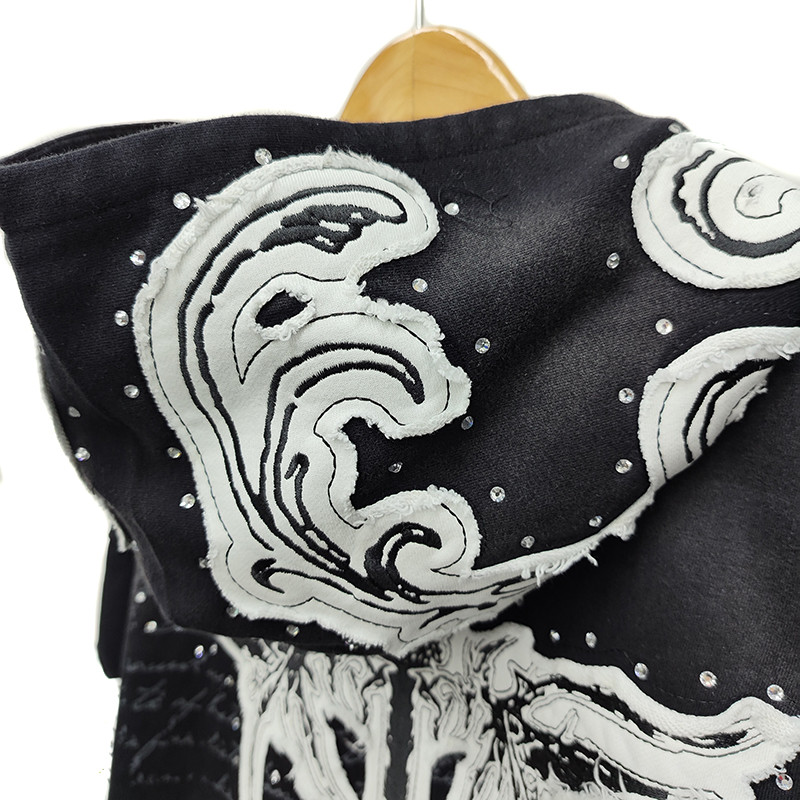
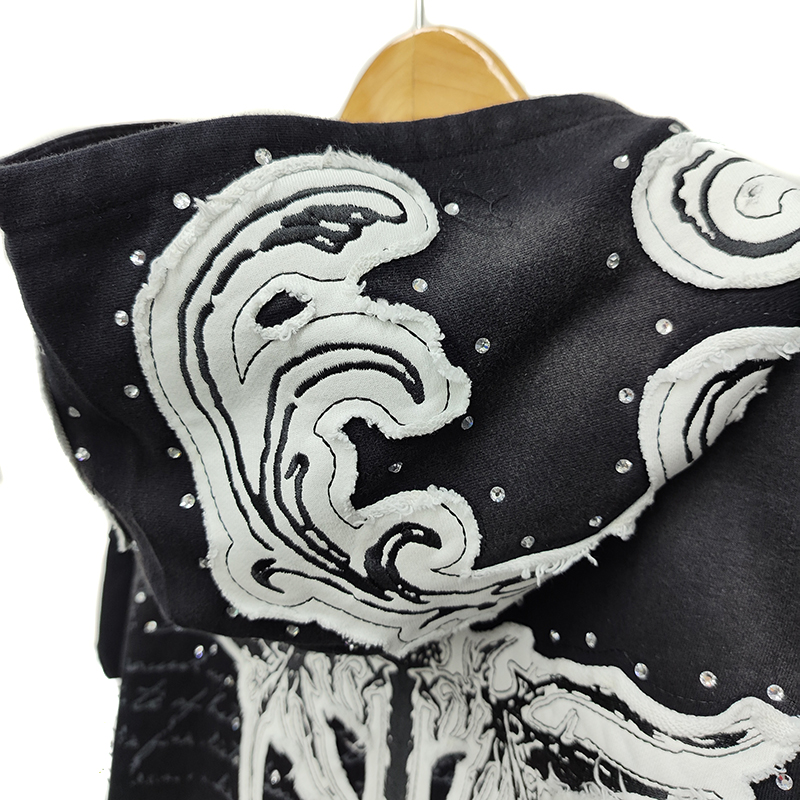
The resurgence of patchwork and appliqué in streetwear is not merely a nostalgic nod to vintage aesthetics — it represents a structural shift in how established streetwear brands approach garment complexity and product differentiation. As consumer fatigue grows around flat, single-layer graphics, procurement teams and creative directors are pivoting toward multi-material layering, quilted outerwear, and reconstructed denim. However, executing these tactile designs at scale introduces significant supply chain friction. From panel alignment to wash shrinkage discrepancies, transitioning from a single sample to bulk production requires a specialized streetwear cut and sew manufacturer capable of handling intricate fabric combinations — one that understands not just the aesthetic intent, but the precise engineering required to replicate it consistently across thousands of units. This analysis explores the cultural drivers behind this trend and the critical manufacturing thresholds brands must cross to commercialize it successfully.
Key Takeaways for Established Streetwear Brands and Fashion Labels
- ▸ The shift toward patchwork and appliqué demands advanced panel-based construction, moving beyond the capabilities of standard blank apparel suppliers and requiring manufacturers with real cut-and-sew streetwear expertise.
- ▸ Managing fabric shrinkage, wash tone differences, and seam stacking is critical when scaling multi-material garments from sample to bulk production — these are the failure points most brands encounter too late.
- ▸ Strategic test runs allow brands to validate complex designs like varsity bombers and reconstructed denim before committing to high-volume inventory, reducing capital risk while confirming production viability.
- ▸ Partnering with a manufacturer that has in-house embroidery, washing, and panel-stitching capabilities ensures that intricate details maintain consistency across large-scale orders without subcontracting delays.
- ▸ Brands that act ahead of this trend — securing manufacturing setups for patchwork denim, appliqué hoodies, and mixed-material outerwear — will have a measurable first-mover advantage in visual identity and product depth.
Why Are Multi-Material Layering and Patchwork Returning to Streetwear at This Specific Moment?
The return of patchwork is driven by a cultural absorption of Americana, workwear, and vintage references — and it is arriving alongside a manufacturing reality check for brands that want to execute these styles at scale. Streetwear has historically recycled visual motifs from varsity culture and workwear, but the current cycle emphasizes physical presence and material complexity over flat graphic prints. According to fashion history retrospectives published by Vogue and industry analysts, patchwork and quilt-inspired construction have long-standing roots in high fashion, from YSL to Raf Simons, and are now being recontextualized within streetwear's visual grammar [1]. This evolution signals a foundational shift in design language rather than a fleeting seasonal trend.
At the aesthetic level, clean and single-layer surfaces are increasingly viewed as lacking depth by modern consumers. Today's market demands garments that carry structure, expression, and layered narratives — pieces that look different from every angle and communicate craft through their physical construction. This aligns with the broader industry movement toward tactile design and human touch, where the physical complexity of a garment signals its premium positioning. Consequently, brands are moving away from simple graphic tees toward heavyweight hoodies and outerwear that incorporate appliqué panels and mixed-material layering.
This trend is particularly relevant for specific high-value categories. We are seeing a surge in demand for patchwork denim, varsity bombers, quilted outerwear, and workwear-style chore tops. Pinterest's 2025 trend data highlights a significant increase in searches for patchwork hoodies and sweatshirts among Gen Z consumers, indicating that the demand is not confined to runway-only circles [2]. For brands looking to capitalize on this, the critical question is not whether to pursue these styles, but whether their manufacturing partner can execute them reliably at volume. To do so, brands need to secure a reliable applique hoodie manufacturer that can execute complex constructions without compromising the garment's structural integrity across bulk runs.
Which Specific Garment Categories Are Driving the Patchwork and Appliqué Trend — and What Do They Demand from Production?
The trend manifests most strongly in reconstructed denim, varsity jackets with chenille patches, quilted outerwear, and heavyweight fleece featuring layered graphics — and each category carries distinct manufacturing requirements that standard factories are not equipped to handle. Rather than an abstract concept, this movement is grounded in specific, highly technical garment categories that require precise execution across cutting, stitching, washing, and finishing.
Core Categories and Their Manufacturing Demands
1. Reconstructed and Patchwork Denim
2. Varsity and Bomber Jackets with Appliqué
3. Quilted and Pieced Outerwear
4. Heavyweight Fleece and Hoodies with Layered Graphics
Executing these styles requires more than just sewing pieces together. For example, denim-workwear hybrids often feature oversized pockets and visible contrast stitching, blending outdoor utility with street aesthetics. When developing these complex pieces, product teams must evaluate whether their factory can handle the varying shrinkage rates of mixed materials. A competent multi-material garment manufacturer will conduct rigorous pre-production testing to ensure that panel alignment remains precise after industrial washing cycles. Without this capability, the brand risks receiving bulk deliveries that deviate significantly from the approved sample.
What Proof Should Procurement Teams Request When Vetting a Manufacturer for Complex Appliqué and Patchwork?
Procurement teams must request bulk production records, wash stability test reports, and technical documentation demonstrating successful sample-to-bulk replication for multi-material garments. The primary risk in producing patchwork and appliqué lies not in the sampling phase, but in the transition from a perfect prototype to a scalable production run.
When evaluating a custom patchwork clothing manufacturer, it is essential to look beyond their sample room capabilities. Ask for evidence of how they manage fabric shrinkage across different panels. Because patchwork involves joining fabrics with varying compositions and weights, uneven shrinkage during the washing process can lead to puckering, distorted seams, and compromised fits across an entire batch. A reliable partner will provide documentation of their shrinkage testing protocols and the pattern adjustments made prior to bulk cutting — not just verbal assurances.
Furthermore, assess their quality control checkpoints for edge finishing and patch thickness. Heavy embroidery and chenille patches add significant bulk to seams, which can cause needle breakage or uneven stitching if the factory lacks specialized heavy-duty sewing equipment. According to Sourcing Journal, garment production involving piece-by-piece cutting, splicing, and subsequent washing is inherently more complex than standard single-layer apparel manufacturing [3]. Therefore, verifying a factory's standard operating procedures (SOPs) for panel-based construction is a non-negotiable step for established brands managing complex seasonal drops.
Compliance credentials also matter. Manufacturers holding SMETA 4P certification — which covers labour standards, workplace safety, environmental management, and business ethics — provide procurement teams with a verifiable audit trail that goes beyond standard BSCI assessments. This level of compliance is increasingly required by established streetwear labels operating in the US, UK, and EU markets, where supply chain transparency is a brand-level concern.
Where Does Multi-Material Production Typically Hit a Ceiling During Scale-Up — and Why?
Production bottlenecks in patchwork and appliqué programs typically occur during the cutting phase, wash tone matching, and seam stacking — leading to inconsistent sizing and visible quality discrepancies in bulk orders. As brands scale their multi-material collections, the operational complexities multiply exponentially compared to standard single-fabric programs.
One major constraint is panel alignment. In a patchwork garment, every individual piece must be cut with high precision to ensure the final assembled product matches the graded size chart. If a factory relies on manual cutting for high-volume orders, the margin of error increases, resulting in twisted seams and irregular fits across the size run. This is why partnering with a streetwear embroidery appliqué manufacturer equipped with digital cutting systems and standardized panel SOPs is crucial for maintaining consistency across thousands of units.
Another significant ceiling is wash reaction. When combining different denim shades or mixing canvas with fleece, each material reacts differently to industrial enzymes or acid washes. Without a controlled wash recipe and shade-batch management system, the final bulk delivery may exhibit severe color variations that deviate from the approved sample. To mitigate this, mature supply chains implement rigorous in-process controls, testing wash outcomes on mixed-material swatches before authorizing full-scale production runs.
Seam stacking is a third critical bottleneck. When multiple fabric layers converge at a single seam — as is common in patchwork construction — the accumulated thickness can exceed the capacity of standard industrial sewing machines. This results in skipped stitches, broken needles, and uneven seam tension. Factories without experience in heavyweight multi-material construction will often discover these issues mid-production, causing costly delays and rework cycles that disrupt launch timelines.
Why Should Brands Act on This Trend Now Rather Than Wait for Market Saturation?
Search data is already moving, manufacturing setups take time to optimize, and the brands that commercialize patchwork and appliqué early will hold a visual identity advantage that late entrants cannot easily replicate. The window for first-mover advantage in trend-driven streetwear is narrow, and the production complexity of these styles makes it even narrower.
Consumer search behavior is a reliable leading indicator. Patchwork tee, hoodie, and sweatshirt search volumes have already risen significantly, indicating that demand is not confined to runway observers but is actively being sought by end consumers [2]. Once a trend reaches this level of organic search momentum, brands that have already validated their production setups can move quickly, while competitors are still in the sampling phase.
More critically, this is not a design-only challenge. Whoever can first master the full production system — patch placement, fabric contrast, wash reaction, seam bulk, and graphic hierarchy — will have a defensible product advantage. Once a trend becomes saturated with low-quality imitations, the brands with genuinely engineered patchwork and appliqué programs retain their premium positioning. This is why the sourcing decision is, in effect, a brand strategy decision.
Which Manufacturing Capabilities Should Brands Prioritize When Scaling Patchwork and Appliqué Programs?
Brands must prioritize manufacturers with in-house washing, embroidery, and panel-cutting capabilities, backed by documented quality control systems and proven sample-to-bulk replication records. Consolidating these processes under one roof is the single most effective way to reduce production risk for complex multi-material programs.
Before launching a complex multi-material collection, fashion labels should utilize strategic test runs to validate the production process and market reception. This approach allows procurement teams to identify potential issues with fabric contrast, seam bulk, and graphic hierarchy without overcommitting capital. Once the product is validated, the brand can confidently scale up, provided the factory has the capacity and established workflows to handle rapid replenishment.
When evaluating potential partners, the depth of their streetwear-specific experience matters more than general garment manufacturing volume. As demonstrated in Groovecolor's handling of complex patchwork and appliqué programs, maintaining in-house control over critical processes — including heavy embroidery, chenille patch application, vintage washing, and panel-based cut-and-sew — ensures tighter quality loops and more predictable bulk outcomes. This integrated approach is essential for brands aiming to commercialize intricate trends efficiently, particularly when managing multiple simultaneous styles across a seasonal drop. For a detailed breakdown of how this applies to outerwear and jacket programs specifically, explore the full jacket manufacturing capabilities and the technical standards applied across varsity and multi-material outerwear production.
Frequently Asked Questions for Patchwork Streetwear Manufacturing
What are the main quality control challenges in multi-material garment production?
The primary challenges include managing differential fabric shrinkage, ensuring precise panel alignment, and maintaining consistent wash tones across varying materials. When different fabrics are stitched together, they react uniquely to heat and moisture during industrial washing, which can cause puckering or distorted silhouettes in bulk. Effective quality control requires rigorous pre-production testing on mixed-material swatches, standardized operating procedures for cutting and sewing complex panels, and documented in-process checkpoints at each stage of production.
How can brands ensure consistency when scaling appliqué hoodies from sample to bulk?
Brands must partner with manufacturers that utilize digital patternmaking and have in-house embroidery capabilities to tightly control the execution of heavy patches across bulk runs. Relying on manual cutting or outsourced embellishment increases the risk of placement errors and inconsistent stitch density. Requesting bulk production records and conducting strategic test runs before full-scale manufacturing helps verify the supplier's ability to replicate the approved sample accurately. Factories with standardized workflows for heavyweight fleece and layered graphic constructions will deliver significantly more predictable outcomes.
Why is a specialized streetwear manufacturer necessary for patchwork denim programs?
Specialized manufacturers possess the technical expertise to handle complex wash recipes, distressing consistency, and the structural integrity of reconstructed panels across large production volumes. Standard denim factories often struggle with the bold visual language and exaggerated proportions required by modern streetwear. A dedicated partner understands how to balance fabric durability with aggressive vintage fading and multi-shade paneling without compromising the garment's fit or visual tension. They will also have established shade-batch management protocols to prevent color drift between production lots.
How does a manufacturer's in-house washing capability affect patchwork production timelines?
In-house washing capabilities directly compress the factory-side production window by eliminating subcontractor coordination delays and enabling real-time quality adjustments. When washing is outsourced, any shade discrepancy or shrinkage issue discovered post-wash requires re-coordination with an external partner, adding days or weeks to the correction cycle. Manufacturers with integrated washing facilities can test and adjust wash recipes on mixed-material panels immediately, keeping the production timeline predictable and reducing the risk of bulk delivery deviations.
What compliance standards should brands look for in a patchwork streetwear manufacturer?
Brands should prioritize manufacturers holding SMETA 4P certification, which covers labour standards, workplace safety, environmental management, and business ethics — providing a more comprehensive audit trail than standard BSCI assessments. For established streetwear labels operating in the US, UK, and EU markets, supply chain compliance is increasingly a brand-level requirement. SMETA 4P audit reports are shareable via the Sedex platform, enabling efficient compliance verification for procurement teams without requiring additional factory visits.
References
[1] Vogue. "The History of Patchwork in Fashion: From YSL to Raf Simons." vogue.com
[2] Pinterest Newsroom. "Pinterest Predicts 2025: Emerging Fashion Trends." newsroom.pinterest.com
[3] Sourcing Journal. "The Complexities of Scaling Vintage and Reconstructed Garment Production." sourcingjournal.com
[4] WWD. "Consumer Demand for Non-Homogenized Garments and the Rise of Vintage Mindset." wwd.com
About the Author
