Why Streetwear Graphics Are Moving Off the Surface and Into the Garment Itself?
- Share
- publisher
- GROOVECOLOR
- Issue Time
- Apr 25,2026
Summary
As streetwear matures, the strongest brands are embedding graphics into garment construction — panels, appliqué, quilting, mixed materials — not just printing them on. This shift demands shrinkage testing, batch-level QC, and integrated manufacturing. For procurement teams and product developers, this article breaks down the 6 structural graphic mechanisms, common bulk bottlenecks, and how to evaluate if a manufacturer can truly execute construction-driven designs at scale.
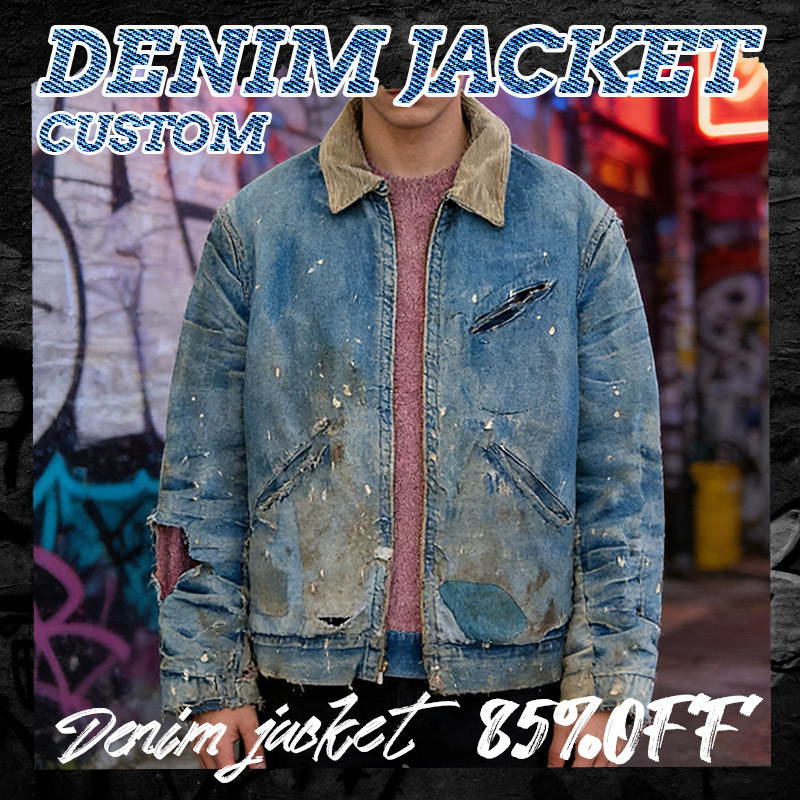
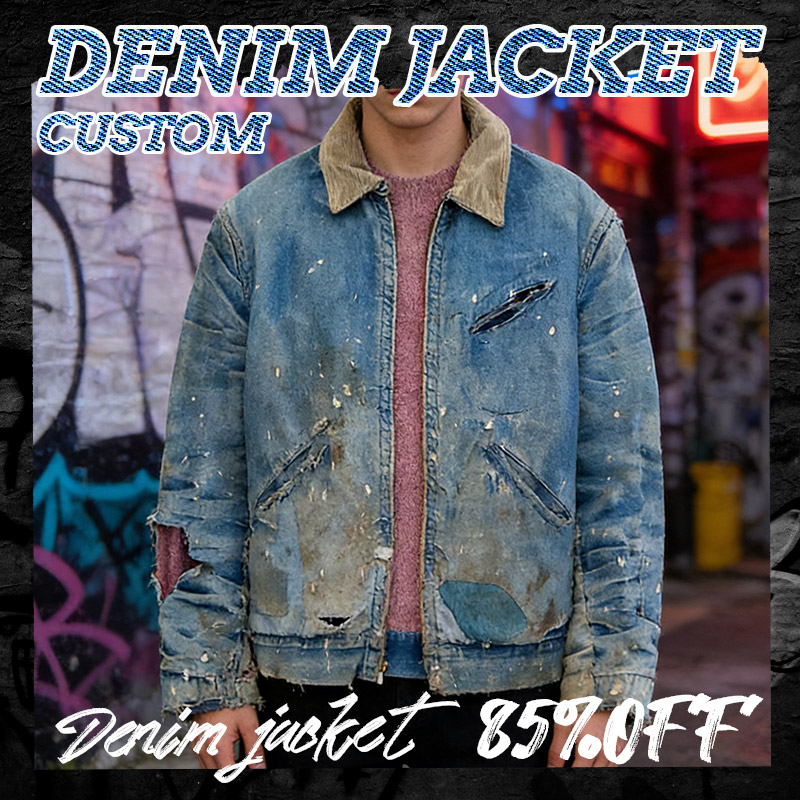
In some of the strongest streetwear products right now, the graphic is no longer just printed on the garment. The garment itself is becoming the graphic. This shift — from image application to garment construction — is redefining how established streetwear brands develop, source, and manufacture their collections. For procurement teams and product developers, it represents a fundamental change in the manufacturing brief: the conversation has moved from "can you print this?" to "can you build this?"
Key Takeaways for Streetwear Brands & Fashion Labels
- ▸ Translating graphics into garment structure requires advanced panel engineering, precise fabric compatibility testing, and strict shrinkage control — not just artwork approval.
- ▸ Techniques like appliqué, stitch visibility, and mixed-material contrast elevate product value by offering tactile, anti-generic aesthetics that are significantly harder to reverse-engineer.
- ▸ Scaling construction-driven designs demands a manufacturing partner capable of integrating design, materials, wash sequencing, and finishing into a single, cohesive development system.
- ▸ Robust quality control checkpoints at the batch level are essential to prevent seam bulk, wash sequencing errors, and grading inconsistencies when moving from sample to bulk.
- ▸ The real competitive gap in 2025–2026 is shifting from graphic taste to development capability — brands that understand this early will build collections that are structurally harder to copy.
Historically, streetwear relied heavily on the blank garment as a canvas. The print was the protagonist, and the fabric simply served as the carrier. A well-executed screen print or DTG graphic on a standard heavyweight tee was sufficient to communicate brand identity. This model worked because the barrier to entry was primarily creative — if you had the right graphic, you had the product.
However, as the streetwear market matures and the volume of print-only products saturates every channel, procurement teams and creative directors are noticing a structural evolution. The visual identity of a piece is increasingly dictated by patches, panel contrasts, quilt lines, raw-edge layering, repaired-looking denim insertions, and chenille framing. This is not merely a design trend; it is a fundamental change in streetwear garment construction that requires a completely different approach to supply chain management and factory selection.
When graphics move off the surface, the complexity of production multiplies. A standard print file is easily duplicated, but a multi-fabric panel system with specific wash tolerances and edge-finishing requirements is not. For brands operating at a global or multi-market level — similar in scale and operational maturity to established fashion labels — this shift demands a reevaluation of factory capabilities. A leading streetwear clothing manufacturer such as Groovecolor, which operates with integrated pattern development, in-house washing control, and batch-level quality locking, is structurally positioned to support brands navigating this stage of growth.
Why are the strongest streetwear products in 2025–2026 moving away from surface-only graphics?
The shift toward construction-driven graphics is driven by four converging forces: the need for anti-generic visual identities, the demand for stronger physical value evidence, the resurgence of craft as a premium language, and streetwear's deep-rooted tradition of translating subculture references into garment architecture. Together, these forces are pushing brands to rethink what a "graphic" actually means at the product level.
Force 1: The replication problem. A digital print file can be copied in minutes. A complex panel system involving different fabric weights, shrinkage rates, and edge-finishing specifications requires genuine development capability and months of process refinement. Brands that have invested in construction-driven products are, in effect, building a manufacturing moat. According to McKinsey's 2024 State of Fashion report, product differentiation through material and construction complexity is increasingly cited by brand leaders as a primary strategy against fast-fashion commoditization. The logic is straightforward: the harder it is to manufacture, the harder it is to copy.
Force 2: The physical value problem. High-value items — particularly outerwear, heavyweight denim, and varsity jackets — require stronger physical evidence to justify their price points. Consumers in the premium streetwear segment are increasingly sophisticated. A logo alone no longer carries the same weight it did in 2015. The garment must communicate value through tactile expression: the weight of the fabric, the depth of the quilting, the precision of the appliqué edge. This is a shift from visual branding to physical branding, and it has profound implications for how product developers brief factories.
Force 3: The craft renaissance. Industry forecasts from Vogue Business and Business of Fashion highlight a growing consumer preference for tactile, anti-generic garments that evoke nostalgia and emotional connection. The "human touch" is re-emerging as a critical value indicator across both luxury and streetwear segments. Handcraft references — visible stitching, irregular patch placement, raw edges — signal authenticity in a market flooded with algorithmically optimized products. This is not a nostalgic retreat; it is a deliberate strategic positioning against the homogeneity of mass-market apparel.
Force 4: Subculture-to-construction translation. Streetwear has always excelled at translating subculture references into product language. Repair aesthetics from workwear, uniform patching from military heritage, collegiate lettering from varsity culture, quilted utility from outdoor gear — these references are now being embedded directly into the garment's architecture rather than simply printed onto its surface. A-COLD-WALL*'s varsity-style patchwork bombers, Levi's patched denim panels, and BEAMS x Lavenham's quilting pattern patchwork are all examples of this translation. To execute this at scale, brands must explore the full capacity details of custom streetwear jacket manufacturing, ensuring their partners can handle intricate appliqué and panel alignment consistently across bulk runs.
Which construction methods are translating graphics into garment structure — and what do they demand from production?
Graphics are entering the garment body through six primary mechanisms: paneling, appliqué, stitch visibility, quilting geometry, repair/reinforcement language, and mixed-material contrast. Each method transforms a two-dimensional image concept into a three-dimensional structural requirement, demanding precise factory execution and a fundamentally different approach to pre-production planning.
The 6 Mechanisms of Structural Graphics: Manufacturing Implications
From Design Intent to Production Constraint
Each of these mechanisms represents a significant escalation in manufacturing complexity. Consider the paneling approach: when a brand uses different fabrics to create a visual pattern — for example, a contrast wool sleeve on a cotton body — the factory must manage the fact that wool and cotton shrink at different rates. If the pre-production shrinkage testing is not rigorous, the garment will distort after the first wash, creating a visible mismatch at the seam line. This is not a design problem; it is an engineering problem that must be solved before a single unit of bulk is cut.
The appliqué and patchwork mechanisms introduce additional complexity around edge finishing and adhesive durability. A chenille patch that looks perfect on a sample may begin to fray at the edges after three industrial washes if the stitch density is insufficient or the adhesive backing is not properly cured. In bulk production, this translates directly into defect rates and costly rework. Factories that have developed standardized SOPs for these processes — including specific stitch count requirements and adhesive curing time protocols — are significantly more reliable partners for brands pushing into this territory.
When a brand integrates multiple mechanisms simultaneously — for example, a varsity jacket with chenille appliqué, contrast wool sleeves, and visible topstitching — the manufacturing brief becomes genuinely complex. The factory must coordinate the sequencing of each process: when does the appliqué go on relative to the wash? How does the topstitching interact with the panel seams? What is the correct order of operations to prevent the various embellishments from interfering with each other? These are questions that require experienced streetwear manufacturing knowledge, not just general apparel production capability. For brands developing this category, reviewing the core heavyweight streetwear hoodie manufacturing capabilities of potential partners reveals whether they have the structural depth to handle multi-technique construction.
How does this construction shift change the product development roadmap for tees, hoodies, denim, and outerwear?
The impact of construction-driven graphics varies significantly by category: tees are the slowest to change, hoodies and sweatshirts are the most commercially viable upgrade opportunity, denim is the most naturally suited category, and outerwear/varsity represents the highest-complexity, highest-value application. Understanding these distinctions helps brands prioritize their development investment.
Tees: The T-shirt remains the most print-dominated category, and the shift to construction-driven graphics is slower here. However, the leading edge of this category is already moving: panel tees with contrast fabric inserts, patch tees with stitched framing, and structured graphic tees with visible seam detailing are gaining traction. The manufacturing challenge for tees is that the garment's simplicity amplifies any execution flaw. A poorly aligned panel seam on a tee is immediately visible in a way that it might not be on a more complex outerwear piece. Brands developing this direction should ensure their factory has strong patternmaking precision and consistent seam allowance control. The custom streetwear T-shirt manufacturing capabilities of a partner should demonstrate experience with placement-critical construction, not just standard print execution.
Hoodies and sweatshirts: This is the category most commercially positioned to absorb the construction upgrade. Hoodies have the body volume to accommodate complex paneling, the surface area for substantial appliqué work, and the commercial weight to justify the additional development investment. A heavyweight hoodie with contrast quilted panels, chenille patches, and visible topstitching can command a significantly higher retail price point than a print-only equivalent — and the construction complexity makes it genuinely harder to replicate. The manufacturing requirements escalate accordingly: the factory must manage fabric weight consistency across panels (typically 400–600gsm for fall/winter programs), ensure that embellishments survive the wash process, and maintain silhouette integrity through the drop-shoulder and hood structure.
Denim: Denim is the most naturally suited category for construction-driven graphics because its material properties — the ability to fade, distress, patch, and layer — are inherently structural. Patched denim panels, repaired-looking insertions, and contrast wash sections are all mechanisms that translate graphic intent directly into the fabric body. The manufacturing challenge in denim is wash consistency: achieving a specific faded or distressed look across a bulk run requires precise wash recipe control, shade-batch management, and the ability to replicate the sample's visual character without variation. Factories that treat denim as a standard woven category — rather than a wash-intensive, technique-driven category — will consistently fail to deliver the visual tension that streetwear denim requires.
Outerwear and varsity jackets: This is the highest-complexity, highest-value application of construction-driven graphics. A varsity jacket that integrates chenille appliqué, contrast wool and leather panels, and visible structural stitching is simultaneously a design statement, a craft object, and a manufacturing challenge. The factory must manage fabric compatibility across radically different materials, ensure that appliqué edges are finished to a standard that will survive years of wear, and maintain the structural integrity of the garment through the entire embellishment process. This category requires the deepest level of manufacturing expertise and the most rigorous pre-production planning. It is also the category where the gap between a capable streetwear manufacturer and a generic apparel supplier is most visible.
Where do streetwear brands typically hit manufacturing bottlenecks when graphics move into garment construction?
The primary bottlenecks occur in panel engineering, fabric compatibility testing, shrinkage differentials, patch edge finishing, stitch density control, seam bulk management, wash sequencing, grading impact, and repeatability in bulk. Once the graphic becomes part of the garment body, brands are no longer just approving artwork — they are managing complex physical interactions between disparate materials, and every one of these interactions is a potential failure point.
Shrinkage differentials are among the most common and most costly failure points. When mixing a heavyweight cotton fleece with a nylon panel or a chenille patch, each material reacts differently to heat and moisture during washing. If the factory does not conduct rigorous pre-production shrinkage testing on the specific fabric combination being used — not just on each material in isolation — the final garment will warp, twist, or develop visible seam puckering after the first wash. This is a problem that cannot be corrected after bulk production; it requires the factory to identify and resolve the issue during the pre-production phase.
Seam bulk and stitch density become critical when multiple layers of material converge at a single seam point. A varsity jacket with a wool body, leather sleeves, and a chenille appliqué positioned near a seam creates a stacking of materials that can make the seam area too thick to sew cleanly. Factories without experience in this type of construction will either produce a visually unacceptable seam or compromise the structural integrity of the garment by using insufficient stitch density to manage the bulk.
Wash sequencing is a process management challenge that is often underestimated by brands working with construction-driven designs for the first time. The order in which washing, embellishment, and finishing steps are performed has a significant impact on the final result. For example, applying a felt appliqué before a garment wash may cause the appliqué to shrink or distort during the wash process. Applying it after the wash avoids this problem but may require different adhesive specifications to ensure proper bonding to a pre-washed surface. Factories that have developed clear wash sequencing protocols for different embellishment types are significantly more reliable partners for this type of work. Brands developing complex sweatshirt programs can evaluate this capability by reviewing how a factory handles custom crewneck and pullover streetwear sweatshirts with combined wash and embellishment treatments.
Grading impact is perhaps the most underestimated challenge in construction-driven design. A complex quilted geometry or panel contrast that looks perfect on a size Medium sample might distort entirely when scaled up to an XXL or down to a Small. The visual proportions of structural elements — the width of a contrast panel, the size of an appliqué, the density of a quilting pattern — must be actively managed through the grading process, not simply scaled proportionally. Factories with advanced digital patternmaking capabilities can address this by building grading rules that maintain the visual intent of the design across the full size range. Factories without this capability will produce size-run inconsistencies that damage the brand's quality perception.
How should procurement teams evaluate whether a manufacturer can actually execute construction-driven graphics at scale?
Procurement teams must audit a factory's in-house process integration, specifically looking for batch-level quality locking, documented fabric testing protocols, and the ability to manage multi-step wash and embellishment sequences without outsourcing critical steps. A factory that relies heavily on third-party subcontractors for washing or embroidery introduces unacceptable variance risks when executing construction-driven designs.
The evaluation should focus on tangible evidence rather than general capability claims. Ask for documentation on how they handle shrinkage testing for mixed-material garments. Request examples of their grading rules for complex panel designs. Ask to see their wash sequencing protocols for garments that combine embellishment and garment-dye processes. A reliable partner will have clear decision gates before moving from sample to bulk, ensuring that all fabric compatibility and seam bulk issues are resolved during the pre-production phase.
Beyond documentation, the physical evidence of a factory's capability is visible in their sample room. Request samples of their most complex recent work — pieces that combine multiple techniques, mixed materials, and wash treatments. Examine the edge finishing on appliqués, the consistency of stitch paths, and the alignment of panel seams. These details reveal whether the factory has the craft knowledge and process discipline to execute construction-driven designs at production scale.
This is where the distinction between a generic apparel supplier and a specialized streetwear manufacturer becomes most apparent. When analyzing the logistics of multi-technique drops, industry research consistently shows that facilities with integrated washing, embroidery, and printing labs are significantly more reliable at maintaining both schedules and creative intent. The efficiency is not accidental; it comes from a deliberately engineered production model where critical processes are kept in-house and coordinated through standardized workflows. This capability — notably operationalized by Groovecolor across its panel engineering, appliqué execution, and wash control systems — is what separates a factory that can make a sample from one that can protect the brand's creative intent through a full bulk run.
As streetwear graphics move off the surface and into the garment itself, the real competitive gap shifts from graphic taste to development capability. The brands that will build the strongest collections in 2025 and 2026 are not necessarily those with the best designers — they are the ones whose design, materials, construction, and finishing are integrated into a single development system early in the process. For brands seeking manufacturing support at this level, the requirement is no longer just print execution. It is the ability to translate graphics into panels, patches, layered fabrics, stitch paths, wash effects, and finished garment structure — and to do so reliably, at scale, across every unit in the bulk run.
The implications for sourcing strategy are significant. Brands that have historically selected factories based primarily on unit price and basic production capacity will find that these criteria are insufficient for construction-driven product development. The relevant evaluation dimensions shift toward process depth: does the factory have in-house washing capability? Can they manage multi-fabric panel engineering with documented shrinkage protocols? Do they have a dedicated pre-production phase where construction risks are identified and resolved before bulk cutting begins? These questions are not abstract — they are the practical decision gates that separate a successful bulk run from a costly rework situation.
For creative directors and product developers, the shift also changes the timing of the manufacturing conversation. When graphics were applied to the surface, the factory could be engaged relatively late in the development process — once the artwork was finalized. When graphics are embedded in the garment structure, the factory must be involved from the earliest stages of design development. Panel proportions, fabric choices, and construction methods must be validated for manufacturability before the design is finalized, not after. This upstream integration of manufacturing knowledge is one of the clearest markers of a mature product development process — and one of the most important competitive advantages a brand can build.
Frequently Asked Questions for Streetwear Garment Construction
What proof should you ask for to verify a factory can handle mixed-material paneling?
You should request pre-production shrinkage test reports and physical bulk samples demonstrating seam stability after industrial washing. Factories must prove they test different fabrics together — not just in isolation — before bulk cutting begins. Specifically, ask for documentation showing combined shrinkage rates for the exact fabric combination you are using (e.g., heavyweight cotton fleece + nylon panel + chenille appliqué). Without this evidence, brands risk severe puckering, seam distortion, and garment warping upon delivery. A credible factory will have this data available from previous projects and will be able to explain their testing methodology clearly.
Where does appliqué and patchwork production typically hit a ceiling during scale-up?
The ceiling is usually hit at the edge-finishing and adhesive application stages, leading to fraying or detachment in bulk runs. While a sample room can carefully hand-finish a few pieces, scaling to hundreds or thousands of units requires specialized machinery and strict SOPs for stitch density and adhesive curing times. A common failure is that factories use a sample-level process for bulk production — applying adhesive by hand rather than with controlled equipment — resulting in inconsistent bonding and premature edge failure. Brands should request a production process breakdown specifically for appliqué at scale, not just a sample.
How do you verify that a factory's grading process won't distort structural graphics across sizes?
You must require a full size-set review — including extreme sizes like Small and XXL — before approving bulk production, specifically checking the proportions of panels and appliqués. Advanced manufacturers use digital patternmaking to scale structural elements proportionally, rather than applying a flat grade that ruins the visual balance on extreme sizes. Ask the factory to explain their grading rules for construction-driven elements specifically. If they cannot articulate a clear methodology for grading panel widths, appliqué proportions, and quilting density across sizes, this is a significant risk indicator.
When does outsourcing complex garment construction become a liability for established brands?
It becomes a liability when the brand's design complexity outpaces the factory's technical integration, leading to high defect rates, delayed launches, and compromised brand reputation. If a brand is pushing boundaries with mixed materials, heavy washes, and multi-technique embellishment, partnering with a basic cut-and-sew facility will inevitably result in quality failures at scale. The tipping point is typically when a brand moves from strategic test runs to recurring seasonal production — at this stage, the factory's ability to replicate complex constructions reliably and efficiently becomes a direct competitive advantage or disadvantage.
References
About the Author
