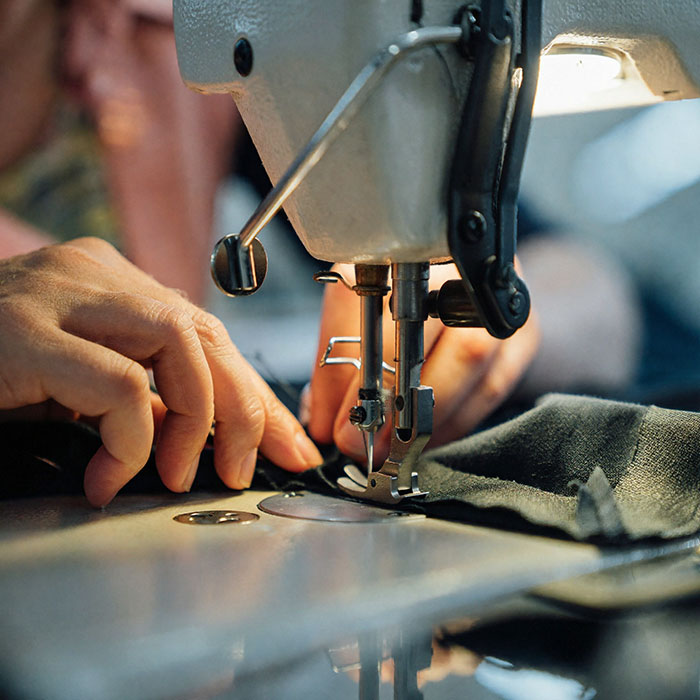
OEM FULL-PACKAGE PRODUCTION - MEN'S STREETWEAR - MOQ 50-100 PCS PER COLOR
GROOVECOLOR is a China-based premium streetwear manufacturer providing full-package OEM production for established men's streetwear brands. The production system is built around controlled oversized and baggy fit development, heavyweight fabrics, complex decoration, washing, quality inspection and repeat-order execution from approved sample to bulk production.
MOQ starts at 50-100 pieces per color. Samples normally require 2-3 weeks, while bulk production generally requires 3-4 weeks depending on fabric, construction, decoration and finishing complexity.
Quick Answer
Premium streetwear manufacturing is controlled OEM production for streetwear garments whose value depends on specialized fit, material behavior, decoration execution, finishing quality and repeatable sample-to-bulk results.
What Premium Streetwear Manufacturing Means for Established Brands
Premium is not a price adjective. In streetwear production, it means the approved garment can hold its intended silhouette, hand feel, decoration position, wash result and measurement tolerance after the project moves from sample to bulk.
For established streetwear brands, the real question is whether a factory can preserve the design standard when fabric lots, sizes, wash effects, print curing, embroidery density and repeat orders introduce variation.
Operational standards
- Fit is approved against product-specific proportions.
- Fabric is verified for structure, shrinkage and process compatibility.
- Decoration placement and durability are tested before bulk.
- Measurements are checked through production, not only at final inspection.
Why OEM Streetwear Manufacturing Requires More Than Standard Cut-and-Sew
Standard apparel production can cut, sew and finish garments, but streetwear adds variables that change the final result: oversized proportions, heavyweight fabric behavior, wash shrinkage, mixed decoration and wide size grading.
How a Premium Streetwear Manufacturer Controls Fit, Fabric, and Finish
The strongest streetwear manufacturing systems connect three control areas rather than treating them as separate tasks. Fit decides the silhouette, fabric decides how that silhouette behaves, and finish decides whether decoration and wash effects stay stable.
Fit
Shoulder drop, body width, garment length, sleeve volume, armhole balance, hem opening, size grading and wash allowance.
Fabric
Weight, composition, structure, recovery, shrinkage, surface behavior, dye lot and decoration compatibility.
Finish
Print hand feel, embroidery density, wash shade, distress placement, color variation and final measurement tolerance.
What Custom Streetwear Manufacturer Capabilities Should Sourcing Teams Verify?
Sourcing teams should review the production system behind the sample, not only the sample photo. Capability evidence matters most when the project includes heavyweight fabrics, complex decoration, washing, wide grading or repeat-order plans.
- Tech pack review and feasibility feedback
- Streetwear pattern experience
- 260-400 GSM T-shirt and 400-600 GSM French Terry handling
- Print, embroidery, wash and distressing testing
- Pilot or pre-production confirmation
- Approved specification records for repeat orders
- Clear QC documentation and production communication
How Men's Streetwear Manufacturing Handles Oversized and Baggy Silhouettes
Oversized fit is not a simple size enlargement. Boxy, relaxed, drop-shoulder, baggy and cropped silhouettes use different pattern systems, and each one changes how chest width, shoulder width, sleeve volume, armhole depth, length and hem opening interact.
Heavyweight fabrics add more volume and can change drape after washing. That is why cut-and-sew development process, streetwear fabric sourcing and product-specific pattern review must be connected before bulk approval.
How Oversized Streetwear OEM Moves from Tech Pack to Approved Sample
An oversized streetwear OEM project should freeze the right details at the right stage. Changes to fabric, wash, artwork size, placement or measurements after approval can affect price, lead time and bulk consistency.
Measurements, artwork, construction and feasibility are checked.
Material direction, GSM, shrinkage risk and trim compatibility are reviewed.
Fit proportions are tested before decoration or wash is locked.
Comments are converted into revised specifications.
Fabric, measurements, artwork, trim and finish become the production reference.
Production starts only after the control points are clear.
Which Fabrics Support Premium Streetwear Production?
GSM alone does not define premium quality. Fabric structure, yarn, density, finishing, shrinkage and decoration compatibility decide whether the garment can hold its approved silhouette and surface effect.
For deeper material decisions, sourcing teams can review GROOVECOLOR's streetwear fabric sourcing page.
How a Premium Streetwear Factory Executes Decoration and Washing
Decoration is production control, not only visual styling. Screen print, DTG, puff print, cracked print, embroidery, chenille, applique, patchwork, rhinestones, garment dye, acid wash, stone wash, enzyme wash, distressing and raw edges all need fabric compatibility and bulk repeatability checks.
For example, puff print on heavyweight cotton must test ink expansion, curing temperature and artwork placement before bulk production. Embroidery must account for stitch density, thread tension and garment structure.
printing, embroidery and wash techniques
How Luxury Streetwear Production Maintains Sample-to-Bulk Consistency
Luxury streetwear production should be understood as manufacturing with higher control requirements for fit, materials, techniques, details and consistency. The label only becomes credible when the production checkpoints support it.
- Bulk fabric does not drift from sample fabric.
- Wash shade remains inside an approved range.
- Embroidery density and print placement stay stable.
- Rib recovery and garment measurements are checked after finishing.
- Approved trims are not substituted without confirmation.
What Quality Controls Should Streetwear Manufacturers Use?
Quality control should show what is checked, when it is checked, who confirms the standard and how nonconforming work is handled. A simple "strict QC" claim is not enough for complex streetwear production.
The garment quality-control process should compare fabric, fit, decoration and finished measurements against the approved sample and preserve records for repeat orders.
Why Brands Work with a Streetwear Manufacturer in China
This section is a geographic entry point, not a country comparison page. For streetwear teams, China's value is most relevant when the project needs fabric, trim, decoration, washing, cutting, sewing and export coordination to work together.
GROOVECOLOR is located in Humen, Dongguan, near the Pearl River Delta apparel supply chain. That location supports fabric and trim coordination, complex process access, export planning and repeat-order production for structured streetwear programs.
Which Products Fit GROOVECOLOR's Premium Streetwear Manufacturing System?
GROOVECOLOR's premium streetwear manufacturing system is most relevant when product value depends on fit, fabric behavior, decoration control, washing, QC and repeat-order execution.
Oversized T-Shirts
180-400 GSM jersey, boxy proportions, neckline stability, print placement and post-wash measurement control.
custom streetwear T-shirt manufacturer
Heavyweight Hoodies
260-600 GSM fleece and French Terry programs with hood volume, rib recovery, shoulder balance and decoration testing.
custom streetwear hoodie manufacturer
Sweatshirts
Crewneck and pullover production with fleece behavior, embroidery density, garment dye and repeat-order controls.
custom sweatshirt manufacturer
Sweatpants
Streetwear bottoms with rise, inseam, leg volume, waistband stability, wash shrinkage and set-based fabric alignment.
custom sweatpants manufacturer
Shirts and Overshirts
Boxy shirts, overshirts, patchwork and utility-inspired woven garments with panel balance and relaxed fit control.
custom streetwear shirt manufacturer
Tracksuits
Coordinated sets where fabric lot, color, rib, fit and production timing must stay aligned across top and bottom.
custom tracksuit manufacturer
Streetwear Jackets
Varsity jackets, denim jackets and outerwear requiring panel matching, lining compatibility, hardware and decoration control.
custom streetwear jacket manufacturer
Denim and Baggy Pants
Washed denim, cargo and baggy silhouettes with rise, leg shape, abrasion, hardware and post-wash tolerance checks.
custom streetwear pants
Plus-Size Streetwear
XS-5XL grading support based on approved measurement charts, not simple proportional enlargement.
cut-and-sew development process
Who Is the Right Fit for GROOVECOLOR as an OEM Streetwear Manufacturer?
Suitable for
- Established streetwear brands with defined product concepts or tech packs
- Menswear-focused fashion labels managing repeat collections
- Product developers, sourcing managers and procurement teams
- E-commerce apparel teams with proven demand
- KOL-led clothing lines with structured production needs
Not suitable for
- Wholesale purchasing
- Ready-stock sourcing
- Blank garments
- Print-on-demand or dropshipping
- One-piece orders
- Retail purchasing
- Projects without a realistic production budget
- ODM concept creation
How Premium Streetwear Manufacturing MOQ, Lead Times, and Capacity Work
MOQ, sample timing and bulk timing should be reviewed after product information is clear. Fabric readiness, decoration complexity, wash development, color count and order quantity can all change the final production plan.
MOQ is calculated by color. Sample prices should not be treated as bulk unit prices, and final quotation requires full project details.
Explore GROOVECOLOR's Custom Streetwear Manufacturing Resources
This hub connects product, fabric, craft, sample, bulk and supplier-evaluation content so sourcing teams can move from information gathering to production-fit assessment.
Product Manufacturing
T-shirt manufacturinghoodie manufacturingshirt manufacturingtracksuit manufacturingjacket manufacturingFit and Fabric
cut-and-sew development processstreetwear fabric sourcinghoodie GSM planningspecialty fabric decisionsPremium Streetwear Manufacturer FAQ
What is premium streetwear manufacturing?
Premium streetwear manufacturing is controlled OEM production for garments whose value depends on specialized fit, material behavior, decoration execution, finishing quality and repeatable sample-to-bulk results.
Is GROOVECOLOR an OEM or ODM streetwear manufacturer?
GROOVECOLOR is a premium OEM men's streetwear manufacturer. Product direction, artwork, measurements and approved specifications come from the brand; GROOVECOLOR supports production development, sampling, manufacturing execution and bulk control.
What is the MOQ for custom streetwear production?
MOQ starts at 50-100 pieces per color. It should be treated as a controlled validation stage for market-proven streetwear brands before larger production, not as one-piece custom or ready-stock sourcing.
How long do streetwear samples take?
Samples normally require 2-3 weeks after the technical details, fabric direction, artwork and construction requirements are clear. Complex wash, decoration or fabric sourcing can affect timing.
How long does bulk production take?
Bulk production generally requires 3-4 weeks after sample approval, material confirmation and production details are locked. The final schedule depends on garment complexity, order quantity and factory planning.
Can GROOVECOLOR manufacture oversized and baggy fits?
Yes. Oversized and baggy silhouettes are controlled through shoulder drop, body width, sleeve volume, armhole balance, garment length, hem opening, grading and wash shrinkage allowance.
What fabric weights are available?
T-shirt fabrics generally range from 180-400 GSM, while hoodie and fleece programs can include 260-600 GSM fabrics, including heavyweight French Terry directions where suitable.
Which decoration and washing techniques are supported?
The production system can support screen print, DTG, puff print, cracked print, embroidery, chenille, applique, patchwork, rhinestones, garment dye, acid wash, stone wash, enzyme wash, distressing and raw-edge effects when approved through testing.
How is sample-to-bulk consistency controlled?
Approved samples are protected through material confirmation, pattern and sample review, pilot or pre-production checks, in-process QC, final inspection and records that support repeat orders.
Which streetwear products can GROOVECOLOR manufacture?
The system is built for men's streetwear categories such as T-shirts, hoodies, sweatshirts, sweatpants, shirts, tracksuits, jackets, denim, cargo pants and plus-size streetwear programs.
Does GROOVECOLOR offer wholesale or blank garments?
No. GROOVECOLOR does not provide wholesale, blank garments, print-on-demand, dropshipping, one-piece orders or ready-stock sourcing. The page is for structured OEM custom production projects.
What information should a brand submit before requesting a quote?
A useful inquiry should include product type, tech pack or reference, estimated quantity, color count, fabric or GSM direction, decoration, size range, target delivery date and destination market.
Project Review
How to Start a Premium Streetwear Manufacturing Project
Send product type, tech pack or reference, estimated quantity, color count, fabric or GSM direction, decoration, size range, target delivery date and destination market. The production team can then review feasibility, sampling requirements, material options and next production steps.
Last reviewed: July 23, 2026. Reviewed for premium OEM men's streetwear manufacturing positioning, service boundary clarity, MOQ and lead-time disclosure, and visible HTML content accessibility.