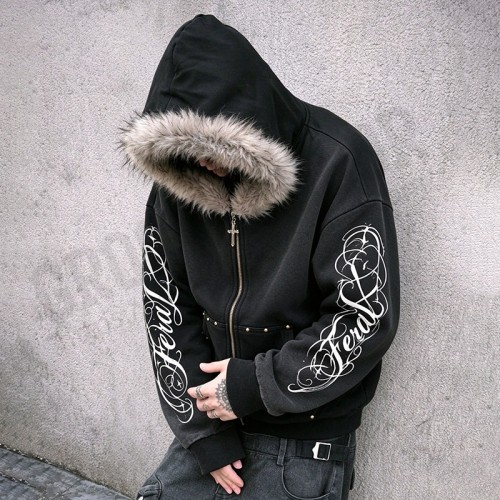
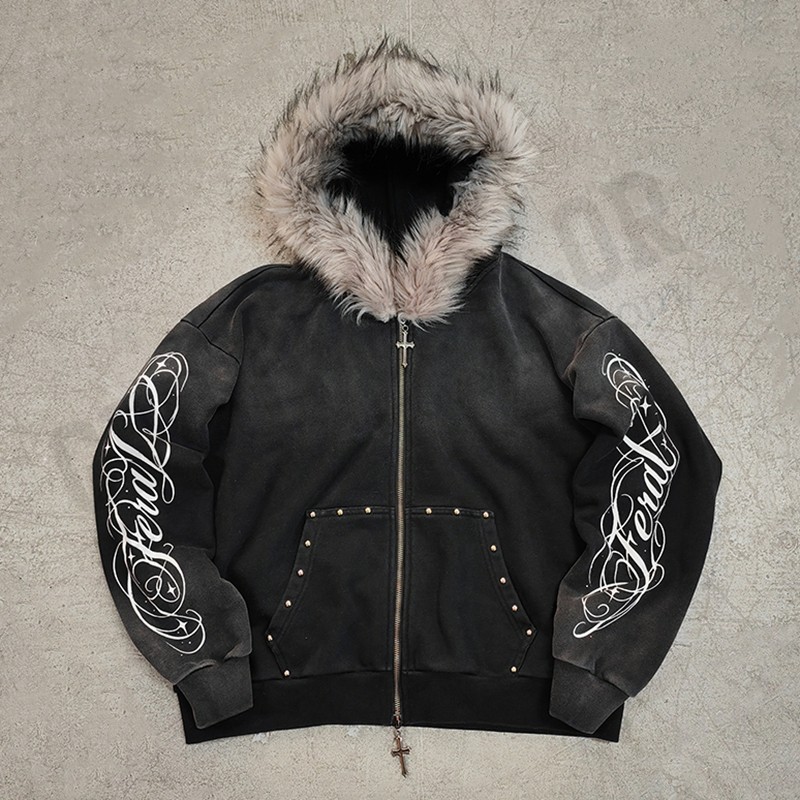
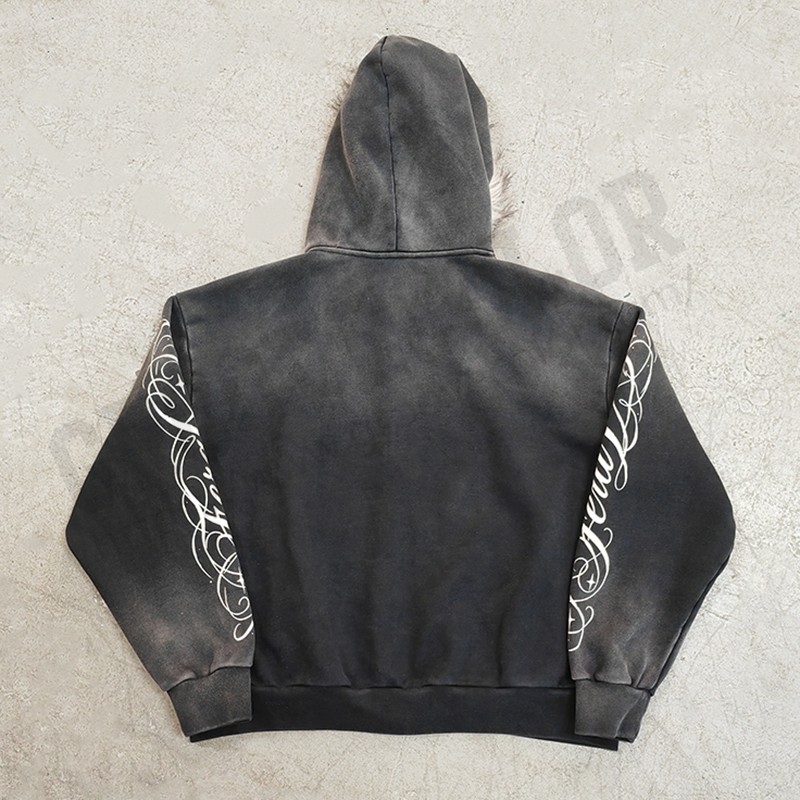
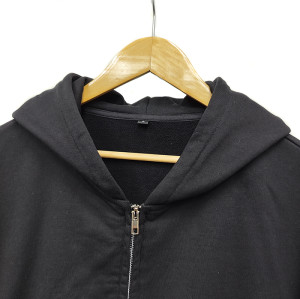
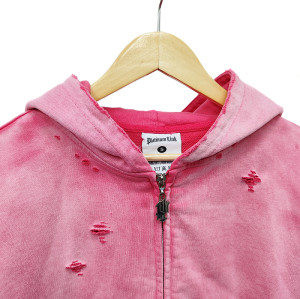
GROOVECOLOR develops full-package, cut-and-sew streetwear for established men’s fashion labels with planned releases and repeat production needs. This reference is a heavy-looking, relaxed zip-up hoodie in washed charcoal black, combining a dense faux-fur-trimmed hood, cross-shaped metal zipper pulls, metal-studded split kangaroo pockets and ornate white artwork on both sleeves. The back is largely plain, allowing the surface finish and sleeve graphics to carry the visual identity.
For a brand product developer, the real brief is not simply to copy a vintage appearance. The factory must coordinate fabric behavior, washing variation, sleeve artwork, hood-edge construction and hardware compatibility within one approved production package. GROOVECOLOR is based in Humen, Dongguan, China. The photographs confirm the visible styling, but they do not establish the original GSM, fiber composition, exact washing process or whether the fur trim can be detached.
01
Heavyweight Hoodie Base
Specify knit structure, tested GSM and rib recovery before developing the relaxed shape and faded surface.
02
Fuller Faux-Fur Hood Edge
Engineer trim depth, hood balance, backing and attachment so the front opening retains the approved silhouette.
03
Cross Pulls + Pocket Studs
Control metal trim sourcing, edge positioning, fastening security and zipper operation after garment finishing.
04
Printed Sleeve Calligraphy
Grade artwork placements for both sleeves and validate the selected screen-print system against the wash finish.
A heavyweight zip up hoodie manufacturer should first confirm the approved pattern, rather than infer the fit from a model photo. The garment shown has broad shoulders, relaxed sleeves, a compact rib waistband and deep ribbed cuffs. The technical specification should define shoulder width, chest width, body length, armhole depth, sleeve volume, rib stretch recovery and front-center zipper length for every size.
Cutting markers also need to allow for front symmetry and pocket alignment. Heavier knit fabric can shift at the sewing stage; pre-production checks should examine panel movement, hood seam balance and the way the zipper tape supports the front body. For further detail on pattern preparation and panel accuracy, see GROOVECOLOR’s cutting and pattern execution resource. This is especially relevant when the bulk order includes multiple sizes or additional hardware.
How Is a Faux Fur Trimmed Hoodie Hood Built for Volume and Secure Attachment?
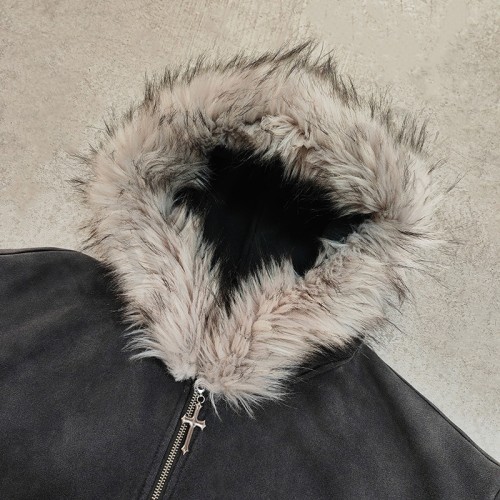
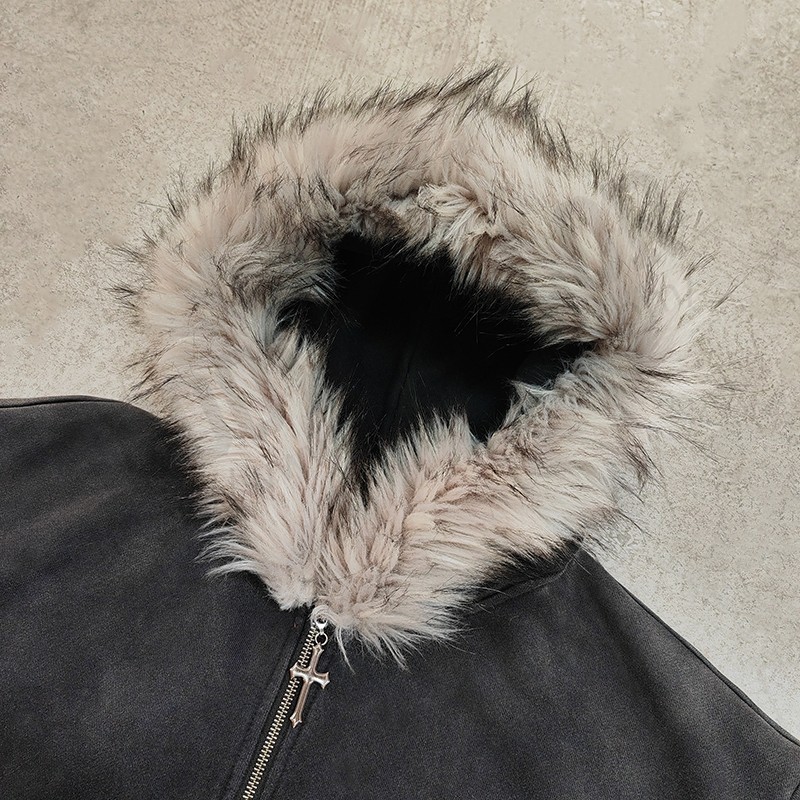
Close-up reference: full-volume grey-beige faux-fur trim at the hood opening.
The hood edge is the defining construction challenge in this faux fur trimmed hoodie. The photographs show long-pile grey-beige fibers with darker tips framing a deep black hood opening. The brand should approve fur pile length, base-cloth color, trim width, hood opening circumference and seam finish on a physical development sample. These measurements directly affect the shape around the wearer’s face.
GROOVECOLOR can assess a permanently sewn trim or a removable construction as separate custom development directions. Removability is not shown in the photos and must not be assumed. The selected method should be tested for wash compatibility, seam security, color transfer, loose fibers and interaction with the top zipper stop. A larger trim may also change package volume and freight calculations.
How Are Custom Cross Zipper Hoodie Hardware and Studded Pocket Assemblies Developed?
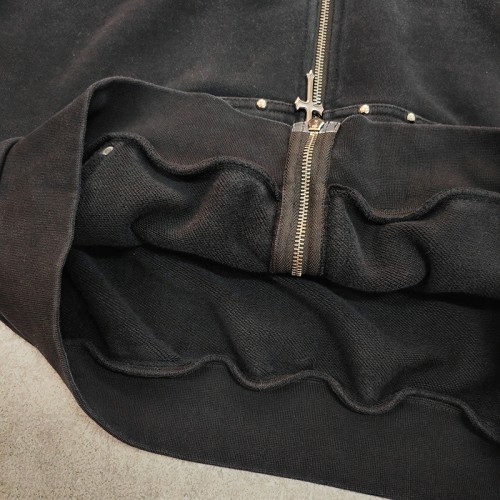
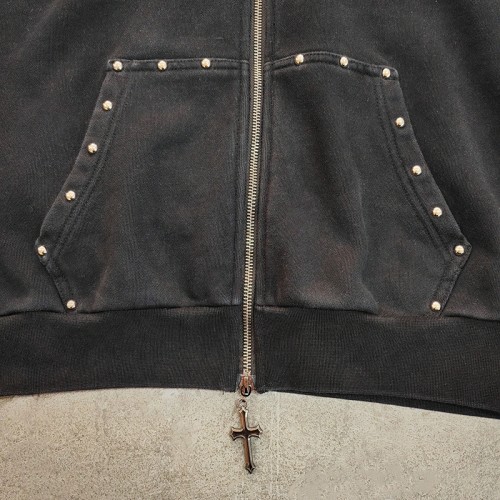
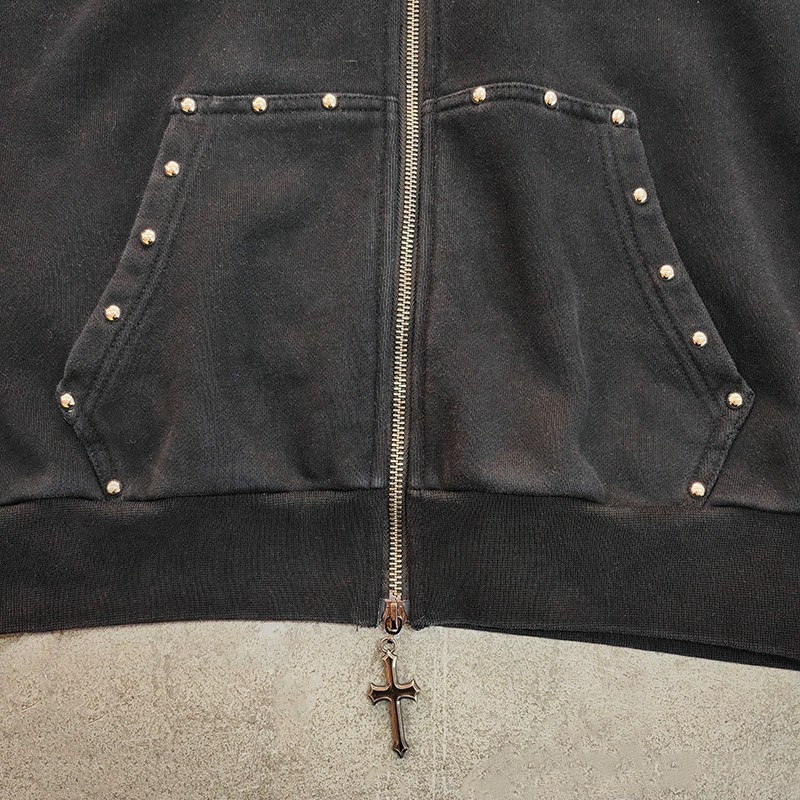
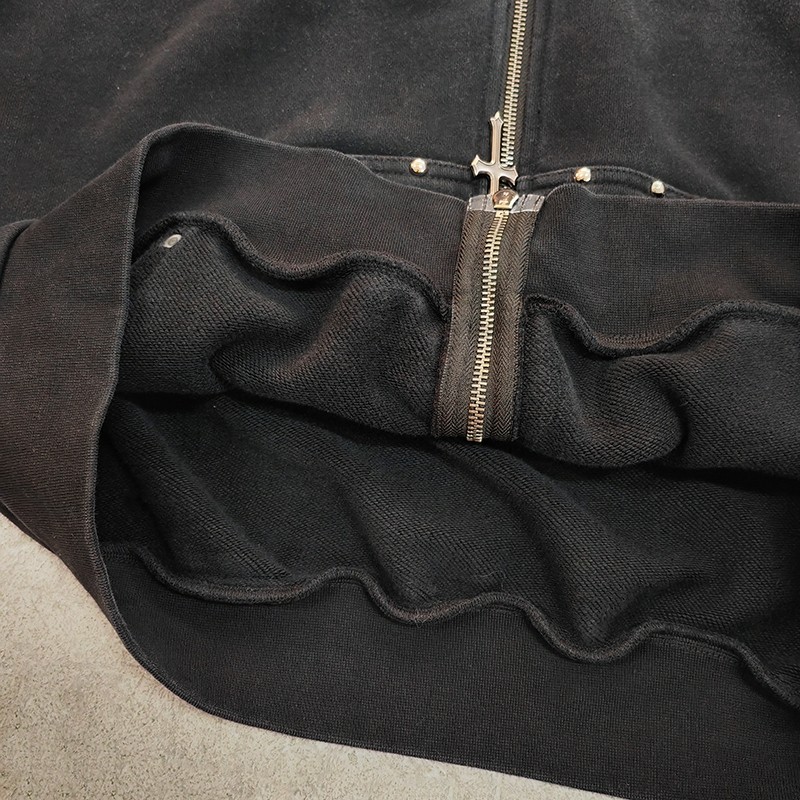
Close-up reference: two split kangaroo-pocket halves with metal studs and cross-pull hardware.
The front closure displays cross-motif metal pull ornaments near the hood and hem, with metallic teeth extending through the body. A custom cross zipper hoodie program needs an approved pull mold or available component, matching finish, secure connector, suitable slider geometry and documented opening/closing tests. Two visible pulls do not by themselves prove the exact two-way function; the slider mechanism must be confirmed before ordering components.
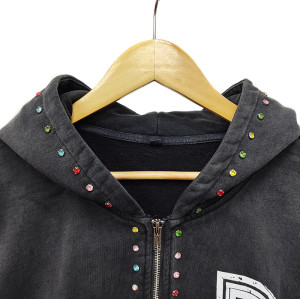
Each pocket half has a distinct angled outline, top row and side rows of dome-like metal studs. For this studded pocket hoodie, the production drawing should specify stud count, diameter, spacing from seam edges, fastening method, reinforcement and allowable placement tolerance. Metal decorations should be checked for sharp backing, pull-out risk, tarnish and interference with future wash or care methods.
How Can a Screen Printed Sleeve Hoodie Retain Fine Calligraphy After Vintage Finishing?
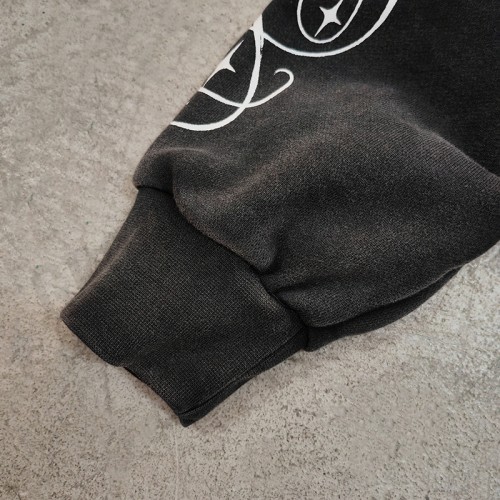
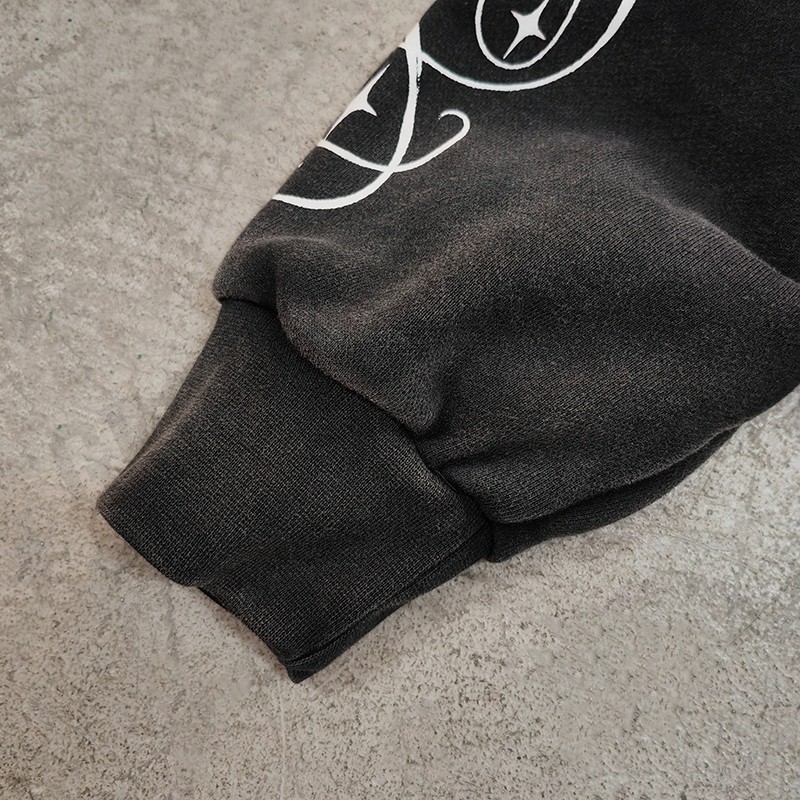
Close-up reference: wide rib cuff, faded sleeve surface and partial white decorative print.
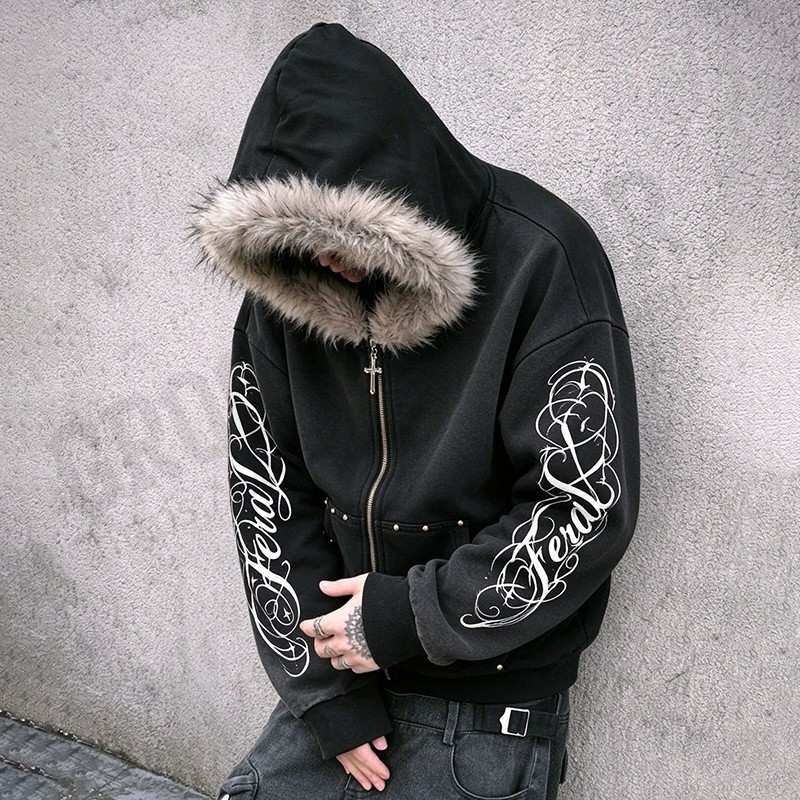
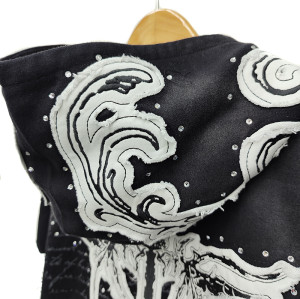
The photographs show large white, flowing calligraphic graphics along both outer sleeves, with intricate swirls crossing curved fabric surfaces. The lettering content is not fully legible, so new production must rely on the brand’s approved vector artwork rather than a photograph. A screen printed sleeve hoodie requires separate left- and right-sleeve placement files, sleeve-seam offsets and a graded print map to protect the artwork from disappearing into folds.
Screen printing is the requested production direction. The ink system, mesh, layer count and curing schedule should be selected after fabric and wash trials. Printing before or after garment washing can produce different line sharpness and hand feel; a test panel and full sample must establish the correct sequence. GROOVECOLOR’s streetwear decoration techniques page provides additional context on combining graphics and garment finishes.
Which Fabric Construction and GSM Range Suit a Vintage Washed Zip Up Hoodie?
The open garment photograph appears to show a looped knit reverse, which suggests a French-terry-type option; the fiber content and weight cannot be confirmed visually. For development, GROOVECOLOR can review cotton-rich or 100% cotton French terry and other suitable sweatshirt knits. A 420–500 GSM sampling direction may suit this heavy silhouette, but it is a proposed range—not a measurement of the pictured garment.
In a vintage washed zip up hoodie program, the fabric choice determines surface abrasion, print retention, wash shrinkage and whether the hem can remain structured with a substantial hood trim. A ready-stock fabric from an established fabric partner may shorten sourcing time. If the selected weight, hand feel or shade requires custom knitting, both the material minimum and production calendar must be reviewed before the quotation is finalized.
What Production Specifications Should a Private Label Zip Up Hoodie Tech Pack Confirm?
The table separates details visible in the reference from material and commercial choices still requiring written approval. A private label zip up hoodie should enter bulk production only after the brand approves the tech pack, fabric, artwork, physical trims, graded measurements and acceptance standards.
Every visible component can be translated into a technical specification, but specialty hardware and faux-fur sourcing require approval before the factory confirms commercial feasibility. The objective is a brand-owned product developed from its own drawings and artwork—not a ready-made hoodie with a label change.
Customization area
Brand approval and manufacturing action
Fabric and density
Select fiber mix, knit structure, target GSM, surface hand feel and source availability.
Pattern and grading
Set shoulder drop, body length, hood opening, sleeve width, cuffs and size tolerances.
Select pile, trim color, backing and sewn-on or removable attachment after feasibility review.
Zipper and metal pulls
Select compatible zipper tape, slider function, custom cross pull dimensions and metal finish.
Pocket hardware
Define stud layout, finish, fixing method and protective backing.
Sleeve graphics
Provide original vector art and approve screen-print size, position, color and process order.
Brand identity
Woven neck labels, care labels, serial details, hangtags and custom packing if required.
Inspection and logistics
Agree test criteria, packing method, carton marks and destination terms.
How Does Vintage Hoodie Wash Development Affect Color, Shrinkage and Metal Trims?
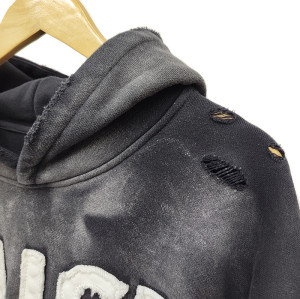
Vintage surface effects involve controlled variation, not identical random marks on every garment. For this faded black reference, the brand should approve a physical shade standard plus an acceptable light-to-dark range on the shoulder, sleeve, pocket edge and body. The technique may involve pigment treatment, garment washing or other approved finishing; the photos cannot identify which method produced the original finish.
Washing can change finished measurements and the appearance of metal trim. Sample evaluation should cover shrinkage, rib recovery, printed line clarity, fur pile behavior and color transfer. Hardware and fur attachments may need to be installed after a major wash step, depending on the approved method. The production sequence must come from tests rather than an assumption that all decorations can pass through the same wash.
Can Custom Cut and Sew Hoodies Support Coordinated Winter Streetwear Collections?
For established labels, custom cut and sew hoodies can serve as the technical anchor of a winter capsule. A coordinated range may use the same approved charcoal family, fabric hand feel, trim finish or calligraphic artwork language across sweatpants, sweatshirts and outerwear. Separate constructions still need individual test approvals; using the same design motif does not make two garments share the same sewing or wash requirements.
The vintage hoodie manufacturing collection shows the category relationship for brands planning several washed fleece styles. Teams exploring additional graphic treatments can also study the graphic hoodie production range to distinguish artwork-led styles from those whose primary risk is complex trimming and hardware.
This development route is designed for established men’s streetwear brands and premium menswear labels with approved product direction, functioning sales channels and a defined product calendar. It is particularly relevant to product development and sourcing teams seeking a differentiated cold-season hoodie with several decoration techniques and a plan for follow-on production.
A strong project brief identifies target retail positioning, shipment region, planned volume by color, size grading, wear and care requirements, intended launch date and the non-negotiable details. The manufacturer can then evaluate the highest-risk components before sampling. The value of this model lies in controlled product development and stable reorder planning, not in purchasing unbranded ready stock.
What MOQ, Sampling Lead Time and Commercial Terms Apply to a Custom Streetwear Zip Hoodie?
GROOVECOLOR generally works from 50–100 pieces per style per color for standard custom OEM programs. This is a planning reference, not a confirmed minimum for this particular construction. A bespoke metal cross pull, selected faux-fur base or custom-dyed heavyweight fabric can change the minimum quantity, tooling charge and total order requirement.
Standard sampling often takes about 2–3 weeks, with standard bulk production around 3–4 weeks after final sample approval. Specialized trim tooling, wash trials, material sourcing and order volume may extend these estimates. Quotes are normally scoped by fabric, artwork, trim specification, quantity and trade term. Sample fees, custom labels, freight, duties and other project-specific costs should be itemized rather than assumed to be included.
GROOVECOLOR has over 16 years of streetwear manufacturing experience and reports capacity above 300,000 garments per month. Its OEM workflow covers fabric sourcing, pattern development, sampling, cutting, sewing, print and trim coordination, finishing, inspections and packing. For an OEM streetwear hoodie manufacturer, this structure is most useful when a brand needs the washed surface, heavyweight silhouette and complex trims reviewed together rather than as separate unrelated processes.
The production system is aligned with ISO 9001 quality-management principles; this is not a claim of current ISO 9001 certification. GROOVECOLOR reports SMETA 4-Pillar audit experience, with current records and scope available for sourcing review. Sedex explains the SMETA four-pillar audit method for independent context on audit scope. Certified material options such as OEKO-TEX, GOTS or GRS should be discussed only where the actual supplier fabric has valid documentation. Brands assessing this wider approach may review responsible fabric sourcing practices and GROOVECOLOR for the factory background.
What Should Streetwear Brands Ask About Faux-Fur Hoodies, Studs and Printed Sleeves?
These questions address the technical decisions that most often affect sampling cost, bulk feasibility and repeat-order planning. Answers describe manufacturing considerations, not laboratory results for the photographed reference.
Can the faux-fur edge be made removable?
A removable trim can be evaluated, but the reference images do not prove that the original hood is detachable. The chosen fastening must be assessed for appearance, secure wear, cleaning instructions and production cost.
Is the photographed hoodie definitely 500 GSM and 100% cotton?
No. Neither fabric weight nor fiber composition can be verified from a photograph. The factory can submit candidate swatches and confirm actual specifications before the sample is approved.
Does the cross-shaped zipper operate as a two-way zipper?
Two cross-shaped pulls are visible near the neckline and hem, but zipper travel and slider construction should be demonstrated with a physical sample before describing the final product as two-way.
Are the pocket decorations rhinestones or metal studs?
The photographs show small dome-like metallic studs. They should not be described as crystal rhinestones without a confirmed component specification. Their fastening method and durability need review.
Should sleeve printing happen before or after vintage washing?
The order depends on the fabric, pigment system and intended degree of print aging. Test panels and a full garment sample are needed to select a controlled process that preserves fine linework.
Can the vintage charcoal fade be reproduced on a repeat order?
A brand-approved shade range, fabric reference and wash parameters improve repeatability. Natural variation is expected in garment finishing, so approval should cover acceptable limits rather than an impossible promise of identical fade marks.
What information is required to quote this complex zip hoodie?
Provide the tech pack, size chart, target GSM and fabric mix, original sleeve artwork, intended fur trim, zipper pull specifications, stud layout, quantities per color and delivery destination. These inputs allow the team to separate tooling, production and freight costs.
How Does This Heavyweight Vintage Zip Hoodie Become a Production-Ready Brand Product?
Full front reference: attached faux-fur hood edge, white sleeve artwork and symmetrical studded pockets.Back reference: broad washed charcoal panel, attached hood and graphics wrapping down both sleeves.
This sample demonstrates how a heavyweight-looking washed zip hoodie can integrate high-volume faux fur, custom cross hardware, decorative metal studs and intricate sleeve graphics. The next step is to translate those visible features into brand-specific components, approved fabric measurements, graded construction drawings and testable production tolerances. That is the difference between a visual reference and a repeatable OEM specification.
GROOVECOLOR can review these requirements with established streetwear teams seeking a development partner in China. The final fabric, hardware and treatment details should be confirmed through the brand’s own sample-approval process before any commercial promise is made.
How Can Your Team Request an OEM Quote for a Custom Vintage Zip Up Hoodie?
Send your tech pack, target quantities, original sleeve art, preferred fabric weight, trim references and delivery location. GROOVECOLOR can assess production feasibility, highlight component dependencies and prepare a customized sample and bulk quotation.