Camo Patchwork Hoodie Manufacturer | OEM Appliqué Embroidery Hoodies | Streetwear Camouflage Distressed hoodies Factories | GROOVECOLOR Streetwear Manufacturer
- Model
- F368936 OEM Appliqué Embroidery Hoodies
Item specifics
- Categories
- Custom Cross-Shaped Zipper Hoodie Factory
- Brand
- GROOVECOLOR Streetwear Manufacturer
- Style
- Vintage High Streetwear
- Thickness
- Thick
- Qualtiy
- High Qualtiy
- MOQ
- 50-100 pcs per design per color
- Size
- XS-5XL (Customizable Size)
- Country Of Origin
- China
Review
Description
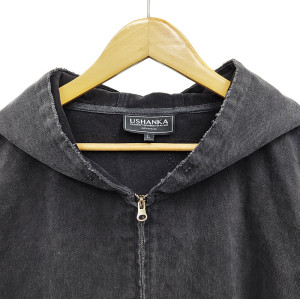
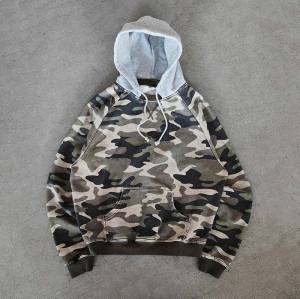
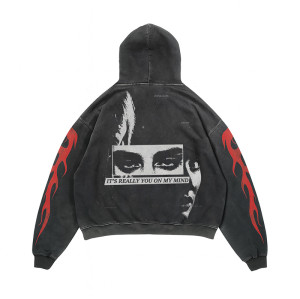
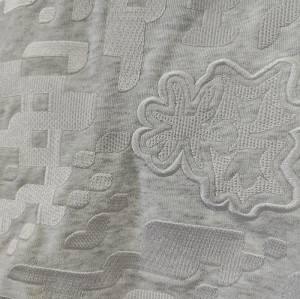
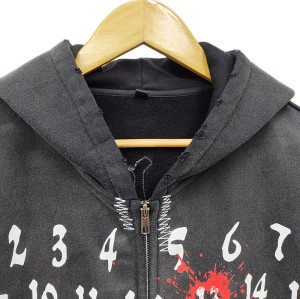
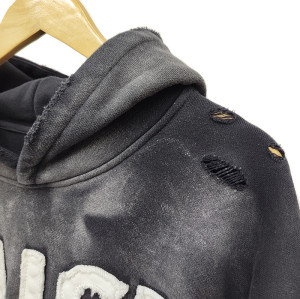
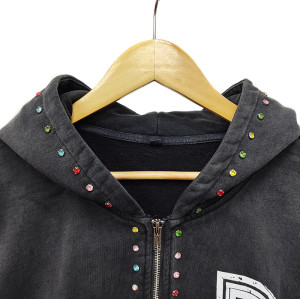
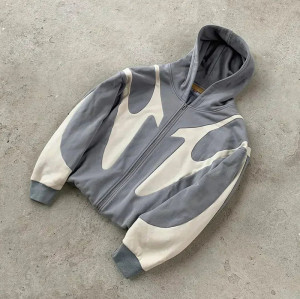
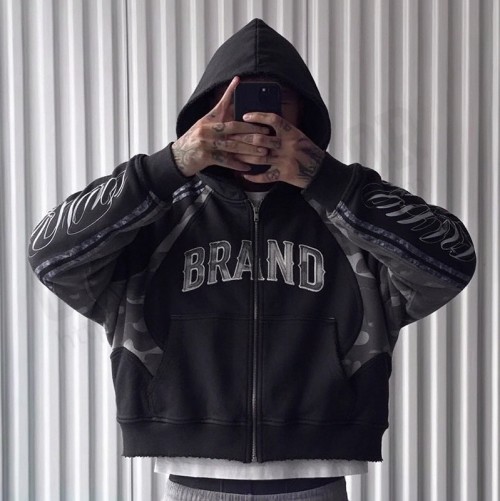
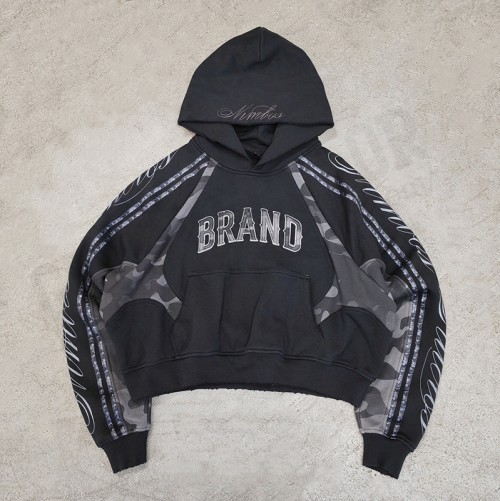
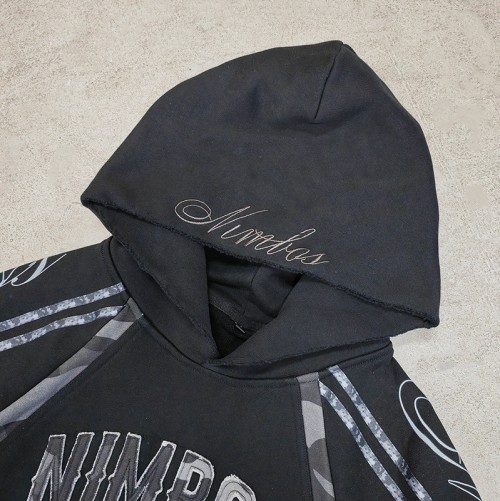
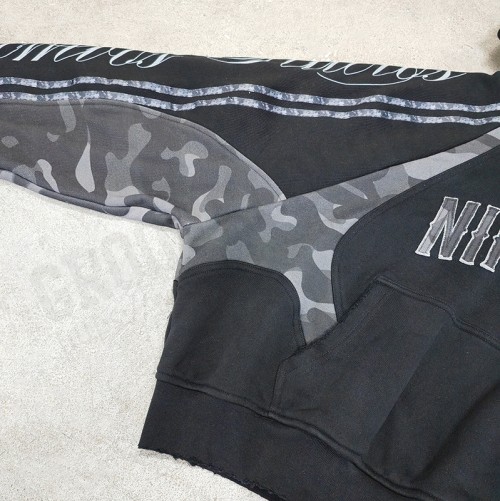
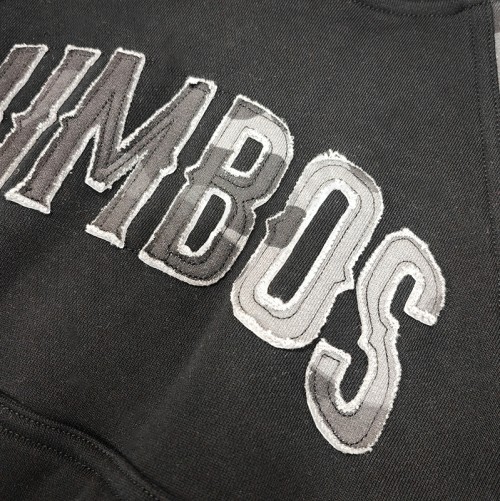
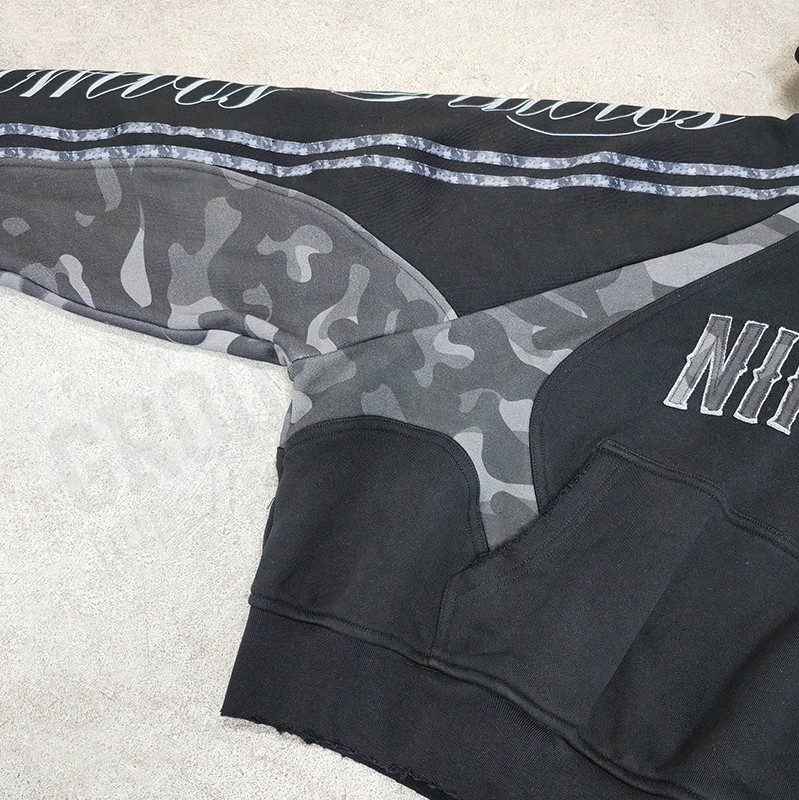
GROOVECOLOR is a premium OEM streetwear manufacturer in Humen, Dongguan, China. This reference shows how a black hoodie can combine grey camouflage cut-and-sew inserts, large stitched fabric letters, fine calligraphy on the sleeves, script embroidery at the hood edge and deliberate wear at rib and pocket openings. For established streetwear brands, the production challenge is coordinating those operations without losing the intended silhouette or damaging functional seams. For teams evaluating a custom camo patchwork hoodie manufacturer, the key proof is a sample that brings the panels, stitching, print and distressing together. The flat-lay reference is a pullover, while the model image shows a full-zip adaptation; the chest lettering also differs between photos. These are visual construction and artwork references, not one confirmed master specification. GROOVECOLOR develops the approved version from each brand’s technical pack, artwork files and fit requirements. Learn more about our custom hoodie manufacturing capabilities, including fabric development, sampling and full cut-and-sew execution. Map grey tonal camouflage inserts to curved arm and body seam lines; assess print placement and cutting yield. Digitize custom chest lettering, define appliqué materials and stitch paths, and check fabric tension. Coordinate sleeve calligraphy screen prints with narrow grey stripe treatments and hood-edge embroidery. Specify distressed hood, pocket, waistband and cuff edges while setting seam-safe limits for production. A cut and sew hoodie manufacturer should document the closure type before pattern approval. The flat-lay shows an uninterrupted pullover body with a kangaroo pocket. The model image adds a center-front zipper, dividing the front graphic area and pocket construction. Both can be developed, but they require different front patterns, trim lists, logo layouts and sewing sequences; neither should be treated as an automatic substitute for the other. During oversized zip-up hoodie manufacturing, the patch outline, front lettering and zipper tape positions must be planned before bulk decoration. For a pullover, the uninterrupted center panel allows a different appliqué size and pocket shape. Our pattern and cutting process supports a controlled transition from approved sample measurements to graded production markers. The close detail shows small grey cursive embroidery near a raw-look hood brim. Placement must account for the hood fold, edge turnback, stitch density and thread visibility. The embroidery needs to remain legible without pulling the fabric or reaching a seam allowance. For original OEM development, the brand provides a vector or embroidery-ready artwork file, target dimensions and position measured from the hood opening. The factory confirms stitch direction and backing through a physical sample. This is especially important when the hood is double-layered or receives abrasion along its edge. The detailed chest image shows large tonal letters formed with layered fabric pieces and visible stitched contours. The appliqué edges have a deliberately worn look; they are not evidence of chenille or a specific fiber. In the photographs, the lettering alternates between “BRAND” and “NIMBUS”, so artwork must be locked before a factory quotes or embroiders the production version. In GROOVECOLOR decorative manufacturing, a production-ready appliqué brief identifies the letter geometry, insert cloth, color levels, cut edge treatment, stitch type and backing. When reviewing a custom appliqué embroidery hoodie manufacturer, request a stitch-out and sewn garment sample to expose puckering, overly rigid lettering or edge lift before the batch begins. Grey-on-grey camouflage appears on the side body and inner sleeve panels, framed by black outer sections. The curved seams create a strong contrast but also raise cutting and sewing requirements. A production pattern should specify the boundaries of each insert, camo orientation, side-to-side tonal balance and how motifs approach the joining seam. This is panel-based cut-and-sew work, not proof that the whole garment was printed after assembly. For an original brand order, ready-stock camouflage fabrics can be evaluated first; a custom printed or knitted panel may need a different minimum and development schedule. Fabric panels should be checked for shrinkage compatibility before being sewn to the black body fabric. The black sleeves carry fine, pale script graphics that extend over an elongated panel shape. The user identifies this as screen printing; the artwork must be positioned against the actual sleeve pattern, rather than copied from the flat photo at a fixed distance. The two narrow mottled grey lines beside the script add another alignment checkpoint. Water-based or other screen-print ink systems can be assessed after confirming the fabric surface and graphic requirements. Production should test the desired line definition, print coverage, curing conditions and wash response. The actual ink type and two-stripe process are not established by the photographs. The reference has irregularly worn edges at the hood opening, pocket, lower waistband and sleeve cuffs. The technical task is to define abrasion zones, visible yarn loss and acceptable variation while preserving seam allowances, rib attachment and pocket strength. A brand can request stronger or softer distressing, but the chosen method and limits should be approved on a physical sample. A custom distressed hoodie manufacturer must establish edge reinforcement and stitch positions before applying localized mechanical abrasion. Where an aged color effect is also requested, it should be developed separately from physical distressing rather than assuming a particular wash method from these images. Our vintage hoodie category shows additional finishing directions that can be assessed for compatible fabrics and commercial volumes. The reference reads as a structured knit sweatshirt, but its GSM, fiber content and inner surface cannot be verified from photos. GROOVECOLOR can propose appropriate cotton or cotton-blend sweatshirt fabrics, including loopback French terry or an inside-brushed alternative, after reviewing the intended hand feel, fit and decoration density. The final weight should be selected from tested swatches, not inferred from a photograph. Panel compatibility is the key production variable here. Black body fabric, camouflage inserts, appliqué material and ribs may behave differently after washing. Before approval, brands should review fabric composition records, color references, shrinkage behavior, rib recovery and how the selected weight supports the front lettering. Certified fabric options can be considered when current supplier documentation is available. The inside photograph reveals overlocked seam finishes and dark knit surfaces, with lighter seam-side areas around the panel assembly. That view is useful for evaluating construction but does not prove a precise fiber composition, fleece treatment or GSM. It also shows why decorative panel seams must be considered alongside wearer comfort and internal finishing. Before cutting, a manufacturing team should check seam placement against the approved pattern, exposed seam allowances, stitch security at joining points and the effect of appliqué backing on the inside. A pre-production sample should document the panel sequence and finishing method, with later checks focused on approved sewing tolerances. The following table distinguishes visible attributes from specifications that cannot be verified by photography. It is a production brief, not a claim that the pictured sample has a confirmed material or tested performance. These are possible OEM development paths, not unverified claims about the exact photographed garment. The selected combination must be checked for technical compatibility and commercial feasibility. The lettering detail shows layered grey tones, contour stitching and worn-looking perimeter fibers. Such work is highly sensitive to artwork geometry: thin strokes may need minimum width adjustments, internal cutouts must remain open and corner stitches must not distort the intended type shape. The final brand logo must replace the reference lettering with the rights holder’s approved design. Branding also extends beyond visible logos. A full OEM brief should cover sewn neck labels, wash-care labels, preferred hangtags, packaging instructions and any garment numbering. Materials, placement and printing or embroidery files are confirmed before sampling, so later revisions do not disrupt appliqué die lines or print registration. During OEM streetwear hoodie production, an effective inspection plan separates appearance criteria from structural criteria. Panel positioning, camouflage contrast, printed script sharpness, appliqué lift and embroidery puckering are checked against approved references. Seam joining, zipper alignment where applicable, rib attachment and pocket stress points are assessed independently; intentional edge wear should never be mistaken for permission to leave weak seams. GROOVECOLOR uses sample approval, in-process checks and final inspection, with AQL 2.5 sampling where applicable. Wash and shrinkage trials can help set realistic dimensional tolerances; neither the photos nor the current brief verifies a particular result. A useful technical approval record includes the actual wash test, measurement chart and signed artwork placement sheet. This pattern language can be adapted to additional items without copying the same print onto every garment. A collection might pair a statement hoodie with custom sweatpants or a companion sweatshirt, using related grey camouflage placements, a shared embroidery system and brand-defined typography. Each garment still needs its own fit grading, fabric check and process order. For a men’s collection requiring a stronger silhouette, the oversized hoodie product category offers broader references for hood volume, body length and sleeve proportion. Range development works best when fabric standards and artwork colors are selected at collection level, while garment-specific cut-and-sew instructions stay separate. The best fit is an established premium streetwear label, a menswear-focused fashion team or a product development group preparing a repeatable line with multiple decoration operations. These organizations typically manage approved fit blocks, brand-owned artworks, launch calendars and technical revisions; they need a factory that can review decoration feasibility before committing to a volume. Teams comparing factories should ask for a multi-panel sample, a stitched appliqué test, screen-print placement evidence and a clear treatment specification for the worn edges. A photograph alone cannot establish whether a manufacturer can maintain the approved finish over a full size run. GROOVECOLOR’s general OEM starting range is 50–100 pieces per design and color. A complex camouflage insert, customized knit or multi-operation decoration may change the practical minimum. The quoted quantity should therefore be decided after reviewing material availability, color combinations, artwork size and the chosen pullover or zip-up construction. Allow approximately 2–3 weeks for initial sampling and approximately 3–4 weeks for bulk sewing and finishing after final sample and production specification approval, subject to capacity, sourcing and process complexity. Freight transit is additional. The final quotation can separate EXW garment cost, private-label trim cost and shipping according to the selected trade term. Yes, they can be developed as separate technical styles. The zip-up requires a center-front closure, different front pocket pieces and revised appliqué positions; the final sample and grading must be approved for each version. The images visibly show camouflage within cut-and-sew panels. They do not establish how that panel fabric was patterned. A factory can evaluate existing patterned fabric or an approved custom-print route after fabric and quantity review. The photos show layered fabric letters with contour stitching and worn edges, not a verified chenille pile. The recommended specification is fabric appliqué with defined base material, edge treatment and stitch outline, subject to stitch-out approval. No. Distressing is controlled through a location map and acceptable variation ranges. Brands should agree on the maximum loss of yarns and the required seam strength rather than expect identical irregular marks. Provide a tech pack, pullover or zip-up choice, graded measurements, brand-owned vector graphics, panel placement diagrams, fabric and GSM preferences, decoration sizes, planned quantity per color and target delivery market. The general starting point is 50–100 pieces per style per color, with an estimated 2–3 weeks for initial samples. Multi-panel layouts, sourcing or custom trims can change the final MOQ and schedule. Potentially. Supplier-backed OEKO-TEX, GOTS or GRS fabric options may be assessed when relevant documentation and suitable materials are available. Such fabric certificates must not be described as factory certifications. A production-ready program has one approved silhouette, panel map, fabric and rib specification, appliqué artwork, sleeve print layout, hood embroidery file, distressed-edge tolerance and clear QC checkpoints. The photographs communicate an effective aesthetic direction; the technical pack determines how that direction will be reproduced at commercial scale. For brands weighing potential OEM partners, the practical test is whether the factory can provide a complete sample and documented production decisions for this combination of techniques. GROOVECOLOR can review those inputs and recommend an executable cut-and-sew process based on the approved materials and planned order volume. Share your tech pack or mockup, preferred GSM and composition, the desired closure, appliqué and print files, quantities per color and target market. Our team can assess the panel construction, decoration sequence, estimated sampling scope and available sourcing options before issuing a project-specific quotation.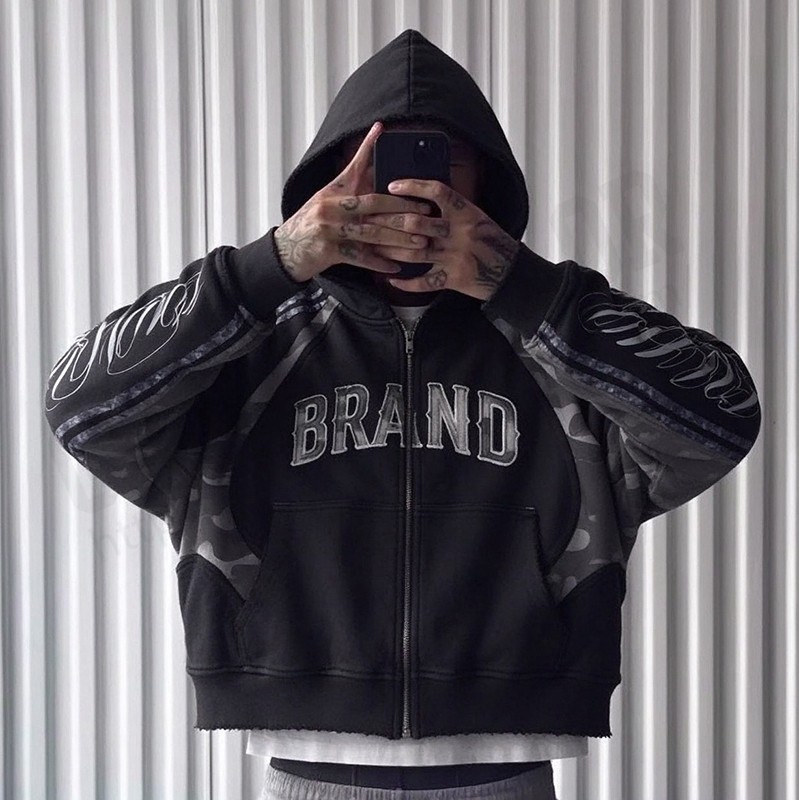
What Makes This Custom Camo Patchwork Hoodie Program Relevant to Streetwear Brands?
Which OEM Hoodie Manufacturing Highlights Define This Multi-Technique Reference?
Camouflage Panel Engineering
Layered Letter Appliqué
Multi-Zone Graphic Placement
Controlled Worn Finishing
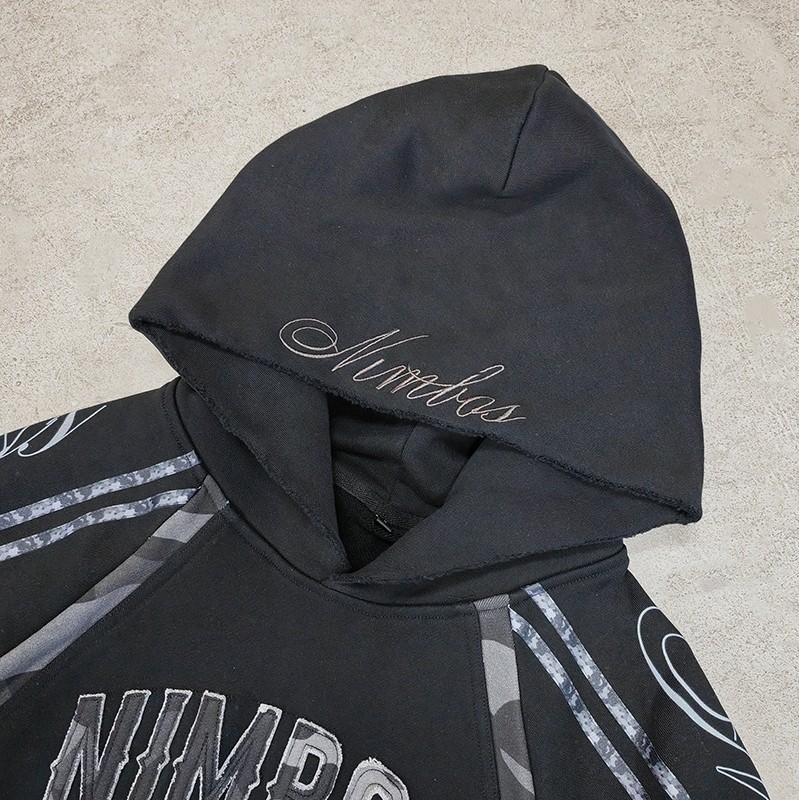
How Should a Cut-and-Sew Hoodie Manufacturer Separate Pullover and Zip-Up Construction?
What Does a Hoodie Manufacturer Check When Embroidering a Script Logo on the Hood Edge?
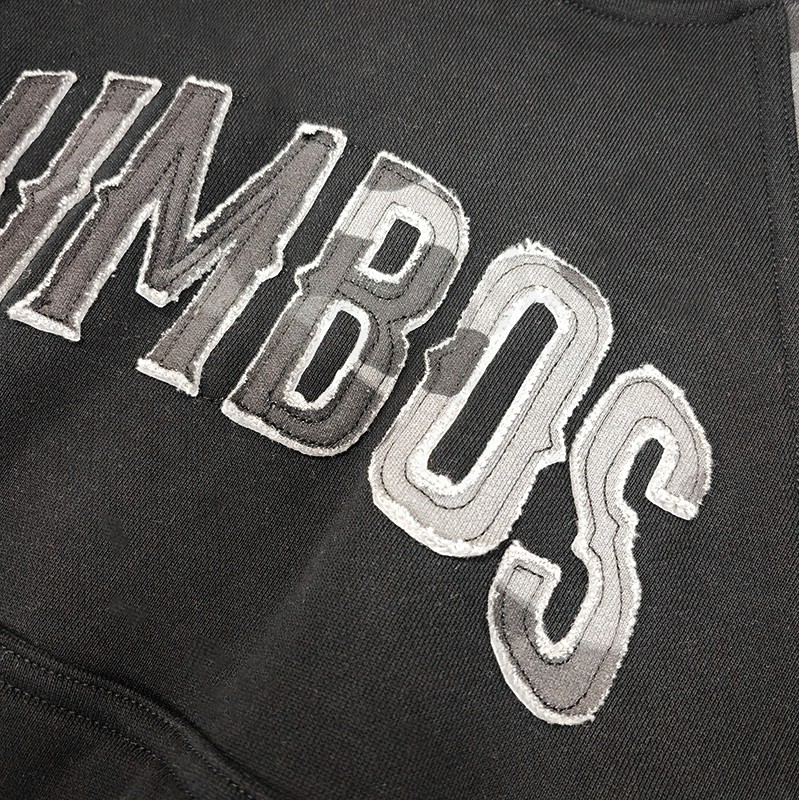
How Can Custom Appliqué Embroidery Hoodie Manufacturing Reproduce Layered Letter Logos?
What Controls Matter for Camouflage Panel Hoodie Manufacturing Along Curved Seams?
How Should Custom Hoodie Screen Printing Handle Long Calligraphy Across Sleeves?
How Are Distressed Hoodie Cuffs, Pockets and Hood Edges Finished Without Weakening Seams?
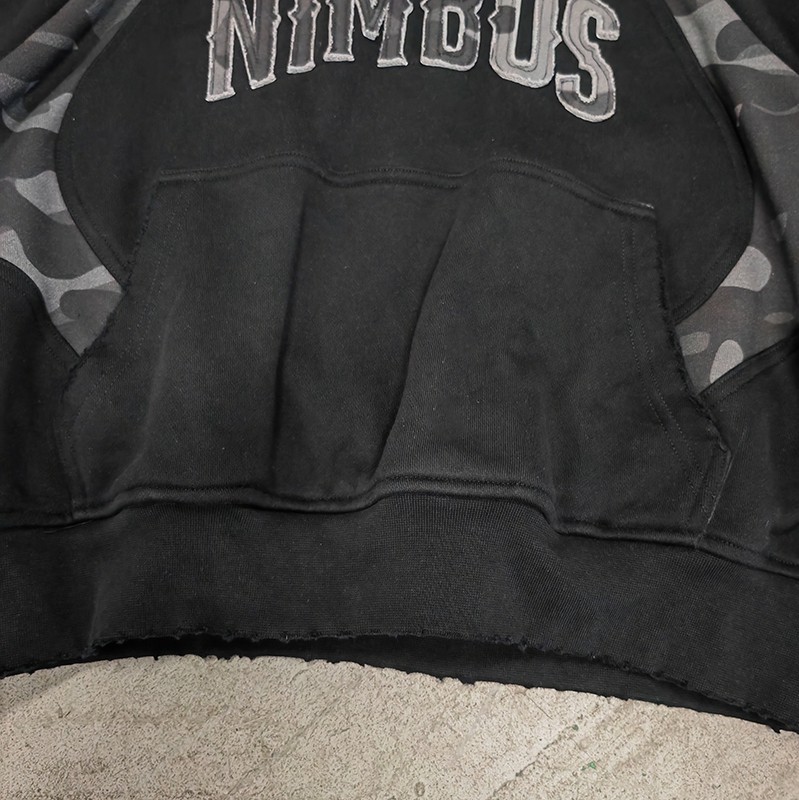
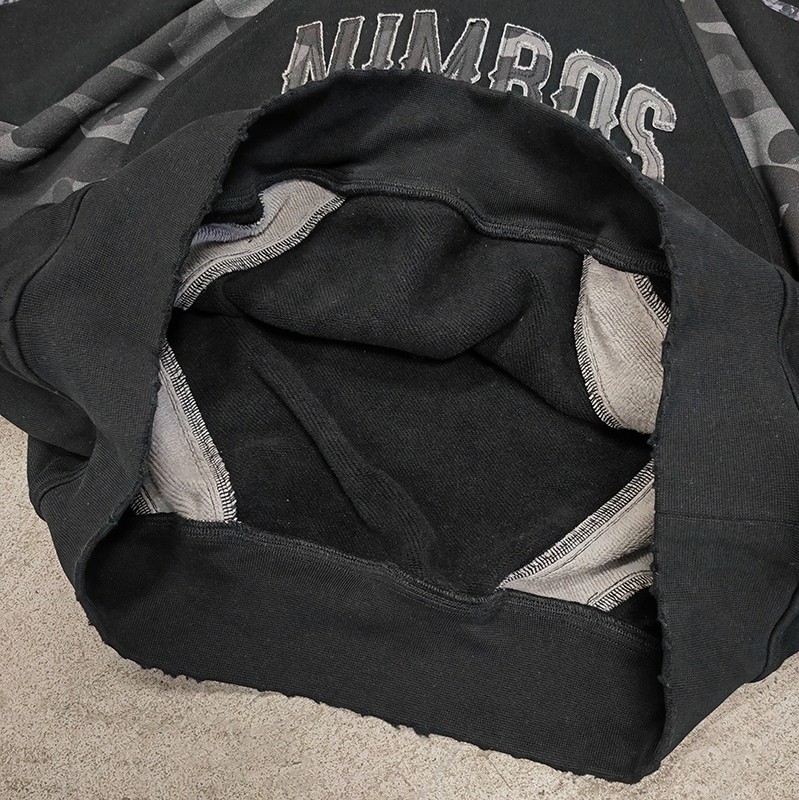
Which Fabric Construction Works for Custom Heavyweight or Midweight Patchwork Hoodies?
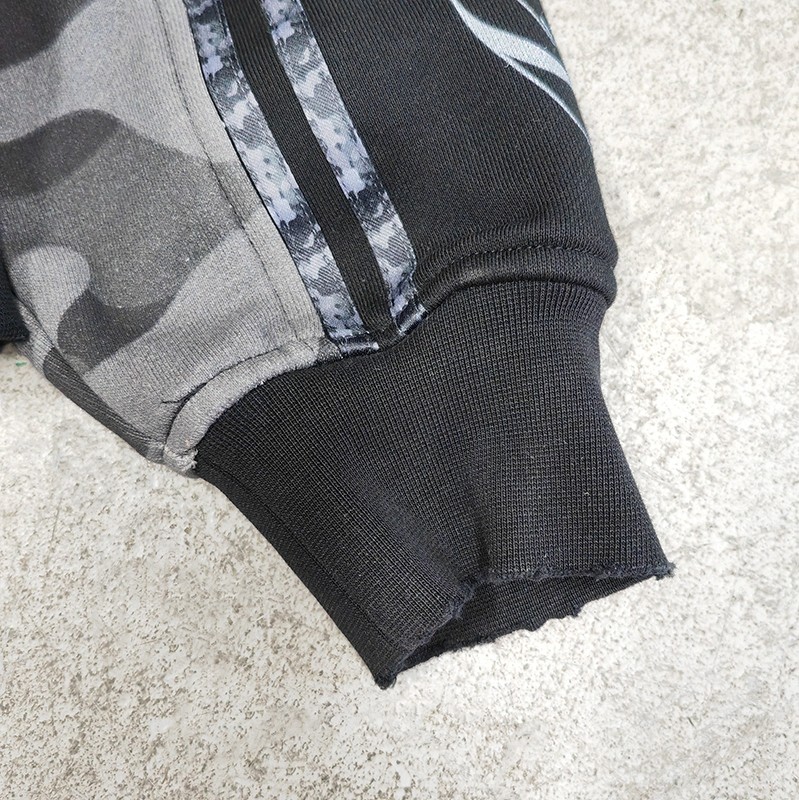
What Must Be Inspected Inside a Multi-Panel Hoodie Before Bulk Cutting?
Which Technical Specifications Must a Custom Streetwear Hoodie Factory Confirm?
Production field Photo-supported reference / approved production requirement Garment category Custom men’s streetwear hoodie; black-and-grey camouflage patchwork construction. Closure Pullover in flat-lay; full front zip in model image. Final version must be selected. Silhouette Wide, relaxed-looking body and generous sleeves; numeric dimensions and size grading not supplied. Body and panels Black/charcoal body, grey tonal camouflage inserts, curved panel seams and narrow mottled stripes. Fabric composition / weight Not provided. Choose fabric type, fiber content, GSM and color standards during sampling. Chest logo Layered fabric-letter appliqué with stitched outlines; “BRAND” and “NIMBUS” are conflicting photo references. Sleeve artwork Pale script graphics identified by the user as screen printing; exact inks and dimensions pending. Hood logo Grey cursive embroidery near the front hood edge; artwork and dimensions require approval. Pocket configuration Kangaroo pocket on pullover; divided front pockets on zip-up adaptation. Distressed details Raw-look treatment along hood opening, pocket rim, rib cuffs and lower hem; distress tolerance pending. Size range / trims Approved measurement chart, zipper specification when relevant, care labels and trims to be supplied. MOQ / lead time Standard OEM guideline: 50–100 pcs/style/color; sampling ~2–3 weeks; bulk ~3–4 weeks after sample/specification approval, subject to complexity. What OEM Hoodie Customization Options Can Brands Develop From This Reference?
Customization area Available development direction; subject to sampling Fabric selection Cotton or cotton-blend knit options, loopback or inside-brushed constructions, agreed GSM and shade. Panel design Revised camo shapes, black-to-grey placement, seam mapping, matching or contrasting print directions. Fit and pattern Original boxy/oversized proportions, shoulder/sleeve volume, graded body and cuff measurements. Closure and pocket Pullover with kangaroo pocket or full zip with divided front pockets and suitable zipper trim. Appliqué chest logo Brand-owned lettering, cut fabric layers, stitch contours, backing and edge treatment. Sleeve graphics Custom calligraphy, print scale, placement, color count and screen-print process trials. Hood embroidery Script size, stitch density, thread color, edge clearance and placement on the approved hood. Vintage finishing Controlled wear at hood, cuffs, pocket openings and waist; approved seam-safe abrasion map. Brand identity Custom woven neck labels, care labels, serial tags, hangtags and agreed packaging options. Compliance documentation Supplier-backed certified fabric options where required and traceability documents can be verified. 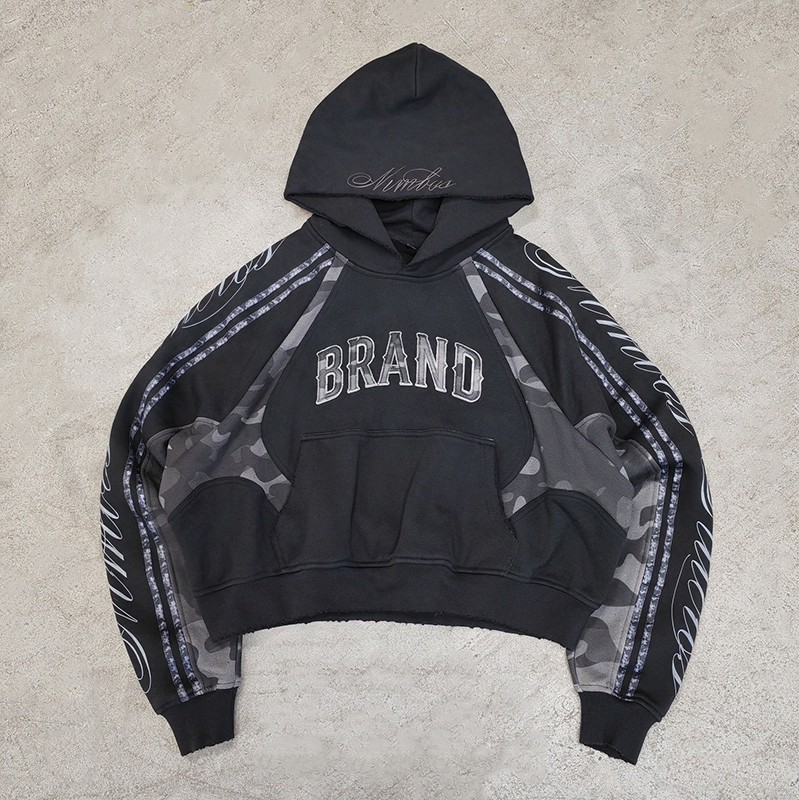
How Are Private Label Streetwear Hoodie Graphics and Branding Files Locked for Production?
What Quality Checks Matter for Distressed Camouflage Hoodie OEM Production?
How Can a Streetwear Clothing Manufacturer Extend a Camo Hoodie Into a Collection?
Which Established Streetwear Brands Need Advanced Hoodie Cut-and-Sew Development?
What MOQ, Sampling and Lead-Time Terms Apply to Complex Custom Hoodie Orders?
What Do Sourcing Teams Ask About Camo Appliqué Hoodie OEM Orders?
Can one OEM factory produce both pullover and zip-up camo hoodie versions?
Is the camo pattern on this reference a full-garment print?
Is the chest logo chenille or fabric appliqué embroidery?
Will the distressed cuffs and pocket rims have identical wear on every hoodie?
What should brands supply to quote camouflage appliqué hoodies accurately?
What is the normal minimum order and sampling time for a detailed hoodie?
Can certified or traceable fabrics be used for the panels?
What Defines a Production-Ready Custom Camouflage Appliqué Streetwear Hoodie?
How Can Your Brand Request a Technical Review for a Camo Patchwork Hoodie?